Fri 14 Dec 2018, 16:53 GMT

Risk minimisation in uncertain times | Geos Group


Company offers service to help minimise the financial risks associated with fuel price fluctuations.


Image credit: Unsplash
By Geos Group

As the UK's Brexit crisis continues to keep the world on tenterhooks, the Geos Group (Sea Bunkering) is working closely with vessel owners and operators in the shipping and offshore industries to help minimise the financial risks associated with fuel price fluctuations.

In these times of deep political and economic uncertainty, the company has seen an increase in enquiries about its price risk management service, which stabilises fuel costs and helps with budgetary planning.

Adam Russell, the company's Trading and Hedging Manager, said: "As traders, physical suppliers and purchasers, we have become accustomed to volatile fuel prices over the last few years, so the uncertainty of the current situation is almost business as usual. We are helping more and more of our clients to develop a hedging strategy, which replaces a risk-laden and uncertain future with a more certain outcome. Our advice to ship owners and operators is: don't gamble on the markets at this time, make sure your hedges are in place, continue to trade responsibly and don't take unnecessary risks. This becomes even more important when trading in sterling."

The price of oil, and therefore the price of marine gas oil, rises and falls on a daily basis as a result of the large number of political, economic and environmental events unfolding around the world all the time. Bunker fuel represents a significant proportion of the cost of running a vessel, and a rising market can impact heavily on operational costs.

There are several hedging tools offered by the Geos Group (Sea Bunkering) that can help to mitigate these risks, including:

The Swap

The swap contract, or 'fixed price paper', fixes the price of a volume of fuel to be delivered in the future. The buyer and seller agree an index price (which changes), usually based on benchmark price assessment figures. When the index price moves above the agreed fixed price, the seller pays the buyer the difference; when the index price moves below the agreed fixed price, the buyer pays the seller the difference. This helps to flatten out price fluctuations over time.

The Cap

The cap protects the buyer from rising prices, whilst enabling him/her to take advantage of falling prices. As with a swap, a fixed price and an index price are agreed upon. When the index price moves above the agreed fixed price, the seller pays the buyer the difference. However, if the index goes below the agreed fixed price, there is no payment due from buyer to seller. The fixed price therefore protects the buyer from rising prices, but allows him/her to benefit from price reductions. Buyers are required to pay an up-front premium for this service, which varies according to contract length, volume, price and market conditions.

The Collar

The collar keeps the bunker costs within an agreed range. A maximum price (cap) and minimum price (floor) are agreed. When the index price moves above the cap, the seller pays the buyer the difference; when the index price is below the floor, the buyer pays the seller the difference; when the index price is in between the cap and floor, so within the collar, no payments are made. There is no up-front premium payment for this service, and the best part is that the buyer only pays for protection when he/she can best afford it (when prices are low and below the floor).

The Swap Option (Swaption)

Here, the buyer of a cap has an option, but not an obligation, to buy a swap. So, if the market ends up above the swap price level, the buyer will exercise the right to enter the swap contract. There is an up-front premium to be paid for this service, which acts as a kind of insurance policy to the buyer.

Although there is still some risk involved, and possibly an additional cost, a hedging strategy that is carefully structured to suit a ship owner or operator's requirements can significantly protect them against the financial risks presented by a highly volatile fuel market.

For more information about purchasing marine fuel, contact the Geos Group (Sea Bunkering) on +44 (0)1491 845474 or email commercial@geosgroup.com.


American Bureau of Shipping (ABS) logo. ABS introduces nuclear-ready notation for marine and offshore assets  

The classification society has released what it describes as an industry-first notation to support future nuclear conversion of vessels and offshore assets.

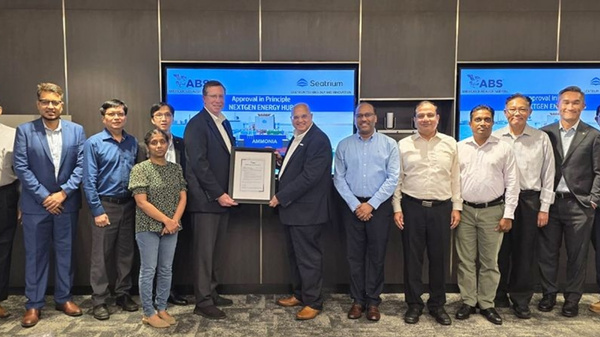
AiP handover ceremony for NEXTGEN Energy Hub (NGEH) design. ABS grants approval in principle for Seatrium’s NEXTGEN Energy Hub design  

The hub concept integrates ammonia bunkering, power generation and electric vessel charging in a single unit.

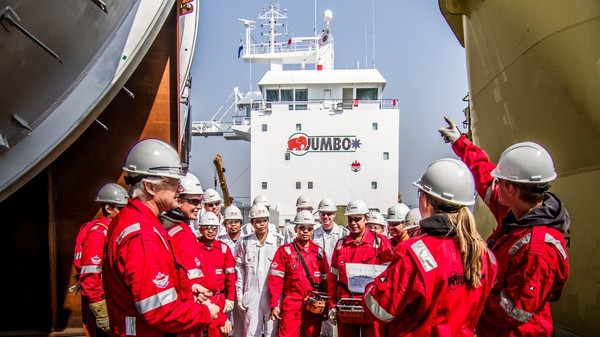
Jumbo Maritime crew aboard vessel. Jumbo orders two methanol-ready L-Class heavy lift vessels from Dajin Heavy Industry  

Dutch heavy lift specialist Jumbo signs newbuilding contract for two 25,000-dwt vessels.

China flag. Zhoushan completes first bonded bunker operation at Majishan port area  

The operation marks full fuel supply coverage across all general cargo terminals in Zhoushan's port system.

US dollar banknotes. Port of Long Beach launches $1m methanol bunkering challenge for oceangoing vessels  

A $1m prize aims to kick-start commercial methanol bunkering at one of North America's busiest ports.

Core Power, Athlos Energy, Deon Policy Institute and ABS logos. Greece floating nuclear study finds no fundamental barriers to implementation  

A PESTLE assessment of floating nuclear power plants in Greece identifies framework gaps, not feasibility barriers.

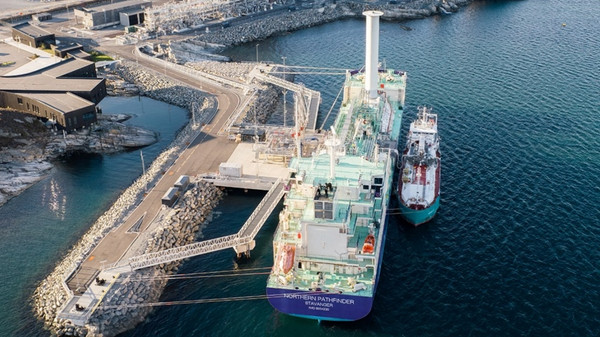
Northern Pathliner alongside Bergen LNG vessel. Molgas completes LNG cool-down and bunkering for Northern Pathliner at Northern Lights terminal in Norway  

Operation carried out at Øygarden facility, with K Line and Integr8 Fuels in the supply chain.

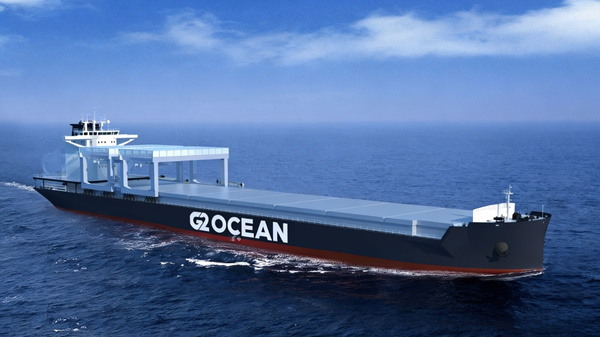
Rendering of a G2 Ocean OHGC vessel. G2 Ocean expands fleet with six future-fuel ready gantry crane vessels  

Open hatch specialist adds vessels and jet sail technology as part of a broad fleet renewal programme.

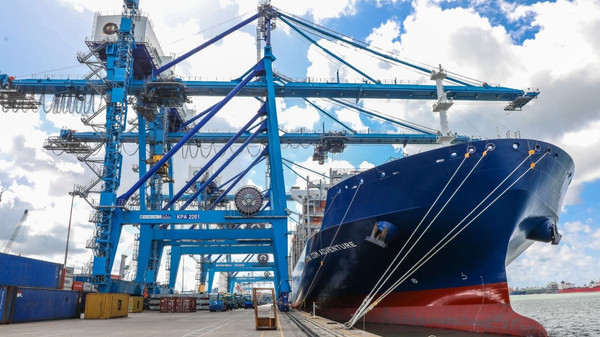
CMA CGM Adventure vessel at Port of Mombasa. LNG-powered CMA CGM Adventure makes first call at the Port of Mombasa  

Kenya Ports Authority receives its first large LNG-fuelled container vessel.

Liam Blackmore, Lloyd's Register. Maritime trio shapes IMO safety guidelines for ammonia as marine fuel  

Real-world operational experience feeds directly into new IMO ammonia fuel safety framework.