Fri 30 Nov 2018, 08:57 GMT

Norden completes first biofuel test voyage


Shipper expecting 'high demand' for ships powered by second-generation biofuel.


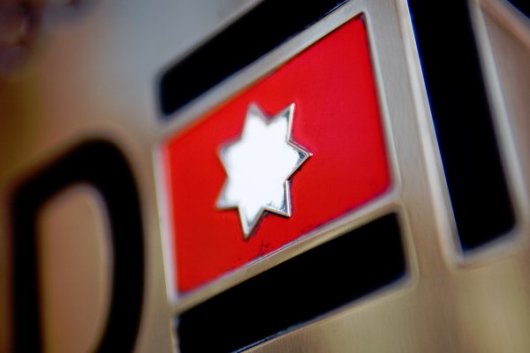
D/S Norden door plate.
Image credit: D/S Norden
D/S Norden says it has successfully completed a test voyage with a large commercial ocean-going vessel powered by biofuel.

The pilot, which was conducted during September in conjunction with Dutch supplier GoodFuels, was a ballast trip from Rotterdam to Tallinn on the 37,000-deadweight-tonne (dwt), 182-metre-long handysize product tanker Nord Highlander.

To compare how the engine reacted with biofuel as an alternative to low-sulphur fossil fuel, the departure from Antwerp was conducted on fossil fuel. Then, after a visual inspection of the engine, the vessel switched to biofuel.

During the voyage, the engine was operated at different loads for sufficiently long periods to establish stable performance. After the test, a final visual inspection of the engine was conducted, which, Norden notes, confirmed that the engine was not negatively affected by the biofuel.

The test voyage was the culmination of three years of extensive research and development with partners including Royal Dutch Boskalis and engine manufacturer Wartsila.

Rotterdam-based GoodFuels says its bio-fuel oil (BFO) delivers near-zero carbon and sulphur oxide emissions without any requirement for engine modifications.

"The successful operation effectively means that there is the capability to future-proof fuel requirements for shipowners and operators who are seeking an alternative to both distillates and Ultra Low Sulphur Fuel Oil (ULSFO) in order to comply with 2020 0.5% sulphur cap requirements, as well as impending International Maritime Organisation (IMO) Greenhouse Gas (GHG) reduction requirements," GoodFuels stated.

According to Norden, the test showed that second-generation biofuel is "a technically and economically suitable and thereby a realistic alternative to comparable fossil fuel" and that the engine's performance is not affected as "the full performance envelope can be delivered without restrictions".

Jan Rindbo, CEO of Norden, remarked: "Norden is proud to be at the forefront of testing and introducing ... fuel that truly makes an impact on the highly important agenda of reducing the carbon footprint of shipping."

Describing the company's work on improving fuel efficiency and lowering emissions, Rindbo noted: "Norden has come a long way in increasing fuel efficiency and has reduced CO2 emissions per tonne cargo transported on owned tanker vessels by 25% between 2007 to 2017. With the newly introduced IMO targets on CO2 reductions, however, it is evident that increased fuel efficiency alone is not enough. We need alternative solutions and with this test, Norden has shown a viable method towards reaching these targets."

Norden acknowledges that biofuel may not be the only solution in the long run; however, the Danish shipper believes that second-generation biofuels available now can contribute significantly to reducing CO2 emissions in the present day and will be in "high demand".

"I am convinced many carbon conscious customers within a foreseeable future will demand this type of transport," he commented.

As previously reported, studies carried out by UMAS in conjunction with Lloyd's Register - one published in May and another last December - concluded that biofuel is currently the most affordable zero-emission option for shipping.

Last year, another study performed in Norway by the Industrial Ecology Programme and Department of Energy and Process Engineering at the Norwegian University of Science and Technology (NTNU) and SINTEF Ocean identified biofuel as having the highest CO2 emissions reduction potential in comparison with a list of other measures.


Container ship near a port. Ammonia emerges as most feasible alternative fuel for deep-sea shipping in 2050 emissions study  

Research combining expert survey and technical analysis ranks ammonia ahead of hydrogen and methanol.

Cargo vessel at sea. EMSA study examines biodiesel blend spill response as shipping adopts alternative fuels  

Research addresses knowledge gaps on biodiesel-conventional fuel blends as marine pollutants and response measures.

BIMCO ETS BARECON clause 2026 graphic. BIMCO adopts ETS clause for bareboat charters, delays biofuel provision  

BIMCO’s Documentary Committee has approved an emissions trading compliance clause while requesting further work on a biofuel charter provision.

SALEFORM 2025 standard form graphic. BIMCO and Norwegian Shipbrokers’ Association launch SALEFORM 2025 ship sale contract  

Updated agreement addresses banking changes, compliance requirements and environmental regulations affecting vessel transactions.

Everllence H2 test engine. Everllence develops hydrogen test bench for marine engines  

German engine maker upgrades Augsburg facility under HydroPoLEn project backed by federal maritime research funding.

CMA CGM Osmium vessel. CMA CGM names 13,000-teu methanol-fuelled containership in South Korea  

CMA CGM Osmium to operate on Asia–Mexico service as part of the carrier’s decarbonisation strategy.

NorthStandard logo. NorthStandard publishes biofuel guide as marine insurance claims emerge  

White paper addresses quality issues and compliance requirements as biofuel testing volumes surge twelvefold.

Clean Maritime Fuels Platform (CMFP) logo. Maritime fuel platform calls for EU shipping ETS revenues to fund clean fuel deployment  

Clean Maritime Fuels Platform urges earmarking of national emissions trading revenues for renewable fuel infrastructure.

Seatransport 73m SLV Lloyd’s Register grants approval for hybrid nuclear power design for amphibious vessels  

Classification society approves Seatransport’s concept integrating micro modular reactors with diesel-electric systems.

Everllence ME-LGIE engine. Everllence and Vale partner on ethanol-powered marine engine development  

Brazilian mining company to develop dual-fuel ethanol engines based on ME-LGI platform.