ABB is to supply the complete electric power and propulsion package for the new fleet of Florida-based
Virgin Voyages.
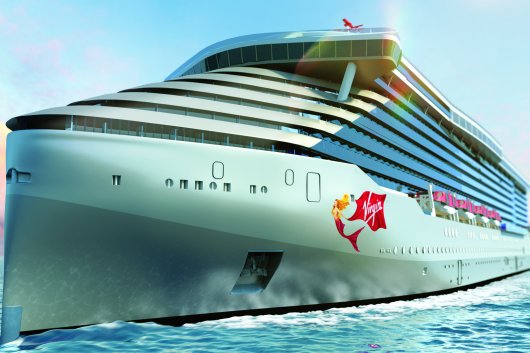
The initial Virgin Voyages vessel, due for delivery in 2020, will be the first of a fleet of
three ships designed and built with environmental responsibility in mind.
Each of the 110,000-gross-tonne vessels will feature ABB's Azipod propulsion - a gearless steerable propulsion system where the electric drive motor is in a submerged pod outside the ship hull. The technology is said to reduce fuel consumption by up to
15 percent compared to traditional shaftline propulsion systems.
"Making Virgin Voyages environmentally sustainable is central to our vision and we are delighted ABB's Azipod propulsion will help us achieve that goal. Combined with excellent maneuverability, it was a natural choice for our ships," said
Stuart Hawkins, Senior Vice President, Marine and Technical Operations for Virgin Voyages.
"Azipod electric propulsion stands for innovation and efficiency like no other propulsion system and is fundamental to our vision of electric, digital and connected shipping," commented
Peter Terwiesch, president ABB's Industrial Automation division.
"Based on 25 years of experience and development, our Azipod propulsion technology continues to lead ships into the future of e-mobility, underpinning our commitment to a technology with superior performance, reliability, safety and environmental profile."
Two
Azipod XO units, with a combined propulsion power of 32 MW (43,000 HP) will propel each of the three ships. In addition to energy efficiency, Azipod XO units - where 'X' stands for 'next generation' and 'O' for open water operation - are designed to provide high manoeuvrability and minimal noise.
Each vessel will feature ABB's complete electric power plant concept – a solution encompassing electricity generators, main switchboards, distribution transformers and a remote control system for maneuvering the Azipod units from the bridge.
The combination of Azipod propulsion and ABB's electric power plant concept makes it possible to configure all of the equipment for optimized performance, resulting in increased efficiency and lower emissions, ABB says.
In line with ABB's 'Electric. Digital. Connected.' approach that envisages shipping's digital and connected future, these vessels will have the capability to connect to the ABB Ability Collaborative Operations Centers infrastructure. This network uses remote equipment monitoring and data analytics to enable predictive maintenance, planned interventions or even remote technical support.
The four-stroke engines powering the electricity generators - four per vessel - will be equipped with ABB's TPL-C turbochargers, designed to handle demanding operations and provide reliability and efficiency to large cruise ships.
All three vessels will be 278 metres long and 38 metres wide. They are to be built at the Fincantieri shipyard in Genoa, Italy, with the second and third vessel deliveries scheduled for 2021 and 2022 respectively.
Since the first installation over 25 years ago, ABB claims Azipod propulsion has saved approximately
700,000 tonnes of fuel while clocking up close to 15 million running hours at an impressive availability rate of 99.8 percent. In March 2018, Azipod propulsion secured its 100th contract for powering a cruise ship.
The units' ability to turn in all directions increases cruise ships access to ports without tug assistance. Options for Azipod propulsion now span 1.5MW to 22MW.