Mon 2 Feb 2009, 09:37 GMT

Stolt-Nielsen hit by drop in bunker surcharges


Company says $33.1m decrease in revenue is partly due to steep decline in surcharges.


Norwegian shipping group Stolt-Nielsen S.A. has said the $33.1 million decline in revenue it experienced during the fourth quarter of 2008 was partly due to a steep decline in bunker surcharges.

The company saw revenue during the last three months of last year drop to $489.5 million, from $522.6 million, which it said reflected a sharp drop in bunker surcharges, softening market conditions and the impact of hurricanes in the U.S. Gulf.

Meanwhile, net profit attributable to shareholders was $52.6 million, up from $42.3 million, reflecting a net benefit from the reversal of prior year tax provisions of $9.5 million in the fourth quarter, the company said.

Stolt Tankers and Stolthaven Terminals reported a decrease in operating profit, due primarily to the combined impact of the weakening business conditions and the effects of the hurricanes in the U.S. Gulf.

Stolt Tank Containers results reflected improved margins and continued strength in overall demand, though shipment volumes began to decline sharply late in the quarter.

Commenting on the Company's results, Niels G. Stolt-Nielsen, Chief Executive Officer said: "While SNSA's performance in 2008 reflected four consecutive quarters of good results, the effects of softening demand and the steep decline in global economic activity have now begun to have a tangible impact on our operations. Business conditions continued to deteriorate in December, which strongly suggests that SNSA's relatively favorable fourth-quarter results should not serve as an indication of our near-term performance."

"Given the current global economic environment, we see little cause for optimism. We became concerned about the outlook well over a year ago and as a result took a number of actions, including securing financing of our newbuildings, the accelerated recycling of five ships, and the sale of one ship. We expect 2009 and 2010 to be extremely challenging years in our industry, and we are planning accordingly. Considering these and other factors, I believe SNSA, with its experienced team and strong position in each of its markets, is well prepared to manage through this crisis."

Norway 

Participants of SSA training course. SSA launches green fuels training course ahead of low-carbon transition  

The Singapore Shipping Association has introduced a course covering alternative marine fuels and emissions frameworks.

The Nautical Institute (NI) logo. The Nautical Institute launches bunkering and engineering assessors course  

New programme targets behavioural competency and human factors in high-risk shipboard operations.

Quasar Conservation vesel render. ABB retrofits expedition yacht with hybrid-electric propulsion for Galápagos operations  

The conversion will make the 1970s-built vessel the first hybrid-electric yacht of its type in the archipelago, says ABB.

Grande Svezia vessel. Grimaldi christens ammonia-ready car carrier Grande Svezia at Swedish port  

Grimaldi Group's new PCTC, delivered in December 2025, claims fuel savings of up to 50%.

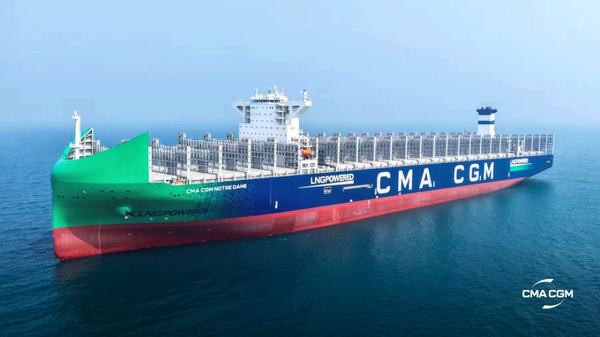
CMA CGM Notre Dame vessel. CMA CGM Notre Dame sets sail as world’s largest LNG-powered container ship  

The 24,212-teu vessel leads a series of ten next-generation French-flagged ships.

IMO building with national flags. IMO seeks head of climate action and clean air section  

London-based role to oversee GHG emissions reduction and air pollution prevention from ships.

Sustainable maritime fuel supply chain report graphic. Strategic port hubs could accelerate sustainable marine fuel adoption, report finds  

Lloyd’s Register Maritime Decarbonisation Hub identifies priority ports and trade routes for alternative fuel infrastructure.

Illustration of a high-speed dual-fuel engine. Nanni develops first high-speed methanol dual-fuel engine with ScandiNAOS  

French manufacturer tests John Deere-based genset running on 70% methanol, 30% diesel blend.

Capital's LNG dual-fuel tanker vessel. New Times Shipbuilding delivers LNG dual-fuel tanker to Capital  

Chinese shipyard hands over 112,500-dwt vessel capable of running on LNG or conventional fuel.

Fuel for Thought: LPG report. Lloyd’s Register examines LPG as marine fuel in new research report  

Classification society evaluates LPG emissions benefits, safety considerations and technology readiness for shipping.