Tue 17 Apr 2018, 12:48 GMT

Rivertrace launches wash water monitor for scrubbers


Smart ESM monitor measures PAH, turbidity, temperature and pH on open-loop, closed-loop and hybrid scrubber systems.


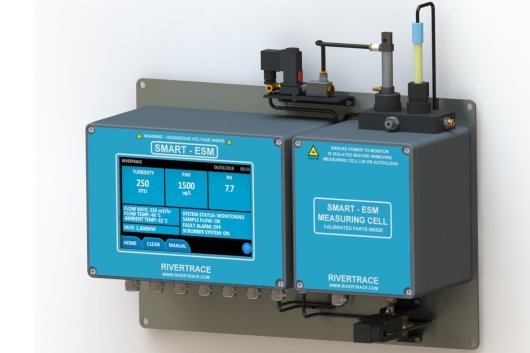
The Smart ESM wash water monitor for ship exhaust gas cleaning systems was launched at the Sulphur Cap 2020 event in Amsterdam on April 17, 2018.
Image credit: Rivertrace
Rivertrace, a company with over 30 years' experience of oil-in-water monitoring, has launched its Smart ESM monitor at the Sulphur Cap 2020 Conference, Awards and Exhibition, being held in Amsterdam this week.

With the pending sulphur cap regulations in sight, one solution for shipowners to ensure compliance will be to install an exhaust gas cleaning system (EGCS), also known as scrubbers. Wet scrubber systems use wash water to remove the pollutants from the exhaust gas, and the wash water being discharged must be monitored at all times to ensure it is within the limits set by the regulating body.

The Smart ESM developed by Rivertrace is a wash water monitor designed for both the inlet and outlet of a wet exhaust gas cleaning system, measuring and recording PAH, turbidity, temperature and pH on open-loop, closed-loop and hybrid scrubber systems.

Rivertrace says the Smart ESM is fully compliant with IMO MEPC 259(68) guidelines for exhaust gas cleaning systems, whilst also provides reliable information to ensure compliance with worldwide sulphur oxide (SOx) limits.

The Smart ESM has a large 10-inch touch screen display. Data is relayed to the ship's main control system via an ethernet connection and 4-20 mA analogue outputs and has the ability to interact with other systems using Modbus protocols. The monitor provides onscreen graphs showing either live data or historic hourly, daily or weekly figures. Data can be emailed automatically anywhere in the world for accurate record keeping. The monitor also provides automatic cleaning of the optical path to ensure continual accuracy.

The Smart ESM has been developed to support all scrubber systems and includes a broad selection of inbuilt analogue and digital outputs.

Mike Coomber, Managing Director of Rivertrace said: "We are excited to launch the Smart ESM, which is the latest in our innovative range of monitoring products. The 2020 global sulphur limit is an important milestone for our industry and we are delighted that we are able to offer such a positive contribution to ensuring the ongoing compliance to new regulations which will reduce harmful impacts of shipping on the environment. We are working in partnership with a number of OEMs ensuring we supply a complimentary and complete solution."

Zhoushan waterfront at night. Zhoushan becomes world's third-largest bunker port  

Chinese refuelling hub overtakes Antwerp-Bruges and Fujairah to take third place in 2025.

Meyer Turku's net-zero vessel concept render. Meyer Turku completes net-zero cruise ship concept with 90% emissions cut  

Finnish shipbuilder’s AVATAR project vessel design exceeds IMO targets using technologies expected by 2030.

Uni-Fuels Logo. Uni-Fuels renews ISCC certification after first biofuel delivery  

Singapore-based marine fuel supplier completes inaugural ISCC-certified biofuel delivery, supporting EU regulatory compliance.

Close-up of a vessel bow at port. Iberian Peninsula poised to overtake the Netherlands as Europe’s top LNG bunkering hub  

Spanish and Portuguese ports quadrupled ship-to-ship LNG supply in two years, data shows.

FOBAS Fuel Insight Fuel Quality report H2 2025 cover. Lloyd’s Register reports sharp rise in marine fuel quality failures in late 2025  

December recorded the highest monthly off-specification cases, driven by sulphur, catalytic fines and flash point issues.

Bio-LNG bunkering infrastructure. Bahía de Bizkaia Gas launches bio-LNG loading service after ISCC certification  

Spanish regasification terminal begins offering renewable fuel loading for trucks and vessels in January 2026.

Grande Michigan vessel. Grimaldi takes delivery of eighth ammonia-ready car carrier Grande Michigan  

The 9,000-ceu vessel features 50% lower fuel consumption and 5 MWh battery capacity.

Graphic of the ABS logo with a blue background and light effects over a globe. ABS consortium delivers ammonia fuel safety report for EMSA  

Report expands on IMO interim guidelines and highlights need for comprehensive understanding of ammonia properties.

Green Future vessel. NYK operates methanol-fuelled bulk carrier for BHP, claims 65% emissions cut  

Green Future becomes first oceangoing bulk carrier to use low-carbon methanol fuel.

Genesis Sea vessel. Ulstein Verft completes sea trials for Genesis Sea CSOV ahead of spring delivery  

The 89.6-metre vessel features hybrid battery propulsion and preparations for green methanol operation.