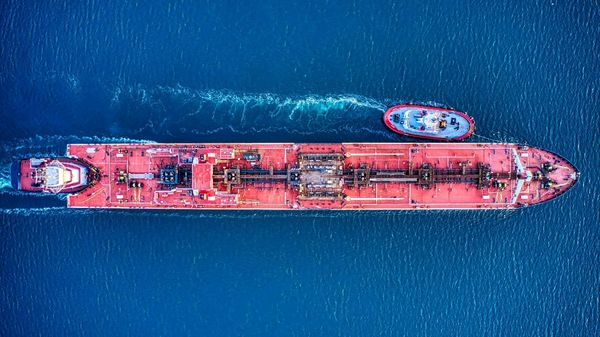
Aegean Marine Petroleum Network Inc. has deployed the bunkering vessel
MT Lefkas to Port Elizabeth, South Africa, and registered it with the South African flag. The move follows the launch of the company's bunkering operation in Algoa Bay in March.
Last week, the MT Lefkas held aloft the flag of South Africa for the first time; it will now be officially stationed at Port Elizabeth to supply fuel to Aegean's clients. The vessel will effectively be the runner between Aegean's other bigger tanker station offshore and passing fleets requiring fuel supplies.
Aegean has been granted permission by the South African Maritime Safety Authority (SAMSA) to deliver bunker fuel and perform ship-to-ship transfers (STS) in Algoa Bay. It has also obtained bunkering licences from Transnet National Ports Authority (TNPA) in Port Elizabeth and Coega.
The supply operation is being run locally by
Aegean Bunkering Marine Services Pty Ltd (ABMS), which is 26 percent owned by a South African partner.
Aegean is currently supplying both 380 centistoke (cSt) intermediate fuel oil (IFO) and marine gas oil (MGO). Deliveries are being carried out by barge at anchorage, thus vessels are not required to berth in port; this can reduce deviation and waiting times, and eliminate port expenses.
Every year, around 12,000 vessels call at South African ports and Aegean hopes to attract passing ships with its new operation.
The natural Bay of Algoa, which includes two ports, Port Elizabeth and Coega, is the first bay in South Africa where the bunkering of vessels at anchorage is officially accepted and where Aegean operates.
Algoa Bay's anchorage area lays north-east of the Cape of Good Hope. Access to the bay from the high seas requires very little deviation (8 to 10 miles) for passing ships rounding South Africa. Up to 30 miles away from shore, the water depth reaches about 100 metres, ideal for anchorage deliveries.
Port Elizabeth has a container terminal, one of only five in South Africa - the others being in Durban, East London, Ngqura and Cape Town. It is also equipped to handle dry bulk, bulk liquid and general cargo. Passenger ships usually make use of one of the fruit terminal berths when calling at the port.
Additionally, being a relatively congestion-free port has allowed Port Elizabeth to maintain high cargo handling rates and fast and efficient ship turnarounds.
Commenting on the deployment of the MT Lefkas, Port of Port Elizabeth Manager,
Rajesh Dana, said: "The Port of Port Elizabeth is proud and honoured to be the registered home port for the Aegean vessel, MT Lefkas. We congratulate Aegean for the registration of the vessel on the South African flag and look forward to the opportunities that this will present to Nelson Mandela Bay and South Africa."
Sobantu Tilayi, acting SAMSA chief executive officer, said the positioning of the Aegean vessel in Port Elizabeth met a number of socio-economic objectives, among which was to strategically expand the location of fuel resources around the country, which up until now has been largely confined to the port of Durban.
Rajesh Dana added that Port Elizabeth had the potential to be a services port for a range of maritime activities, including the cruise industry. He highlighted the proximity between Port Elizabeth and Port Coega and the fact that the area enjoys protection from weather and ocean currents.