Mon 25 Apr 2016, 10:22 GMT

Fuel management training agreement signed


Veritas Petroleum Services and Seagull Maritime to provide fuel management e-learning solutions.


Veritas Petroleum Services (VPS) and Seagull Maritime AS have signed a collaborative agreement to bring state-of-the-art fuel management training to the maritime industry.

First conceived to plug a gap in the knowledge and experience of ship managers and vessel crews in fuel management, a computer-based training tool is now being developed to provide e-learning onboard and ashore.

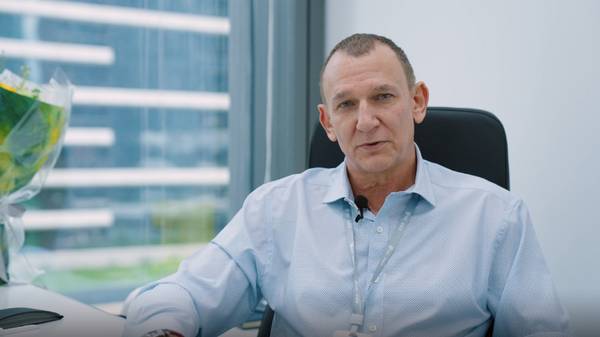
"As the pioneer of fuel quality testing and analysis with more than three decades of global experience, we have noticed a pressing need for seafarers to fully understand fuel quality issues and learn how to handle such challenges. At the same time, we have also observed that ship crew are invariably short-handed and hard-pressed for time," said Gerard Rohann, CEO of VPS.

"Hence, now more than ever before, such fuel-related knowledge and capabilities are increasingly becoming the keys to mitigating engine breakdowns and unplanned operational downtime. We will give our clients a competitive edge by bringing carefully designed e-learning to their crew and staff, anywhere, anytime, and by leveraging technology and combining our unique competencies with those of Seagull Maritime.

"As the leading provider of computer-based training systems to the shipping industry worldwide with 9500 user sites, it is logical for us to gravitate toward VPS, the recognised leader in fuel testing and inspection, to provide e-learning on total fuel management solutions for our customers," remarked Oscar Johansen, Chairman of Seagull Maritime AS.

The first module of the comprehensive computer-based educational and training system is to focus on fuel sampling, testing and bunkering, and is expected to be ready for the shipping industry by the middle of the year.

Veritas Petroleum Services (VPS) delivers testing, inspection and advisory solutions that are designed to help customers achieve improvements to fuel management, fuel cost, operational efficiency and marine fuel regulatory compliance. The company introduced the first commercial bunker fuel testing and bunker quantity surveys for ships in 1981 and 1987, respectively.

Seagull Maritime AS is a provider of computer-based training systems for seafarers worldwide, and offers a library of e-learning and onboard courses designed for regulatory compliance and improved seafarer knowledge.


China flag. Zhejiang’s first methanol-powered container ship launches in Jiaxing  

Vessel uses methanol propulsion technology to reduce carbon dioxide emissions by 90%.

TES flag with a model vessel in the background. TES joins SEA-LNG coalition to advance e-methane as marine fuel  

Green energy company targets 1m tonnes annual e-methane production by 2030 for shipping decarbonisation.

Ethanol and methanol workshop graphic. IBIA to host workshop on ethanol and methanol marine fuels during Singapore Maritime Week  

Half-day event will examine alcohol-based fuel pathways and integration into shipping’s multi-fuel landscape.

Steel-cutting ceremony for 13,000-dwt vessel. ROC begins construction of second chemical tanker for Essberger  

Chinese shipbuilder holds steel-cutting ceremony for 13,000-dwt methanol-ready vessel with ice class capability.

Norsepower and CHIC sign agreement. Norsepower and Cosco Shipping Heavy Industry Equipment sign wind propulsion cooperation agreement  

Wind propulsion technology provider partners with Chinese shipyard to scale rotor sail production.

Wärtsilä logo. Shipping firms struggle to prioritise decarbonisation investments amid regulatory uncertainty, Wärtsilä survey finds  

Survey of 225 maritime executives reveals 70% say uncertainty hinders investment decisions despite regulatory pressure.

IMT Isca G-Flex vessel render. Longitude Engineering unveils IMT Isca G-Flex PSV design with alternative fuel capability  

Naval architecture firm launches adaptable platform support vessel design based on the IMT-984 G-Class hull.

Philippos Ioulianou, EmissionLink. Shore power infrastructure is key to cutting ferry emissions in European cities, says EmissionLink  

Port electrification is needed to enable vessels to switch off engines at berth, reducing urban pollution.

Maritime and Port Authority of Singapore logo. Singapore prioritises maritime resilience amid geopolitical uncertainty, eyes digitalisation and green fuels  

MPA chief outlines the sector’s adaptation to supply chain disruptions while advancing automation and alternative fuels.

Aerial photograph of Zhoushan Island. China exports first domestically blended biofuel for marine use from Zhoushan  

A vessel carries 2,600 tonnes of biofuel blend to Qingdao Port for international ship refuelling.