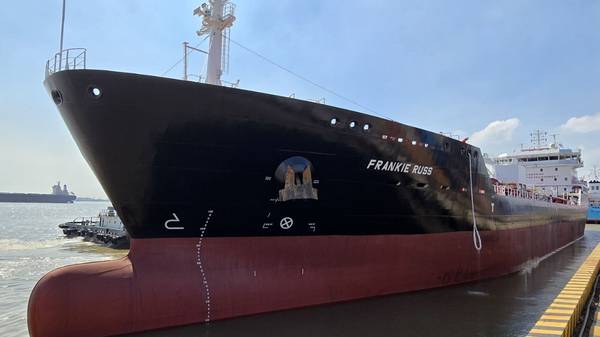
Waterfront Shipping Company Ltd is to charter seven methanol-fuelled vessels between April and October.
The seven 50,000-deadweight-tonne vessels are built with MAN B&W ME-LGI 2-stroke dual-fuel engines that can run on methanol, fuel oil, marine diesel oil, or gas oil.
With growing demand for cleaner marine fuel to meet environmental regulations, methanol is an alternative fuel for ships that can meet the industry's stringent emissions regulations. It is a biodegradable, clean-burning marine fuel that reduces emissions such as particulates, sulphur oxides and nitrogen oxides.
"Working with our partners to advance new, clean technology is an important and innovative step in the right direction. Investing in methanol-based marine fuel reinforces our commitment to invest in sustainable technology that not only provides environmental benefits but also an economically viable alternative marine fuel. The cost to build new and convert existing vessels to run on methanol is significantly less than alternate fuel conversions," stated Jone Hognestad, President, Waterfront Shipping.
Waterfront Shipping will charter the seven vessels to replace older vessels and expand its fleet. Two of the vessels are owned by WL, two vessels are jointly owned by Marinvest and Waterfront Shipping, and the remaining three vessels are owned by MOL. The ships were built by Hyundai Mipo Dockyard and Minaminippon Shipbuilding Co., Ltd.
The first three are being delivered in April, with the remaining four scheduled to be delivered by October 2016.
"MAN developed these 2-stroke engines in response to interest from the shipping world to operate on alternatives to heavy fuel oil and meet increasingly stringent emissions regulations. To hedge the risk of fuel price volatility, the vessels can switch between fuels, and operate cost-effectively," stated Ole Grøne, Senior Vice President, Head of Marketing and Sales, MAN Diesel & Turbo.
The traditional ship-naming ceremony for two of the dual-fuel vessels, owned by WL with the second as a joint venture with Waterfront Shipping/Marinvest, is due to take place in South Korea on April 18; officially taking delivery on April 20 and 28.
"This investment is very much aligned with our vision and leadership to supply safe and environmentally friendly transports. The ability to run on a sulphur-free fuel offers great potential and provides innovative solutions for the world's energy needs," commented Patrik Mossberg, Chairman, Marinvest.
"To be one of the shipping companies helping to lead this effort makes sense for our business. It's great to be part of an innovative solution," added Rolf Westfal-Larsen, President and CEO, Westfal-Larsen Management.
MOL is scheduled to take delivery of its dual-fuel vessel in Japan on April 22. "We are excited and proud of the delivery of our first vessel, installed with the first dual-fuel engine in Japan. We are pleased that our technical expertise has been utilized for this commemorative occasion. Having these vessels operating on methanol marine fuel provides shippers and port facilities with a practical and diversified fuel solution that meets today's and tomorrow's emission requirements," said Yoshikazu Kawagoe, MOL Managing Executive Officer (Technical).
Image: Mariline fuel tanker ship operated by Waterfront Shipping.