Thu 21 May 2015, 12:03 GMT

Global Vision Market Report


Market report from Global Vision Bunkers B.V.


WTI oil futures rose for the second straight session this morning, as concerns over a supply glut in the U.S. eased after data showed that crude inventories fell for the third consecutive week last week.

Oil futures at ICE and NYMEX recovered on Wednesday morning from their strong losses on Tuesday due to the bullish US oil inventory data as per API. Short covering was encouraged as the technical constellation was to be interpreted as neutral again after its selling signals on Wednesday morning. The Japanese GDP increased stronger than expected and supported oil futures. No considerable countermovement took place when oil prices decreased as analysts were of the opinion that there are many signs at the market which speak for a trend change. This fact prevented US dollar investments in in dollar negotiated oil futures. Gasoil was limited by its resistance at 595.00 USD and Brent by its 65.00 USD mark. The oil market stayed rather calm in the afternoon and prices consolidated in a rather narrow range while market players were waiting for the US oil inventory report as per DOE. The report was to be interpreted as bullish but oil futures' decreased in an initial reaction. But they changed direction near their first supports testing their strong resistances again in late trading. The FOMC minutes also supported oil futures as bankers indicated that an US interest rate hike in June is rather improbable. Nevertheless, oil futures weren't able to breach their resistances at 65.00 USD Brent and 595.00 USD Gasoil on Wednesday evening.

ICE Gasoil contract for May delivery settled at 592.75 USD on Wednesday, this is -0.50 USD below Tuesday's settlement. With some 58,000 deals the traded volume (front month) was about on average.

The stochastic indicator's lines at the Brent and the WTI chart already converge. Therefore, the bearish influence has been completely absorbed. Even the lines of the stochastic indicator at the Gasoil chart don't diverge anymore. This is why all these indicators are to be interpreted as neutral. The RSI has no direction providing influence this morning while the 7 day moving average and the 21 day moving average at the Brent chart sustainably crossed generating a selling signal. If this selling signal is confirmed at the WTI chart, technical selling pressure could increase again. First downward trends are to be seen at the Brent and the WTI chart which also include upward margins while Gasoil keeps rather consolidating. Therefore, we consider the technical constellation as neutral this morning.

U.S.

Nymex on average: Oil futures started strong this morning due to the bullish US oil inventory report and the breach of yesterday's resistance lines. The traded volume at NYMEX is about on average at this time of the day. Market players are waiting for the European financial and the forex markets to open and for economic indicators that are on the agenda today.

Forecast: Crude oil -1.1; Distillates +0.1; Gasoline +0.3 million barrels vs previous week.
DOE: Crude oil -2.7; Distillates -0.5; Gasoline -2.8 million barrels vs previous week.
API: Crude oil -5.2; Distillates +0.2; Gasoline -1.2 million barrels vs previous week.

Houston (ex-wharf indications 21-5)
380cst $344
180cst $484
MGO $656

New Orleans (ex-wharf indications 21-5)
380cst $352
180cst $407
MGO $609

Singapore (delivered indications 21-5)

WTI is gaining with +$0.36. Singapore paper is gaining with +$6.00 for 180cst with +$4.84 for 380cst for Jun, and for Jul 180 cst +$5.25 and 380cst with +$4.85 with MGO contracts Jun gaining with +$0.14 and in Jul with +$0.15. The cargo market is bearish with 180cst -$3.16, 380cst with -$2.77 and MGO with -$0.74.

380cst $356
180cst $376
MGO $576

Fujairah (delivered indications 21-5)

380cst $386
180cst $395
MGO $734

ARA (Amsterdam - Rotterdam - Antwerp)

Indications for delivered bunkers:
380cst : $338
MGO 0.1%S: $582

MGO  

American Bureau of Shipping (ABS) logo. ABS introduces nuclear-ready notation for marine and offshore assets  

The classification society has released what it describes as an industry-first notation to support future nuclear conversion of vessels and offshore assets.

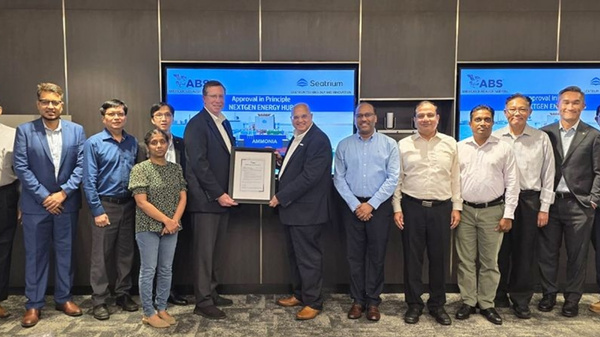
AiP handover ceremony for NEXTGEN Energy Hub (NGEH) design. ABS grants approval in principle for Seatrium’s NEXTGEN Energy Hub design  

The hub concept integrates ammonia bunkering, power generation and electric vessel charging in a single unit.

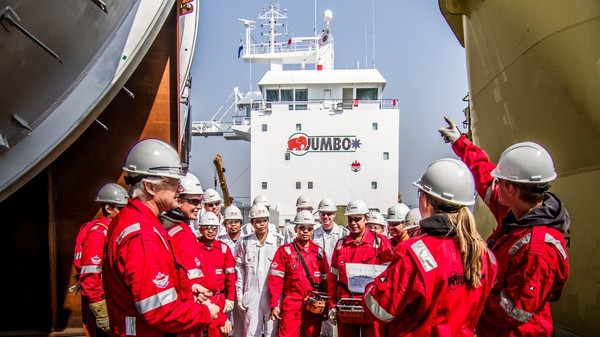
Jumbo Maritime crew aboard vessel. Jumbo orders two methanol-ready L-Class heavy lift vessels from Dajin Heavy Industry  

Dutch heavy lift specialist Jumbo signs newbuilding contract for two 25,000-dwt vessels.

China flag. Zhoushan completes first bonded bunker operation at Majishan port area  

The operation marks full fuel supply coverage across all general cargo terminals in Zhoushan's port system.

US dollar banknotes. Port of Long Beach launches $1m methanol bunkering challenge for oceangoing vessels  

A $1m prize aims to kick-start commercial methanol bunkering at one of North America's busiest ports.

Core Power, Athlos Energy, Deon Policy Institute and ABS logos. Greece floating nuclear study finds no fundamental barriers to implementation  

A PESTLE assessment of floating nuclear power plants in Greece identifies framework gaps, not feasibility barriers.

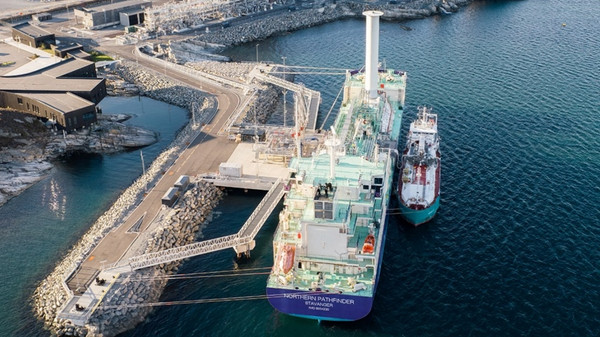
Northern Pathliner alongside Bergen LNG vessel. Molgas completes LNG cool-down and bunkering for Northern Pathliner at Northern Lights terminal in Norway  

Operation carried out at Øygarden facility, with K Line and Integr8 Fuels in the supply chain.

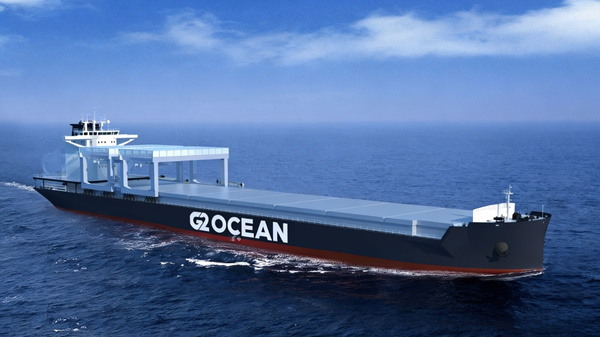
Rendering of a G2 Ocean OHGC vessel. G2 Ocean expands fleet with six future-fuel ready gantry crane vessels  

Open hatch specialist adds vessels and jet sail technology as part of a broad fleet renewal programme.

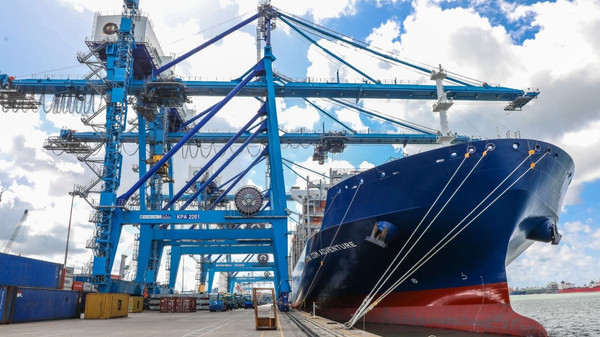
CMA CGM Adventure vessel at Port of Mombasa. LNG-powered CMA CGM Adventure makes first call at the Port of Mombasa  

Kenya Ports Authority receives its first large LNG-fuelled container vessel.

Liam Blackmore, Lloyd's Register. Maritime trio shapes IMO safety guidelines for ammonia as marine fuel  

Real-world operational experience feeds directly into new IMO ammonia fuel safety framework.