Fri 13 Feb 2015, 11:28 GMT

Global Vision Market Report


Market report from Global Vision Bunkers B.V.


Oil rose above $60 a barrel this morning for the first time this year, bringing its gain this week to almost 4 percent, supported by signs that deeper industry spending cuts may curb excess supply.

Like in the past few weeks, market fundamentals were still bearish for oil markets on Thursday. The technical indicators favoured tests of the downside as well. Even so, we had already forecast in our early morning news that the indicators might have no larger impact as the expiry of the Gasoil contract with February delivery and Brent with delivery in March might prompt investors to cover their short positions. And investors did so. Since the Gasoil contract expired in the early afternoon, oil futures already gained ground in the first half of the day. Many market participants still held short positions which they cut before the expiry of the contract. This generated technical bull pressure that temporarily waned in the early afternoon. The CEO of Royal Dutch Shell PLC warned that the oil boom might be over sooner than many market players might expect and that oil demand growth might outpace supply growth in 2015. Along with the sharply rising euro (vs. the dollar), the cold weather in the USA, the strike of refinery workers and further short covering ahead of the expiry of Brent (Thursday evening), a combination of bullish factors developed, adding to momentum at oil markets in the course of the afternoon. Futures exceeded several resistances, automatically triggering more technical buying orders and accelerating the rise. The Brent contract with delivery in April (new front month) was pushed up to the 60.00 USD-bar in late trade and so oil futures over all settled with considerable gains.

ICE Gasoil contract for March delivery settled at 562.50 USD on Thursday, this is 18.25 USD above Wednesday's settlement. With some 118,700 deals the traded volume (front month) was far above average.

The bias of the technical constellation has changed compared to yesterday. The lines of the stochastic indicator have crossed at the Brent and the Gasoil charts, providing fresh buying cues. This bullish signal hasn't been confirmed yet at the WTI chart. The RSI is still bearish at the Brent chart but it doesn't give any fresh signal. That is why the technical constellation points to more tests of the upside, with a neutral to bullish bias. Brent has meanwhile breached its former key-resistance at 60.00 USD but, so far, this hasn't generated more upward potential. If the stochastic indicator at the WTI chart confirms the buying signals it has already given at the ICE charts, the technical constellation would turn clearly bullish. The latest rise in oil futures was also due to short covering, however. Therefore, the stochastic indicator at the ICE charts might be skewed to the upside. The technical situation is thus rather unstable, the more so as the RSI might give a selling signal at the Gasoil chart as well if it drops below 70%.

U.S.

Nymex above average: Oil futures held steady in electronic trading this morning, rising above Thursday's highs. Brent has meanwhile climbed slightly above its key-resistance at 60.00 USD as well. The traded volume at NYMEX is above average at this time of the day. Investors are waiting for the European financial and the forex markets to open, for news concerning the strikes at US oil refineries and the economic indicators which are to be released today, especially the Eurozone's GDP.

Houston (ex-wharf indications 13-2)
380cst $333
180cst $401
MGO $627

New Orleans (ex-wharf indications 13-2)
380cst $339
180cst $374
MGO $618

Singapore (delivered indications 13-2)

WTI is gaining with +$4.25. Singapore paper is up with +$20.75 for 180cst with +$20.00 for 380cst for Feb, and for Mar 180 cst +$22.05 and 380cst with +$21.55 with MGO contracts Feb bullish with +$3.45 and in Mar with +$3.57. The cargo market is bullsh with 180cst +$2.12, 380cst with +$1.55 and MGO bearish with -$0.33.

380cst $349
180cst $370
MGO $551

Fujairah (delivered indications 13-2)

380cst $346
180cst $365
MGO $758

ARA (Amsterdam - Rotterdam - Antwerp)

Indications for delivered bunkers:
380cst : $323
MGO 0.1%S: $563

MGO  

Dubai skyline. Oilmar seeks senior bunker trader for Dubai office  

Experienced trader with proven P&L responsibility sought by UAE-headquartered firm.

CFD simulation of vessel with three eSAILs. ABS reviews bound4blue’s Pwind calculation methodology for eSAIL wind propulsion systems  

Independent review aims to ease regulatory compliance and accelerate adoption of suction sail technology.

Port of Rotterdam aerial view. Port of Rotterdam appoints new programme manager for bunkering  

Astrid Sonnevelt has a background in renewable products, business development and emissions reduction.

Merlion statue in Singapore. Oilmar seeks bunker trader for Singapore office  

Marine fuels trading role open to mid-level and senior-level candidates.

Floating hydrogen terminal render. Höegh Evi and Nord Gas Solutions complete ammonia-to-hydrogen cracking tests in Norway  

Pilot cracker achieves 99.5% hydrogen purity, supporting floating terminal deployment plans across Europe.

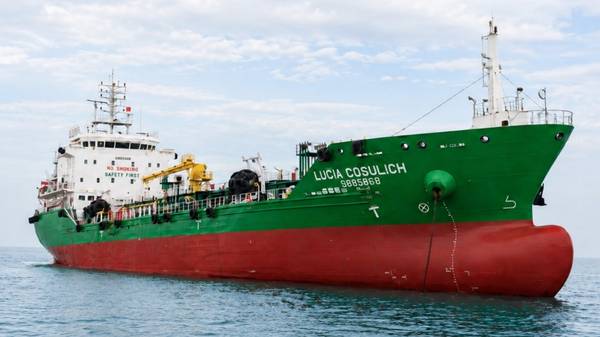
Lucia Cosulich vessel. Fratelli Cosulich Marine Energy takes delivery of second methanol-ready bunker tanker  

Lucia Cosulich is second of four sister vessels in the group’s fleet expansion programme.

Grimaldi ro-ro passenger vessel render. AYK Energy secures nine-vessel battery deal with Grimaldi Group  

New ro-pax vessels will feature multi-fuel engines capable of running on methanol.

World Fuel logo. World Fuel hiring Korean-speaking bunker trader for Singapore hub  

Bunker trader sought to cover Korea and the wider region.

Aerial view of a container vessel. EU ETS 2026 review raises cost predictability concerns for European shippers  

European Shippers' Council warns that carbon market reforms could affect logistics planning and competitiveness.

Grande Oriente vessel. Grimaldi takes delivery of 12th ammonia-ready car carrier Grande Oriente  

Naples-based firm says its latest PCTC halves fuel consumption compared with earlier-generation vessels.