
 |
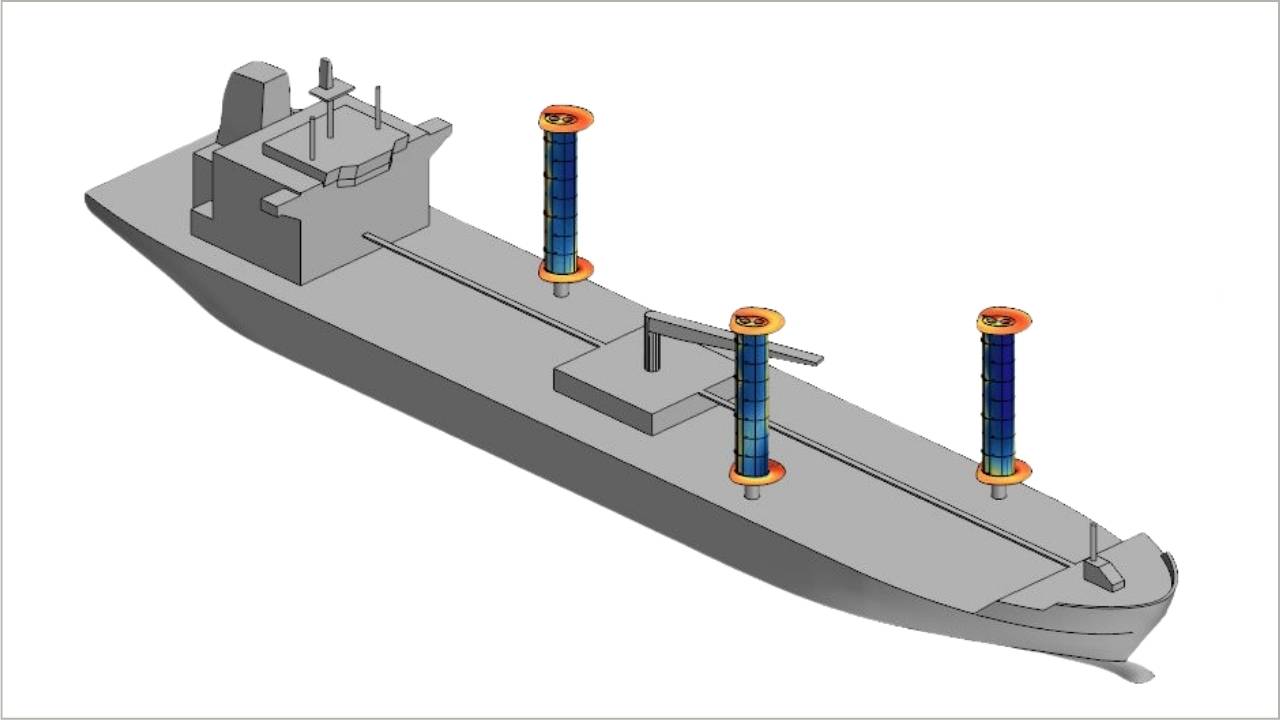
Wind propulsion technology company bound4blue has announced that classification society ABS has completed a review of its proprietary force matrix methodology for calculating Pwind values — a measure used to quantify the contribution of wind-assisted propulsion systems under international maritime regulations.
The review adds to a number of prior classification society assessments of bound4blue’s methodology. According to the firm, the independent assessment is intended to give shipowners greater confidence when seeking to quantify the regulatory and financial benefits of installing its eSAIL suction sails, and to support compliance with frameworks including EEDI, EEXI, and the FuelEU Maritime regulation’s Wind Reward Factor.
Methodology and approach
Bound4blue’s approach combines computational fluid dynamics (CFD) modelling with wind-tunnel-validated tools to generate vessel-specific aerodynamic force matrices — designed to avoid the need for full-scale testing while accounting for sail-to-sail and ship-to-sail aerodynamic interactions. The methodology — using a combination of Reynolds-averaged Navier-Stokes (RANS)-based CFD simulations, wind-tunnel model tests, and potential-based interference analysis — was reviewed in accordance with applicable IMO regulations and ITTC guidelines.
Verified Pwind values derived from the methodology can be incorporated into EEDI and EEXI calculations and used to determine FuelEU Maritime’s Wind Reward Factor. Such methodologies do not account for factors such as fuel savings or hydrodynamic performance, but do indicate reduced compliance costs, Bound4blue notes.
Industry perspectives
José Miguel Bermúdez, CEO and co-founder of bound4blue, stated: “In a transitioning and increasingly complex industry, third-party reviews deliver both certainty and transparency for shipowners considering suction sail installations. That is a vital factor in accelerating the adoption curve for advanced wind propulsion technology.”
Bermúdez added: “Independent review from leading class societies such as ABS gives stakeholders confidence that the aerodynamic methodology behind our Pwind calculations is robust, credible, and suitable for regulatory use. This creates a clear pathway to compliance, making it easier for shipowners to capture not only the environmental benefits of wind propulsion, but also the significant financial advantages available through today’s regulatory frameworks.”
Alberto Llopis, Head of Aerodynamics at bound4blue, explained: “The focus of this review is the generation of accurate aerodynamic polars and force matrices that represent how eSAIL systems perform under different wind conditions. Our methodology combines sophisticated CFD calculations and in-house tool development with extensive wind-tunnel validation to provide insights into complex aerodynamic interactions. We’re delighted to have worked with ABS, as we continue in our quest to build confidence and credibility for wind power among shipowners, financiers, charterers, and other key stakeholders.”
Michael Kei, ABS Vice President of Technology, remarked: “ABS is committed to supporting the safe adoption of innovative technologies that help the industry comply with evolving regulations. We are pleased to work with bound4blue on their technology, helping provide a clear and consistent framework for evaluation of wind-assisted propulsion systems and supporting informed decision-making across the industry.”
Deployment and fleet
Bound4blue claims its eSAIL systems generate forward thrust up to seven times greater than conventional rigid sails of the same size. The mechanically simple, non-ATEX units are said to be suitable for a range of vessel types, including tankers, bulkers, ro-ros, cruise vessels, ferries, gas carriers, and general cargo vessels.
The eSAIL systems have been deployed on 11 ships, with a further seven in its order book, representing more than 50 eSAIL units in total. Clients include Eastern Pacific Shipping, Maersk Tankers, Odfjell, Klaveness Combination Carriers, BW Epic Kosan, and Louis Dreyfus Company.
Founded in 2014 and headquartered in Cantabria, Spain, bound4blue has offices in Barcelona, Singapore, Shanghai, and Suzhou.

|
World Fuel seeks marine fuel sales executive in Singapore
Role requires more than five years' experience in bunkering, trading, energy or commodities. |
|
|
|
||
|
MISC names first of three new LNG carriers for QatarEnergy charter deal
Th'ailib, chartered to QatarEnergy for 15 years, extends MISC's long-term LNG fleet partnership with the energy producer. |
|
|
|
||
|
AYK Energy to supply batteries for Kongsberg Maritime’s electric Svitzer tugs
Battery maker AYK Energy expands its workboat portfolio with a deal to power four fully electric Svitzer TRAnsverse tugs. |
|
|
|
||
|
Wärtsilä to supply dual-fuel engines for 12 CMA CGM container ships
Wärtsilä will deliver 36 LNG dual-fuel engines for a dozen new 18,000-TEU container vessels being built for CMA CGM. |
|
|
|
||
|
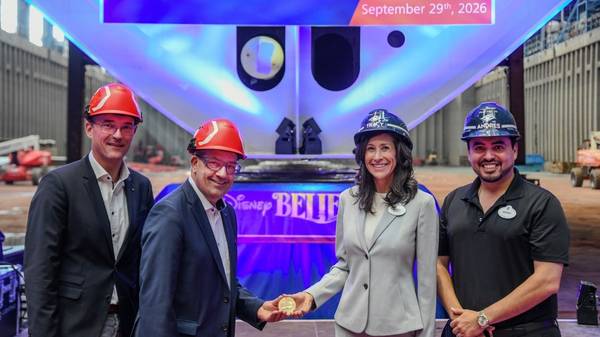
Keel-laying ceremony held for LNG-powered Disney Believe at Meyer Werft
Construction starts on second gigablock of Disney Believe, the fourth vessel in Disney Cruise Line’s Wish class. |
|
|
|
||
|
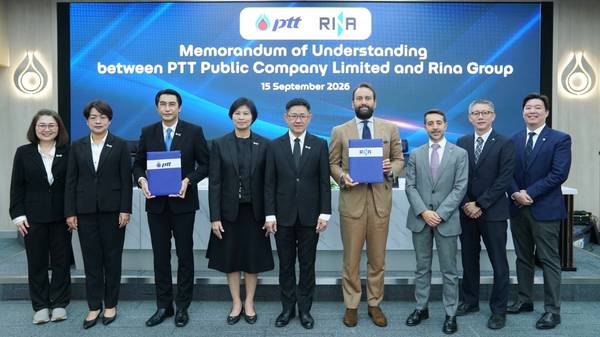
RINA and Thailand’s PTT sign MoUs to collaborate on decarbonisation technologies
Agreements establish a research and knowledge-sharing framework covering alternative fuels, hydrogen readiness and vessel electrification across the energy and maritime sectors. |
|
|
|
||
|
IBIA to host ethanol marine fuel workshop in New York
Limited-capacity session will examine ethanol’s commercial, technical and regulatory prospects as a shipping fuel. |
|
|
|
||
|
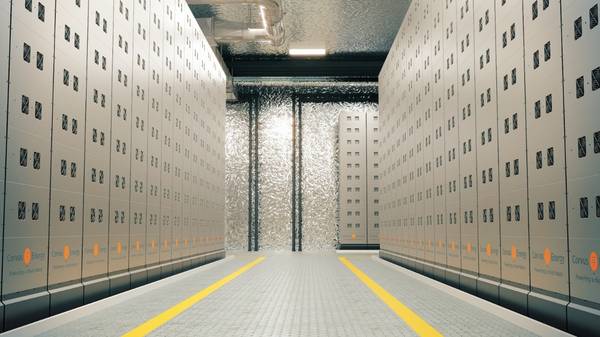
Corvus Energy’s Blue Whale NxtGen battery system gains DNV type approval
DNV approval confirms the safety and performance of Corvus Energy’s large-scale battery system for ferries, cruise ships and offshore vessels. |
|
|
|
||
|
PMG Energies appoints Jessie Ng as bunker trader in Singapore
Bunker firm adds experienced trader to Singapore team. |
|
|
|
||
|
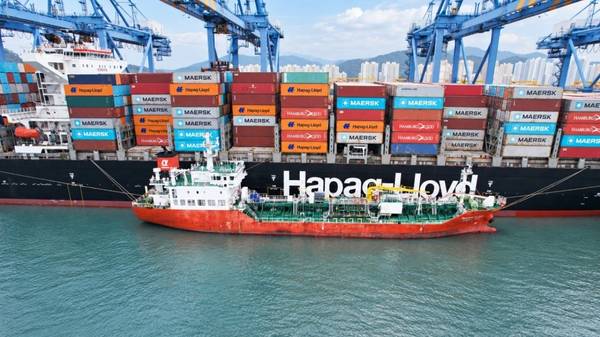
Hapag-Lloyd completes simultaneous-operations biomethanol bunkering in Busan
Container line bunkers ISCC EU-certified biomethanol from Goldwind during SIMOPS, advancing its 2024 supply agreement. |
|
|
|
||
| ABS, HD KSOE and Siemens partner on digital twin technology for ammonia-fuelled ship safety [News & Insights] |
| Nuclear-powered LNG carriers cost more upfront but cut lifetime fuel bills, ABS-backed study finds [News & Insights] |
| ABS grants design approval for ammonia bunkering vessel from HD HHI and HD KSOE [News & Insights] |
| ABS grants technology qualification approval for FPSO fuel cell system [News & Insights] |
| ABS grants Hanwha Ocean approval for dual-fuel tank enabling LNG-to-ammonia switch [News & Insights] |
