Fri 14 Mar 2014, 13:11 GMT

Study highlights safety concerns over LNG-fuelled ships


Report says there are 'safety concerns' over the rise in the number of ports with LNG bunkering facilities that will have never previously handled LNG.


A new report by Allianz Global Corporate & Specialty SE (AGCS), entitled the Safety and Shipping Review 2014, has highlighted the rise of LNG-fuelled vessels as an emerging risk for the shipping industry.

The review points out that the use of liquefied natural gas (LNG) to power ships is expected to dramatically increase by 2020, adding that there are "safety concerns" over the rise in the number of ports with LNG bunkering facilities that will have never previously handled LNG.

According to the report, which analyzes reported shipping losses of over 100 gross tons, shipping losses continued their downward trend with 94 losses reported worldwide in 2013, coming in below 100 for only the second time in 12 years.

Losses declined by 20 percent from 2012 when there were 117 reported losses. The 2013 accident year also represents a significant improvement on the previous 10-year loss average with total worldwide shipping losses declining 45 percent since 2003.

"More than 90 percent of global trade is carried by sea, according to OECD statistics. The safety of international shipping vessels and routes is critical to the health of the global economy," said Tim Donney, Global Head of Marine Risk Consulting. "While the long-term downward trend in shipping losses is encouraging, there is more work to be done to improve the overall safety of these vessels as well as their cargo, crew and passengers, especially in Asian waters. As an insurer we are always concerned about recognized issues such as training and safety management. Human error is not something we can ignore and lack of skilled workforce is still an issue, but we also need to be alert for new risks as the industry continues to develop."

More than two years after the Costa Concordia disaster, improving passenger ship safety continues to be a priority for the marine industry, with 2014 likely to see the 100th loss of a passenger vessel since 2002.

North American waters report safe year

The U.S. eastern seaboard region did not register a total loss during 2013, but has incurred 45 losses since 2002. The North American west coast region reported only one total loss during 2013, the same as during 2012. There have been 861 shipping casualties/incidents in the North American west coast region since 2002 – the ninth highest overall globally.

Asia saw highest number of marine losses

According to the report, more than a third of 2013's total losses were concentrated in two maritime regions. As in 2012, the South China, Indo China, Indonesia and the Philippines region saw the highest number of losses (18 ships), closely followed by the seas around Japan, Korea and North China (17 ships).

Around the world, more than a third of the vessels lost were cargo ships with fishery and bulk carriers the only other type of vessels to record double-digit losses. The total loss of two bulk carriers in Asian waters in 2013, Harita Bauxite and Trans Summer, highlighted the importance of proper cargo handling and stowage of bulk cargoes. AGCS experts believe high moisture content leading to destabilization of the cargo to be the primary cause of the accidents.

Oil pollution and prevention a priority in U.S. waters

With the 25th anniversary of the Exxon Valdez oil spill, one of the largest oil catastrophes in U.S. history, approaching, oil pollution prevention is a significant concern in the U.S. In 2013, a regulation was passed requiring owners of vessels -- both foreign and domestic -- over 400 gross tons to submit an oil spill response plan to the U.S. Coast Guard.

Piracy attacks still a concern

In 2013, piracy attacks declined 11 percent to 264 reported incidents worldwide, according to International Maritime Bureau statistics; 106 of these occurred in Indonesia, which has seen a 700 percent increase in attacks since 2009.

An emerging piracy hotspot with more organized crime is the Gulf of Guinea/West Africa with 48 incidents in 2013, accounting for 18 percent of all attacks worldwide. Piracy attacks in Somalia have declined dramatically with only seven incidents in 2013 compared with 160 attacks in 2011.

Emerging Risks

An increasingly difficult operating climate for ship operators has forced a number of innovations, including larger ship sizes to capitalize on economies of scale, the use of alternative fuels and changes in ship designs. At the same time, more economical trading routes are fast appearing in Arctic regions during the summer months, but these present their own set of challenges.

Emerging risks identified in the 2014 report include:

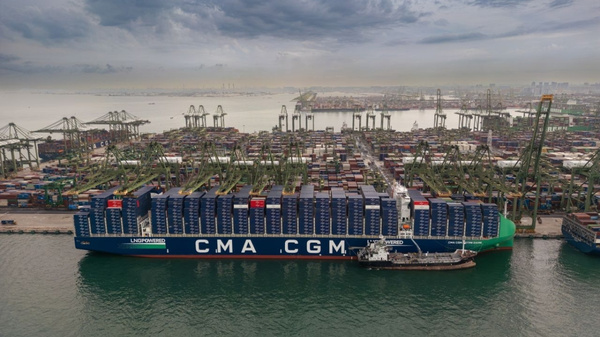
Vessel size: Last year marked the arrival of the largest container vessel on record, over 400 meters long and boasting capacity in excess of 18,000 teu. This trend is set to continue. AGCS estimates capacity grows by around 30 per cent every four to five years, meaning the arrival of 24,000 teu carriers can be anticipated around 2018. These 'mega ships' pose unprecedented risks and challenges in terms of operating safety and salvage efforts.

Rise of LNG-fuelled vessels: Use of liquefied natural gas to power ships is expected to dramatically increase by 2020. There are safety concerns, however, as the industry will see the rise of ports that have never previously handled LNG providing bunkering stations on dock.

Arctic trading routes: According to the IMO, there has been a tenfold increase in the number of vessels using the Northern Sea route during recent years, with 46 ships recorded in 2012, compared with 34 in 2011 and only four in 2010. Shipping casualties in Arctic Circle waters have increased to an average of 45 per year during 2009-2013 from only seven during 2002-2007. Damage to machinery caused a third of these incidents, higher than average elsewhere, reflecting the harsher operating environment.

To view the full Safety and Shipping Review 2014, please visit http://www.agcs.allianz.com/assets/PDFs/Reports/Shipping-Review-2014.pdf


EIB and Port of Rotterdam signing. Port of Rotterdam secures EUR90m EIB loan for shore power installations  

Financing will support shore power infrastructure at three container terminals, with an EU grant also approved.

IBIA logo. IBIA updates biofuels training module for 2026  

Updated online course covers latest regulatory developments and market trends in liquid and gaseous biofuels.

Brim Explorer’s fully electric passenger vessel concept render Bureau Veritas to class all-electric trimarans for Brim Explorer  

Two zero-emission passenger vessels will operate in Norwegian fjords after extensive Arctic testing.

Steel cutting ceremony for LNG fuel tank project. CIMC SOE starts construction on first 9,000-cbm LNG tank project  

South Korean shipowner SUNBO has commissioned the tanks for 18,000-cbm LNG bunkering vessels.

Rob Mortimer, CEO of FuelRe4m. Gulf tensions expose shipping’s continued reliance on fossil fuels, says Fuelre4m  

Dubai-based firm warns alternative fuel infrastructure remains fragile compared to established oil and gas systems.

Welcoming of CMA CGM Grand Palais vessel. CMA CGM adds 23,000-teu containership to Asia-Europe service  

CMA CGM Grand Palais will operate on the FAL3 route between Asia and Europe.

WinGD methanol and ethanol webinar invitation. WinGD to host webinar on methanol- and ethanol-flexible fuel engine technology  

Engine manufacturer will discuss market outlook, regulations and operational experience with alcohol-based marine fuels.

Peninsula graduate programme group photo. Peninsula opens applications for 2026 graduate programmes in marine fuels trading  

Two-year scheme offers positions across six global locations starting in September, combining hands-on experience with structured development.

Collin She, Oilmar DMCC. Oilmar DMCC promotes Collin She to key account manager role  

She will lead strategic customer relationships and drive growth opportunities in Singapore and the wider region.

Areion vessel. Dorian LPG takes delivery of dual-fuel VLGC capable of carrying ammonia  

The 93,000-cbm Areion can run on LPG or fuel oil and transport ammonia cargoes.