Mon 15 Jul 2013, 14:43 GMT

Global Vision Market Report


WTI for August delivery fell 63 cents, or 0.6 percent, to $105.32 a barrel at 9:03 on the New York Mercantile Exchange. The volume of all futures traded was 4.1 percent above the 100-day average for the time of day. The contract climbed $1.04 on July 12, capping a 13 percent rally over three weeks. Brent for August settlement slid 34 cents, or 0.3 percent, to $108.47 a barrel on the London-based ICE Futures Europe exchange. Volume was 2.7 percent below 100-day average. Brent’s premium over WTI widened to as much as $3.43. The spread was $1.99 on July 10, the narrowest based on closing prices since November 2010.

After Thursday's losses oil futures at ICE consolidated in a relatively tight range on Friday morning. The break of the first resistances generated further technical stop loss buying orders that raised buying pressure. While US economic data came in mixed, the renewed shut-down o the Trans Niger Pipeline prompted investors to increase their long positions. NYMEX gasoline contracts also dragged prices along. Due to the shut-down of several refineries there was some strategic buying in this category that also had a bullish effect on the other contracts. Since the euro declined against the dollar in the course of the day, the calculatory heating oil price index for domestic prices already pointed to a further rise in (the merely calculated) prices in the afternoon. Oil futures held steady until the evening. After severeal short-term resistances had been breached, there was frequent technical buying and so futures settled with new highs. Futures at ICE even hit new 3-month highs.

ICE Gasoil contract for August delivery settled at 916.25 USD on Friday. This was +6.75 USD compared to Thursday's settlement. With some 84,900 deals the traded volume was above average.

The stochastic indicator is still slightly bearish at the WTI and Gasoil chart this morning even though it already gave the signals last Thursday. Formally, the lines of the stochastic indicator have crossed at the Brent chart, too, this morning. However, this is not a strong signal as the lines don't significantly diverge, yet. The RSI is likely to be the indicator that will give the next selling signals - in case it falls below the 70% at ICE and NYMEX. The short-term supports might provide some cues, too, if they are breached. Given the past 3 day's lows between 104.21 dollars and 104.36 dollars, a new key-support has formed at the WTI chart near 104.20 dollars. We assess the technical constellation as neutral this morning, even if there is some profit taking. The technical situation would only turn bearish if the RSI gave the according selling signals and if the WTI's key support is breached.

U.S.

Nymex neutral: Despite weak economic data of China, oil futures have consolidated on a high level this morning. This is probably also the case because Japanese markets are closed today due to a holiday. The traded volume at NYMEX is about on average for this time of day. Market players are now looking ahead to the performance of European markets, new clues from forex trading and some economic indicators.

Houston (ex-wharf indications 12-07 )
380cst $596
180cst $676
MGO $996

New Orleans (ex-wharf indications 12-07)
380cst $601
180cst $633
MGO $998

Singapore (correct as of 1430hrs LT - delivered indications)

Crude is bullish with +$0.73. The paper market is bullish, with Jul 180cst +$0.50 and for 380cst +$0.75, and Aug contracts with 180cst +$0.75, 380st +$0.98. The cargo market is bearish, with 180cst -$7.14, and 380cst -$4.36 and MGO -$1.02.

380cst $595
180cst $602
MGO $905

ARA (Amsterdam - Rotterdam - Antwerp)

Indications for delivered bunkers:
380cst : $604
(1.0 %) :$620
180cst: $634
(1.0 %):$ 650
MGO 0.1%S: $ 898

MGO  

Rob Mortimer, CEO of FuelRe4m. Gulf tensions expose shipping’s continued reliance on fossil fuels, says Fuelre4m  

Dubai-based firm warns alternative fuel infrastructure remains fragile compared to established oil and gas systems.

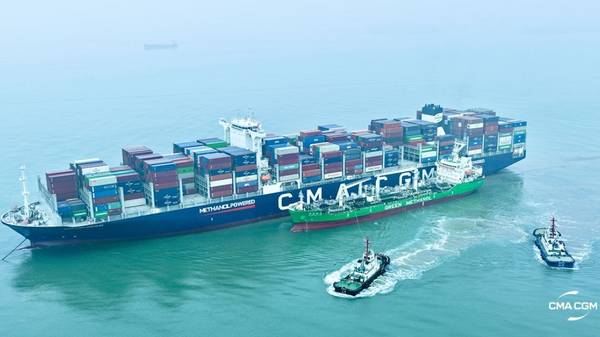
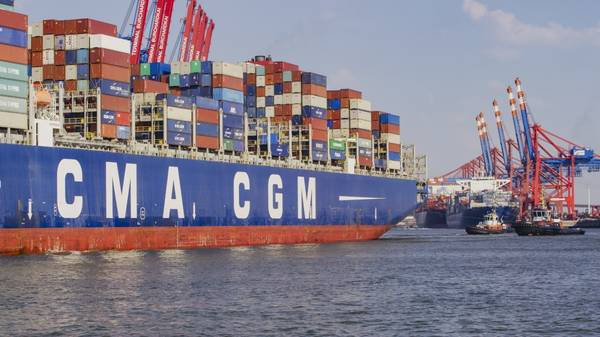
Welcoming of CMA CGM Grand Palais vessel. CMA CGM adds 23,000-teu containership to Asia-Europe service  

CMA CGM Grand Palais will operate on the FAL3 route between Asia and Europe.

WinGD methanol and ethanol webinar invitation. WinGD to host webinar on methanol- and ethanol-flexible fuel engine technology  

Engine manufacturer will discuss market outlook, regulations and operational experience with alcohol-based marine fuels.

Peninsula graduate programme group photo. Peninsula opens applications for 2026 graduate programmes in marine fuels trading  

Two-year scheme offers positions across six global locations starting in September, combining hands-on experience with structured development.

Collin She, Oilmar DMCC. Oilmar DMCC promotes Collin She to key account manager role  

She will lead strategic customer relationships and drive growth opportunities in Singapore and the wider region.

Areion vessel. Dorian LPG takes delivery of dual-fuel VLGC capable of carrying ammonia  

The 93,000-cbm Areion can run on LPG or fuel oil and transport ammonia cargoes.

FSRU Toscana alongside Green Zeebrugge vessel. RINA awards ISCC EU certification to OLT Offshore LNG Toscana for bio-LNG supply  

Certification enables bio-LNG use in the EU as a renewable fuel under RED II and RED III directives.

World Shipping Council at IMO meeting. WSC calls for safe maritime corridor as 20,000 seafarers remain trapped in the Persian Gulf  

Industry body urges IMO member states to establish safe passage and supply access.

Graphic promoting Auramarine webinar titled 'Sustainable Fueling Part 3: Ammonia - next alternative fuel in marine'. Auramarine to host webinar on ammonia as marine fuel in April  

Finnish firm will explore ammonia’s role in maritime decarbonisation at its third spring webinar.

Front cover of study by WinGD and Envision Energy titled 'Renewable Fuel Economics: An OPEX illustration based on current costs'. Green ammonia could reach cost parity with VLSFO and LNG by 2050, study finds  

WinGD and Envision Energy study projects green ammonia operational costs competitive with conventional marine fuels.