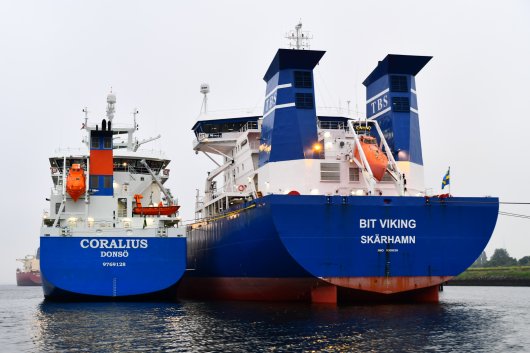
Gasum has further expanded its coverage in the Antwerp, Amsterdam, and Rotterdam (ARA) region by securing an LNG distribution licence for the Belgian market.
The new licence, obtained on March 17, includes the port of Zeebrugge — one of Europe's leading pure car and truck carrier (PCTC) hubs.
Commenting on the news, Jacob Granqvist, Vice President Maritime at Gasum, remarked: "Obtaining this license underlines Gasum's commitment to act as a reliable European maritime LNG supplier and enabler of maritime decarbonization. It also supports our growth strategy and enables us to deliver safe and clean energy, which helps our customers to reduce their greenhouse gas emissions considerably. Moreover, the significance of the ARA region and Zeebrugge as a bunkering hub is likely to increase, which makes it a strategically important area for Gasum."
Back in November, Gasum relocated its 7,500-cubic-metre delivery vessel Kairos to the ARA region in a move designed to meet the needs of existing clients in northern Continental Europe as well as new customers.
The latest development in Belgium would appear to be in line with Granqvist's comments in July 2020, when he revealed that the company had projects planned for Belgium and The Netherlands, as well as Germany and Poland — as part of Gasum's "commitment to expand our geographical footprint in continental Europe".
|
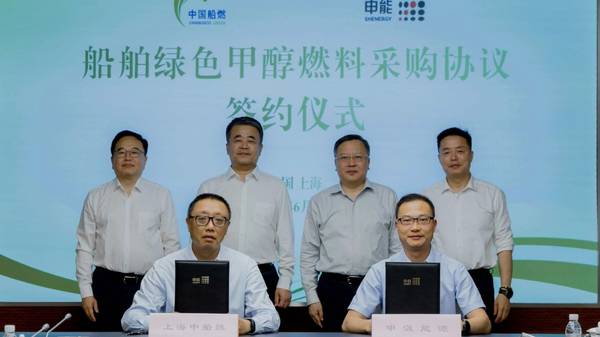
'China’s largest single-order green methanol procurement deal' announced
Chimbusco and Shenergy seal agreement for 6,000 tonnes of methanol. |
|
|
|
||
|
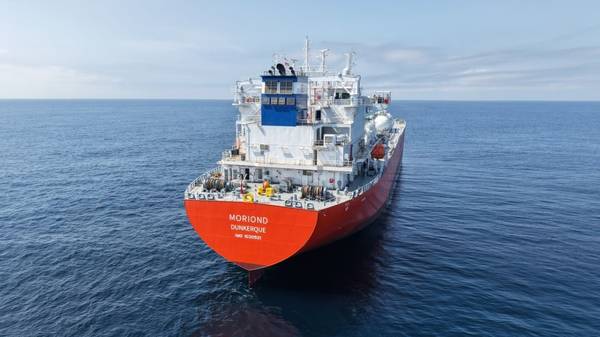
Exmar takes delivery of third dual-fuel LPG midsize gas carrier in newbuild programme
Belgian shipping group Exmar takes delivery of the 41,000-cbm LPG carrier Moriond. |
|
|
|
||
|
Hafnia Pools reaches 24 partners and 170 vessels as FuelEU compliance met through pooling mechanism
Hafnia’s tanker pool platform adds five vessels in Q1 2026 amid volatile market conditions. |
|
|
|
||
|
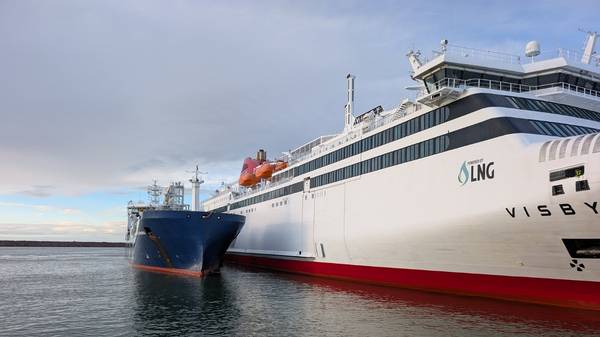
St1 Biokraft supplies liquefied biogas to Destination Gotland for summer ferry operations
Nordic biomethane company makes its first liquefied biogas delivery to Swedish ferry operator. |
|
|
|
||
|
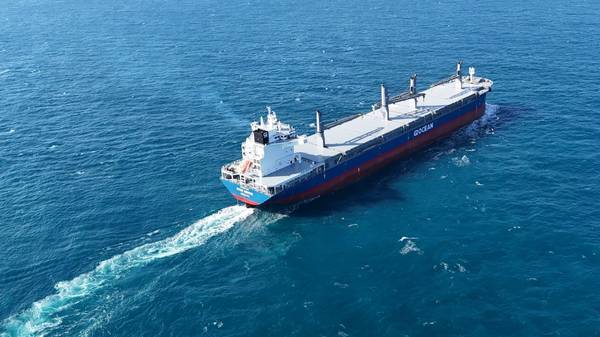
G2 Ocean launches emission reduction certificates for supply chain decarbonisation
New certificates allow cargo owners to offset Scope 3 transport emissions via biofuel use. |
|
|
|
||
|
World Fuel’s marine gross profit surges 86% as bunker price volatility drives Q1 results
Higher bunker prices and volatility propel World Fuel to a strong first quarter, prompting upgraded full-year guidance. |
|
|
|
||
|
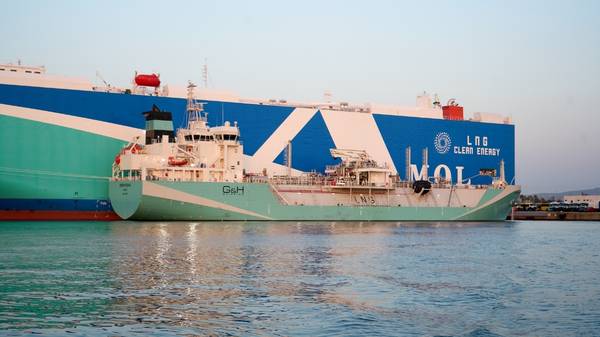
Axpo completes first ship-to-ship bio-LNG bunkering at Barcelona
Swiss energy company supplies bio-LNG to MOL's car carrier Lapis Ace at Spanish port. |
|
|
|
||
|
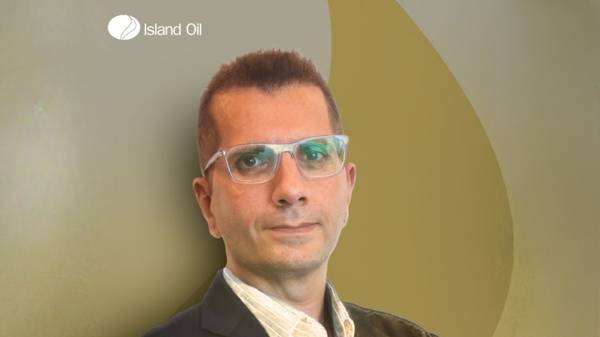
Island Oil appoints Dimitris Mertikas as head of international trading in Dubai
Bunker firm says hire will strengthen its trading capabilities and knowledge of the Middle Eastern and Greek markets. |
|
|
|
||
|
LNG and biofuels seen as most viable near-term options, ICS Barometer finds
Geopolitical instability emerges as shipping’s defining risk in ICS report. |
|
|
|
||
|
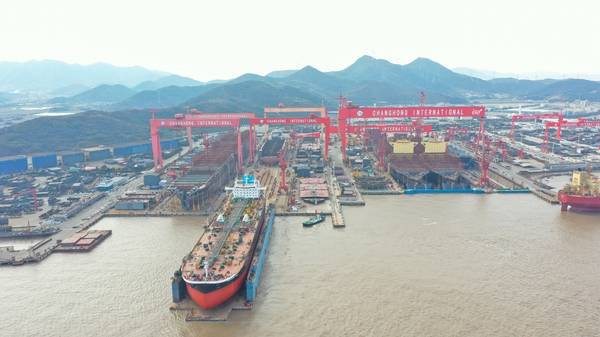
Zhoushan ship exports nearly double in five months amid decarbonisation push
China's Zhoushan reports 93.7% surge in ship exports driven by rising demand for more advanced and environmentally friendly vessels. |
|
|
|
||
| Gasum ups LNG supply capacity in ARA [News & Insights] |
| Gasum performs maiden LNG delivery in France [News & Insights] |
| Gasum starts biogas delivery trials to Finnish Border Guard [News & Insights] |
| Gasum secures LNG supply licence in France [News & Insights] |
| Gasum performs first LNG-LBG ship-to-ship bunkering to cargo vessel [News & Insights] |
| Ship powered by LNG fuel cells unveiled [News & Insights] |
| Schottel to supply electric propulsion for two SIPG LNG bunker vessels [News & Insights] |
| Alfa Laval begins gas testing at newly expanded facility [News & Insights] |
| Kochi LNG terminal to double capacity [News & Insights] |
| Seaspan takes delivery of first 10,800-ceu dual-fuel LNG car carrier [News & Insights] |