This is a legacy page. Please click here to view the latest version.
Tue 23 Oct 2018, 13:13 GMT

Holland America to outfit 11 ships for shore power following three-vessel project


Simplified switchover process is said to enable a more seamless transition between ship and shore power sources.


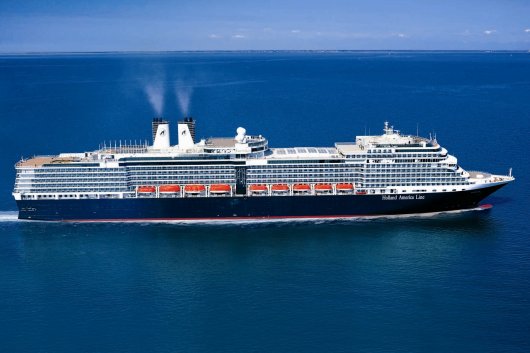
The MS Eurodam is one of three vessels to have been retrofitted with ABB shore power connectors.
Image credit: ABB
Seattle-headquartered Holland America Line has retrofitted three of its vessels with ABB's shore power connectors in a move designed to allow the ships to completely turn off their engines and save fuel by switching to electricity generated in a power plant on shore when berthed at a port.

According to Juha Koskela, Managing Director, ABB Marine & Ports, the full installation of its shore power connectors can be performed during the normal operation of a vessel.

The company says it has taken steps to streamline and minimize disruption during the installation process, whether it be for newbuilds or retrofits.

Discussing the Holland America Line project, Koskela remarked: "We completed three turnkey projects simultaneously, covering procurement, engineering, installation and commissioning."

Additionally, the solution put together for Holland America Line is said to include a simplified switchover process, enabling a more seamless transition between ship and shore power sources - compared to up to 20 minutes on existing shore power solutions.

And after having executed three new installations, Holland America Line will proceed to feature a total of 11 cruise ships outfitted with ABB's shore power connectors, ABB says.

"Holland America Line remains firmly committed to including new technical solutions that truly advance its policy for sustainable operations," commented Orlando Ashford, President, Holland America Line. "Our ships call at the world's most beautiful destinations, which is one reason we prioritize environmental responsibility. These ships can now achieve very low emissions while in ports where shore power is available."

Varying standards for connectors and cables, one single interface

An increasing number of ports in Asia, Europe and North America are investing in shore power infrastructure for visiting ships, yet implementation standards for connectors and cables vary, ABB notes.

ISO 80005-1 offers an international standard covering design, installation and testing of high-voltage shore connections and an update for low-voltage systems is in the pipeline, but the lack of such a standard has hindered the adoption of shore power, ABB explains.

Primary distribution voltage, for instance, can vary from 440 volts to 11 kilovolts, while load requirements can range from a few hundred kilowatts (kW) in the case of car carriers to a dozen or more megawatts (MW) in the case of passenger ships or reefer ships.

ABB notes that it is able to offer a single interface for complete port electrification and grid integration that is compliant worldwide and can be installed for newbuilding projects or for retrofit.


Svitzer Balder vessel. Battery-methanol harbour tug completes sea trials ahead of Gothenburg deployment  

Svitzer Balder is claimed to be the most powerful electric escort tug in the world.

Launching ceremony of Nave Orbit vessel. Changhong International launches fourth LR2 tanker for Navios  

Chinese shipbuilder floats 115,000-tonne LR2/Aframax product tanker with methanol and LNG conversion capability.

Nippon Yuka Kogyo logo. Nippon Yuka Kogyo launches lubrication oil analysis service for ammonia-fuelled engines  

Japanese company offers condition monitoring service to support adoption of ammonia as a marine fuel.

Steel cutting ceremony of vessel with builder's hull no. S1128. CIMC Pacific Offshore Engineering advances two 20,000-cbm LNG bunkering vessel projects  

Two sister vessels for Singapore and Luxembourg owners reach construction milestones in China.

MPA and SSA logo side by side. Singapore maritime sector to accelerate AI adoption under new partnership  

MPA and SSA sign MOU to support AI implementation across shipping operations and bunkering.

Aerial view of a ship-to-ship (STS) transfer operation. Portland Port receives licence for LNG ship-to-ship transfer operations  

UK port can now support direct LNG transfers, reducing transit times and streamlining logistics operations.

Martin White, CEO of Stream Marine Group. Seafarer training must match pace of alternative fuel adoption, says Stream Marine Training  

Training provider highlights regulatory gap as methanol, ammonia and hydrogen gain traction in shipping.

Anji Luck vessel. Jiangnan Shipyard delivers final methanol-ready car carrier to Anji Logistics  

The 9,500-vehicle capacity vessel completes a 12-ship series built for SAIC’s logistics arm since 2022.

Bunker vessel alongside a ship during fuel transfer. Nippon Biofuel secures METI funding for Africa-based marine biofuel supply chain  

Japanese company to establish Jatropha cultivation and biofuel production facilities in Mozambique and Ghana.

Everllence B&W 6G60ME-LGIA HPSCR engine. Everllence’s ammonia-fuelled engine passes factory acceptance test ahead of October delivery  

Engine built by HHI-EMD will power Eastern Pacific Shipping’s very large ammonia carriers.


↑  Back to Top