This is a legacy page. Please click here to view the latest version.
Wed 16 May 2018, 07:58 GMT

Brent reached new highs of $79.47 before retracing to $78.2


By A/S Global Risk Management.


Michael Poulson, Global Risk Management.
Image: Global Risk Management
Yesterday, the American Petroleum Institute (API) released the weekly inventory stats which showed a build in crude of 4.85 mbbl, a draw on gasoline of 3.37 and a draw on distillates of 0.77 mbbl. However, U.S. crude inventories overall have been building during the year.

Global demand remains strong and OPEC seems compliant to the production cut deal. On top of that, re-imposing sanctions on Iran could jeopardize about half a million barrels daily unless other OPEC producers offset those barrels. Adding even more tightness in the market is the situation in Venezuela, which does not seem to improve. The U.S. shale production is, however, surging, but it appears that those many new barrels produced are having a difficult time reaching the global market. The dynamic can as well be observed by looking at the difference between the Brent price and the WTI price. Both are getting more expensive, but the Brent is becoming relatively more expensive than WTI - meaning that the difference (the so-called spread) is increasing.

The EIA is releasing the inventories stats today, but likely the build reported by the API is already priced in. Volatility around release is however expected. Also later today the International Energy Agency (IEA) will release the monthly oil market outlook.


Illustration of balance scale with cargo ship and penalty block. FuelEU penalties spark contract disputes as first-year compliance costs emerge  

Shipowners and charterers negotiate biofuel handling, payment timing, and multiplier penalties under new regulations.

Marina Bay Sands, Singapore. Singapore tops first global container port ranking by DNV and Menon Economics  

The port leads across all five assessment pillars in inaugural industry report.

Jack Spyros Pringle, Lloyd’s Register. Marine fuel procurement becomes strategic imperative as regulatory pressures mount: LR  

Operators must adopt comprehensive fuel strategies amid supply constraints and compliance costs, says Lloyd's Register.

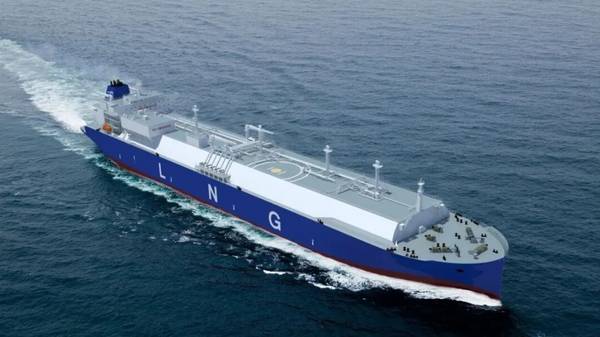
Xinfu124 ultra-large LNG carrier. Private Chinese shipbuilder plans to deliver eight dual-fuel boxships  

Yangzi Xinfu is fully booked until May 2029 and expected to post annual sales revenue exceeding $1.4 billion.

Østensjø Rederi newbuild tug render. Østensjø Rederi orders methanol-ready tug from Spanish shipyard  

Norwegian operator contracts Astilleros Gondán for vessel with diesel-electric hybrid propulsion system.

Bound4blue worker in safety gear. Bound4blue establishes China production base for wind propulsion systems  

Spanish wind propulsion firm targets Asian shipbuilding market with outsourced manufacturing network.

Alfa Laval and Hanwha Ocean Ecotech sign MoU. Alfa Laval and Hanwha Ocean Ecotech partner on ammonia fuel systems  

Collaboration aims to develop ammonia fuel technology for dual-fuel vessels in the Asian market.

Meg Dowling, Lloyd's Register. Nuclear-powered boxships could deliver $68m annual savings: Lloyd's Register  

Small modular reactors could eliminate fuel costs and carbon penalties while boosting cargo capacity, says report.

Minerva Bunkering and Autoridad Portuaria de Las Palmas (APLP) signing ceremony. Minerva Bunkering extends Las Palmas terminal concession by 15 years  

Bunker supplier adds barge capacity and explores new terminal for energy transition fuels.

Liam Blackmore, Lloyd's Register. Ammonia Energy Association releases gas detection whitepaper with Lloyd's Register input  

Lloyd's Register contributed expertise to new guidance on ammonia detection systems for the maritime sector.


↑  Back to Top


 Recommended