This is a legacy page. Please click here to view the latest version.
Fri 2 Feb 2018, 11:23 GMT

Gothenburg starts construction of land-based LNG bunker facility


Will be available to ships calling at Gothenburg's Energy Port.


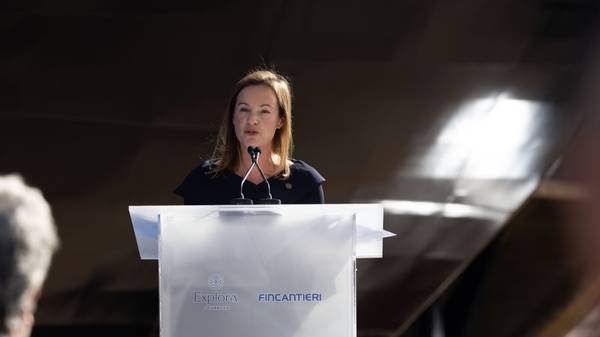
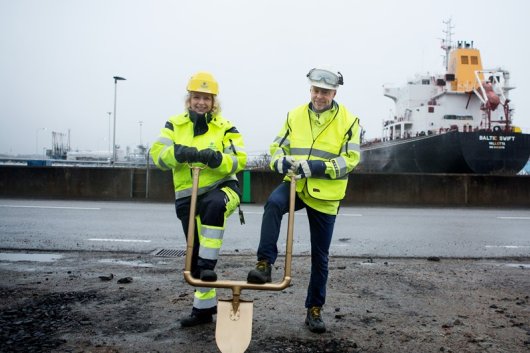
Jill Soderwall from the Port of Gothenburg and Johan Zettergren from Swedegas broke ground for Gothenburg's new LNG facility at the Energy Port.
Image credit: Swedegas / Port of Gothenburg
Construction of a new liquefied natural gas (LNG) facility is now under way at the Port of Gothenburg. It is due to become fully operational later this year.

Gothenburg witnessed its first LNG bunker delivery when Terntank's vessel, the Ternsund, was supplied with the fuel in 2016. Since then, operating regulations and routines at the Swedish port have been developed and efficiency is said to have been improved, whilst there has been a steady rise in the number of LNG bunkering operations.

Currently, Skangas supplies vessels with LNG using the ship-to-ship delivery method in Gothenburg. During the third quarter of 2017, Skangas completed Gothenburg's first LNG bunkering whilst loading was taking place. The company's chartered vessel, the Coralius, also performed its first Gothenburg LNG bunker delivery and its first supply of LNG in open sea to a vessel that cooled down its tanks in order to switch from diesel oil to LNG, just outside Gothenburg.

Skangas has been joined in Gothenburg by Swedegas, which owns and runs the Swedish gas transmission network and which will be expanding the number of LNG supply options at the port with the construction of a facility designed to ensure safe and quick land-based LNG bunkering whilst vessels are loading and discharging at the Energy Port.

"With both Skangas and Swedegas operating at the Port of Gothenburg, we have two companies that complement each other with different offerings. Shipping lines now have a further incentive to consider switching to LNG," said Jill Soderwall, Vice President and Head of Commercial Operations at the Energy Port.

LNG will arrive at the new LNG facility by trailer or in containers, and will be distributed via a 450-metre vacuum-insulated cryogenic pipeline to the quayside.

The facility marks the first step in the construction of a broader solution for the gas infrastructure at the Port of Gothenburg, with the potential to connect to the gas transmission network. In time, Swedish industry and land transport could also make use of the facility.

"As is the case with the gas transmission network, in which both natural gas and biogas can be transported, the new facility will be flexible and can also be used for the storage and transport of renewable gas. Customers with access to the transmission network can already choose biogas, and this is something we are looking to extend to the shipping sector as the next step in their transition to environmentally correct alternatives," said Johan Zettergren, Swedegas Chief Executive.

The EU has assigned the project Project of Common Interest (PCI) status, which means that it is among the most prioritised infrastructure projects in Europe. The EU, via the INEA (Innovation and Networks Executive Agency), has also confirmed that support measures are in place to ensure the project reaches fruition.


Zhoushan waterfront at night. Zhoushan becomes world's third-largest bunker port  

Chinese refuelling hub overtakes Antwerp-Bruges and Fujairah to take third place in 2025.

Meyer Turku's net-zero vessel concept render. Meyer Turku completes net-zero cruise ship concept with 90% emissions cut  

Finnish shipbuilder’s AVATAR project vessel design exceeds IMO targets using technologies expected by 2030.

Uni-Fuels Logo. Uni-Fuels renews ISCC certification after first biofuel delivery  

Singapore-based marine fuel supplier completes inaugural ISCC-certified biofuel delivery, supporting EU regulatory compliance.

Close-up of a vessel bow at port. Iberian Peninsula poised to overtake the Netherlands as Europe’s top LNG bunkering hub  

Spanish and Portuguese ports quadrupled ship-to-ship LNG supply in two years, data shows.

FOBAS Fuel Insight Fuel Quality report H2 2025 cover. Lloyd’s Register reports sharp rise in marine fuel quality failures in late 2025  

December recorded the highest monthly off-specification cases, driven by sulphur, catalytic fines and flash point issues.

Bio-LNG bunkering infrastructure. Bahía de Bizkaia Gas launches bio-LNG loading service after ISCC certification  

Spanish regasification terminal begins offering renewable fuel loading for trucks and vessels in January 2026.

Grande Michigan vessel. Grimaldi takes delivery of eighth ammonia-ready car carrier Grande Michigan  

The 9,000-ceu vessel features 50% lower fuel consumption and 5 MWh battery capacity.

Graphic of the ABS logo with a blue background and light effects over a globe. ABS consortium delivers ammonia fuel safety report for EMSA  

Report expands on IMO interim guidelines and highlights need for comprehensive understanding of ammonia properties.

Green Future vessel. NYK operates methanol-fuelled bulk carrier for BHP, claims 65% emissions cut  

Green Future becomes first oceangoing bulk carrier to use low-carbon methanol fuel.

Genesis Sea vessel. Ulstein Verft completes sea trials for Genesis Sea CSOV ahead of spring delivery  

The 89.6-metre vessel features hybrid battery propulsion and preparations for green methanol operation.


↑  Back to Top