This is a legacy page. Please click here to view the latest version.
Wed 6 Jul 2016, 10:53 GMT

Lukoil launches marine lubricants


Two new formulas are enhanced versions of previously released lubricants.


Lukoil has announced that two new marine lubricants are now available: NAVIGO 70 MCL AW cylinder oil and NAVIGO 6 CO crankcase oil.

What's new about these lubricants?

Both formulas are enhanced versions of previously released lubricants. Each of the two oils contain a new additive package that is said to give better results for thermal and oxidation stability, corrosion prevention, and wear protection.

Here are some of the specifics on each new lubricant:

NAVIGO 70 MCL AW

The 'AW' in this oil's name stands for 'anti-wear'. This was added to the name because of the extra protection it is said to give to the engine against cold corrosion.

This lubricant is intended for two-stroke engines and is designed to work with any fuel with a sulphur content of between 0.5% and 3.5%. It is also said to enable extended piston overhaul.

NAVIGO 6 CO

Stefen Claussen, Technical and Marketing Director for Lukoil Marine Lubricants, said that this lubricant gives more benefits with enhanced detergency and dispersion as well as improved crankcase cleanliness. It also has better deposit control of oil-cooled piston undercrowns, according to the Russian supplier.

The new formula is compatible for use with iCOlube, Lukoil Marine's onboard unit for intelligent cylinder oil lubrication. This unit combines high BN cylinder oil and new or used system oil to tailor the ideal cylinder oil for each engine. Additional benefits include the reduction of cylinder oil grades the ship needs to store onboard.

Both of the new lubricants were put through testing and have been approved by major original equipment manufacturers (OEMs).

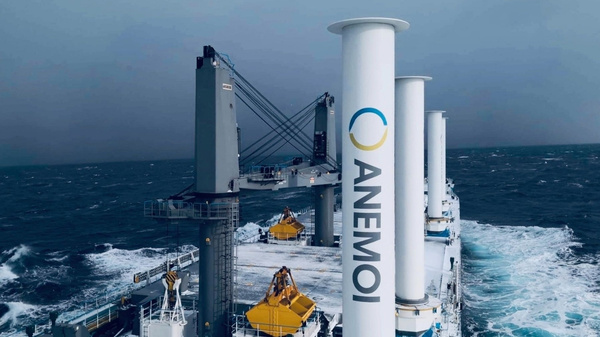

Oriental Aquamarine vessel. HMM deploys Korea's first MR tanker with wing sail technology  

Oriental Aquamarine equipped with wind-assisted propulsion system expected to cut fuel consumption by up to 20%.

BC Ferries vessel render. ABB to supply hybrid-electric propulsion for BC Ferries' four new vessels  

Technology will enable ferries to run on biofuel or renewable diesel with battery storage.

Alternative marine fuels port graphic. LNG-fuelled boxships sustain alternative fuel orderbook share despite market slowdown  

Alternative fuels maintained 38% of gross tonnage orders in 2025, driven by container segment.

Conceptual diagram of the MOL–ITOCHU strategic alliance. MOL and ITOCHU sign MoU for cross-industry environmental attribute certificate partnership  

Japanese shipping and trading firms to promote EACs for reducing Scope 3 emissions in transport.

CPN as China's No. 1 marine biofuel supplier in 2025 graphic. Chimbusco Pan Nation delivers 170,000 tonnes of marine biofuel in China in 2025  

Supplier says volumes quadrupled year on year, with a 6,300-tonne B24 operation completed during the period.

V.Group and Njord logo side by side. V.Group acquires Njord to expand decarbonisation services for shipowners  

Maritime services provider buys Maersk Tankers-founded green technology business to offer integrated fuel-efficiency solutions.

Container vessel manoeuvring in port. Has Zhoushan just become the world's third-largest bunker port?  

With 2025 sales of 8.03m tonnes for the Chinese port, Q4 data for Antwerp-Bruges will decide which location takes third place.

Monjasa Oil & Shipping Trainee (MOST) trainees. Monjasa opens applications for global trainee programme  

Marine fuel supplier seeks candidates for MOST scheme spanning offices from Singapore to New York.

Singapore's first fully electric harbour tug. Singapore's first fully electric tug completes commissioning ahead of April deployment  

PaxOcean and ABB’s 50-tonne bollard-pull vessel represents an early step in harbour craft electrification.

Fuel for thought: Hydrogen report cover. Lloyd's Register report examines hydrogen's potential and challenges for decarbonisation  

Classification society highlights fuel's promise alongside safety, infrastructure, and cost barriers limiting maritime adoption.


↑  Back to Top