Source: International Chamber of Shipping
The
International Chamber of Shipping (ICS), whose 36 member national shipowners’ associations represent all sectors and trades and more than 80% of the world merchant fleet, has called on the International Maritime Organization (IMO) to accelerate a critical study into the global availability of low sulphur fuel for ships.
ICS has been expressing concern for some time about whether sufficient fuel will be available to allow ships to comply with strict IMO regulations aimed at reducing sulphur emissions and whether, as result of insufficient supply, the costs for those ships which are able to obtain the required fuels might be prohibitively expensive.
In an important submission to the IMO
Marine Environment Protection Committee (MEPC), which meets in October, ICS is once again pressing IMO to start work now on a study that can consider the impact all of the major changes required by the new MARPOL regime, before it is too late for the oil refining industry to respond and invest.
There is already a formal mechanism in
MARPOL Annex VI for IMO to complete a review, by 2018, of progress made towards meeting the demand for 0.5% sulphur fuel that must be used globally outside of Emission Control Areas (ECAs) by 2020 or 2025. However, ICS stresses that the enormity of the switch to distillate and its economic impact on shipping should not be underestimated.
ICS Secretary General,
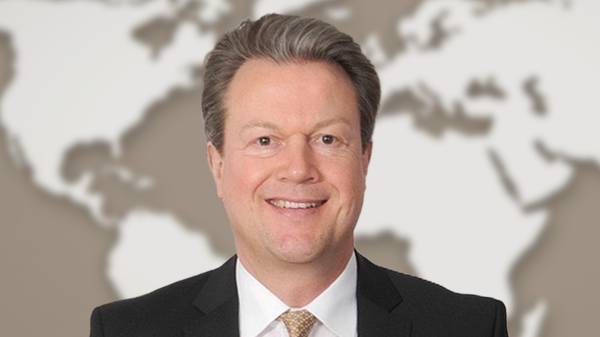
Peter Hinchliffe [pictured] said: "Governments will surely want to avoid any perception that a blind eye has been turned to the practical implementation of the measures as the issue of fuel availability becomes increasingly pressing. It is essential that a global fuel availability study is carried out sufficiently in advance of 2020 in order to give the refiners adequate time to invest and react. The major refinery upgrading required could take a minimum four or five years, perhaps longer, and we fear that completing the study in 2018 would simply be too late."
He added: "The need to move forward the IMO study is more important than ever now that the European Union has signalled that it will definitely implement the 0.5% requirements in 2020, even if the IMO study results suggest, as permitted by MARPOL, that full implementation should be postponed until 2025 to ensure the availability of sufficient quantities of compliant fuel."
In its submission to IMO, ICS has suggested that a preliminary IMO study of the availability of compliant fuel, taking into account the introduction of the 0.1% sulphur in fuel requirements to be used in the Baltic Sea, North Sea and the North American ECAs in 2015, would provide a suitable test case. Such a study would provide a projection of possible scenarios resulting from the introduction of the 2015 0.1% ECA standard, against the background of the world market. This could then be considered in comparison with the real situation encountered in 2015.
Mr Hinchliffe emphasised: “When the global requirement to switch to distillate was adopted four years ago, ICS supported the agreed IMO timetable as an acceptable compromise. But if the switch to low sulphur fuel is to be successful, those governments that advocated such ambitious goals need to do everything possible to help ensure that the refineries are able to deliver. We strongly believe this means undertaking the required studies of fuel availability as soon as possible.”
Fuel is by far the largest operational cost for shipowners and has already increased in price by about 300% since 2000. However, the current 50% price differential between low sulphur distillate and the residual fuel oil that is currently in use is predicted to increase further if the new demand that will be created by the MARPOL requirements is not matched by increased supply. (Exhaust gas cleaning systems or ‘scrubbers’ have been predicted to cost in excess of US$2 million per engine if fitted on board larger ships. However, it is still unclear whether these will be technically, environmentally, or economically viable for use on a widespread basis before the 2015 or 2020 deadlines).
Timetable for new limits to sulphur content in ships’ fuel agreed by IMO (2008 amendment to MARPOL Annex VI):
2010 - Emission Control Area ( ECA ) limit reduced to 1% (from 1.5%)
2012 - Global limit reduced to 3.5% (from 4.5%)
2015 - ECA limit reduced to 0.1%
2020 - Global limit to 0.5% but a review in 2018, with authority to delay implementation, will determine whether this is achievable.
2025 - Global limit to 0.5% notwithstanding the result of the 2018 review.