
 |
Türkiye’s Sea of Marmara ferry network could cut greenhouse gas emissions by 63% by 2050 by switching to a mix of hybrid and fully electric vessels, according to a study commissioned by the International Maritime Organization’s (IMO) GreenVoyage2050 programme.
The study, carried out in partnership with Türkiye’s Ministry of Transport and Infrastructure, assessed 67 ro-ro and ro-pax ferries operating across 26 ports in the region. The network carries around 25 million passengers and seven million vehicles each year.
According to the study, battery-electric and hybrid propulsion are technically feasible across all the ro-pax and ro-ro ferry operations assessed. It identifies an “optimum scenario” that combines hybrid and fully electric vessels to balance emissions reductions against costs. Under this scenario, annual GHG emissions could fall by around 63% by 2050, compared with business-as-usual operations using diesel fuel.
The study estimates that the transition would also reduce local air pollution and could avoid €492 million in cumulative health and environmental damage costs.
A fuller conversion of the fleet to fully electric operations could cut GHG emissions by 84% by 2050, the study found, rising to as much as 95% if Türkiye’s electricity grid decarbonises in line with the country’s 2053 net-zero target.
The study states that it identified no major technical barriers to electrification. Instead, it points to charging infrastructure, upfront investment, coordinated energy planning and the domestic regulatory framework as the main challenges to large-scale deployment.
Building on shipbuilding capacity
The report suggests that ferry electrification would build on Türkiye’s shipbuilding capabilities, supporting clean-technology industries in the country and reducing reliance on imported marine fuels.
Under the optimum hybrid-electric scenario, the study estimates that the required investment could support an average of around 1,100 jobs a year through to 2050, with vessel construction and retrofit jobs expected to be concentrated in Turkish shipyards.
Recommended actions
To move from findings to implementation, the report recommends a coordinated approach involving government, municipalities, ports, ferry operators and the energy sector.
Priority actions include expanding shoreside charging infrastructure and high-voltage grid connections at ports, supported by long-term port concessions that include charging infrastructure. The study also recommends securing a low-carbon electricity supply at ports, including by allowing ports to generate, use and sell locally produced low-carbon electricity.
Other recommendations include introducing targeted financial incentives, mobilising blended finance and using emissions-based port fees to encourage cleaner vessels. The study also calls for electrification to be integrated into transport and energy planning, environmental criteria to be embedded in public ferry procurement, and feasibility studies and pilot projects to demonstrate commercial viability before wider deployment.
GreenVoyage2050 and Türkiye’s Ministry of Transport and Infrastructure said they are now looking to advance a first pilot electrification project in the Sea of Marmara to demonstrate the technical, environmental and commercial benefits identified in the study.
The GreenVoyage2050 programme supports developing countries in reducing greenhouse gas emissions from shipping, in line with the IMO’s Strategy on Reduction of GHG Emissions from Ships. The programme is funded by the governments of Denmark, Finland, France, Germany, the Netherlands and Norway.
|
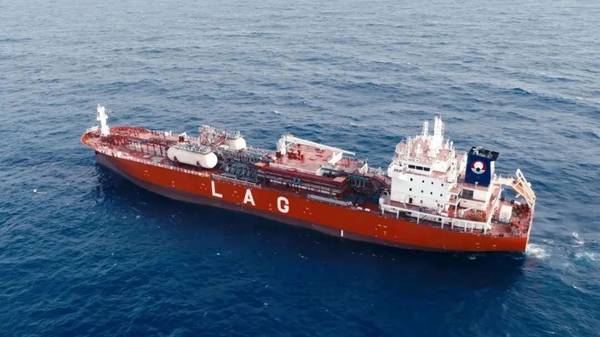
China delivers first domestically built ammonia-fuelled gas carrier
CCS-classed vessel becomes the world's second ammonia-fuelled gas carrier, testing rules for the IMO's zero-carbon shipping transition. |
|
|
|
||
|
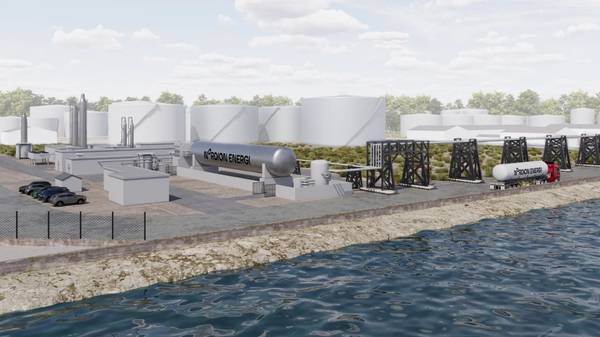
Storage tank installed as Gothenburg's LBG bunkering plant advances towards 2027 completion
Nordion Energi's liquefied biogas facility at the Port of Gothenburg takes a step forward with tank installation. |
|
|
|
||
|
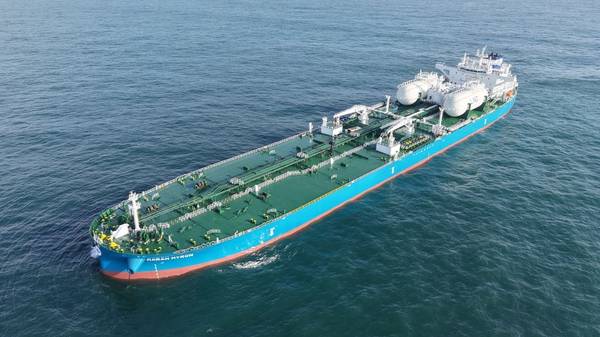
Maran Tankers takes delivery of dual-fuel Suezmax Maran Myron
Vessel is sixth dual-fuel tanker in eight-vessel series built by New Times Shipbuilding. |
|
|
|
||
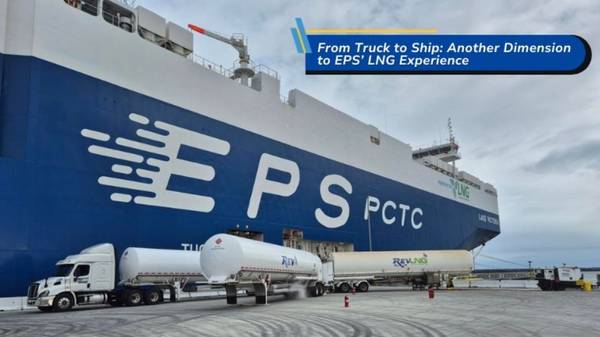
|
EPS completes first truck-to-ship LNG bunkering operation in Davisville
Fuel delivered to the pure car and truck carrier Lake Victoria whilst at berth. |
|
|
|
||
|
MPA opens applications for LNG floating storage unit licences
Singapore invites applications for up to two LNG floating storage unit licences to bolster bunkering supply resilience. |
|
|
|
||
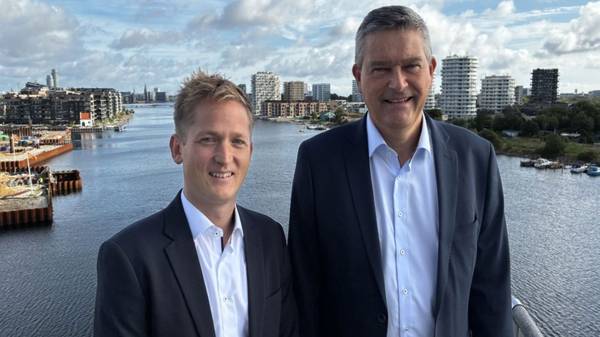
|
Everllence's small-bore GenSet orders surpass 2,000 in 2026
Engine maker reports strong order intake across its small-bore portfolio, citing demand for reliable, fuel-flexible auxiliary power. |
|
|
|
||
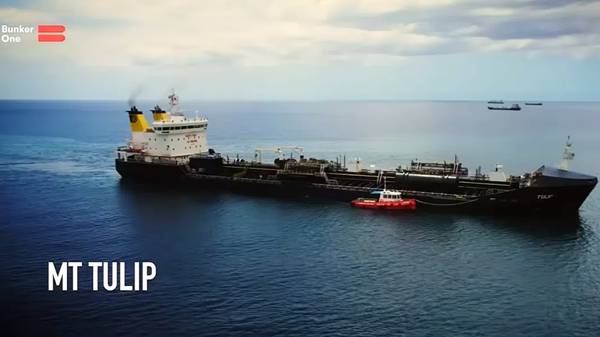
|
Bunker One renews MT Tulip charter, plans mass flow meter upgrade in Mauritius
Bunker One is keeping its bunker tanker in Mauritius while adding flow metering technology to improve delivery transparency. |
|
|
|
||

|
Fund for Energy Efficiency Technologies becomes first to adopt revised Singapore-Asia Taxonomy
FEET's adoption coincides with Lloyd's Register's independent review of GCMD's methodology for quantifying fuel savings from wind-assisted propulsion systems. |
|
|
|
||
|
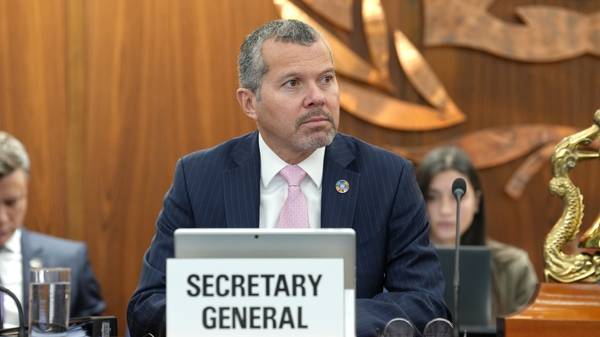
IMO chief urges states to enforce safety rules in Strait of Hormuz amid rising attacks
Arsenio Dominguez says more than 130 attacks on commercial vessels have been verified since February, with at least 25 seafarers killed. |
|
|
|
||
|
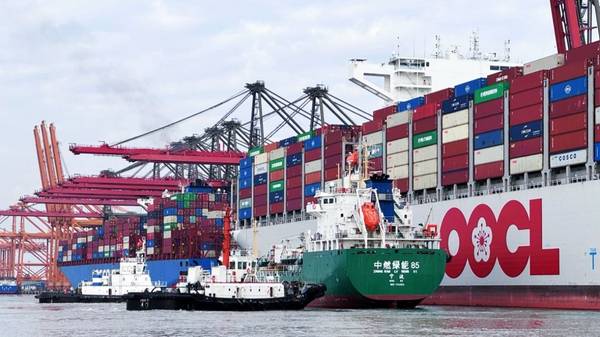
Xiamen Port launches 'green methanol bunkering' with OOCL Wisdom
Boxship received 1,005 tonnes of methanol, corresponding to a reduction of more than 1,600 tonnes in carbon emissions, says COSCO Shipping. |
|
|
|
||
| IMO chief urges states to enforce safety rules in Strait of Hormuz amid rising attacks [News & Insights] |
| Study maps route for Jamaica to become regional hub for alternative marine fuels [News & Insights] |
| IMO trains regional instructors to teach seafarers LNG fuel safety [News & Insights] |
| Singapore and Qingdao sign work plan to advance green and digital shipping corridors [News & Insights] |
| Alternative-fuel ship orders outpace port infrastructure, LR report finds [News & Insights] |
