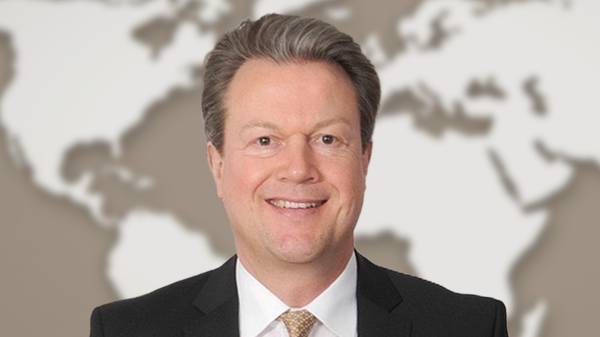
Peter Hinchliffe [pictured], Secretary General of The
International Chamber of Shipping (ICS), believes that there is no shortfall in governance so far as the international regulation of shipping is concerned.
Hinchliffe is today (July 13) taking part in a debate about oceans governance in
New York. The international academic conference on "Developing a New International Architecture for Maritime Policy" has been organised by the Dräger Foundation and the Earth Institute at Columbia University.
Hinchliffe praised the virtues of the comprehensive regulatory framework developed by the
International Maritime Organization (IMO) within the umbrella for oceans governance provided by the
United Nations Convention on the Law of the Sea (UNCLOS).
ICS reported that the number of significant oil spills had decreased from about 23 per year in the 1970s to just three per year during the past 10 years, while the volume of maritime trade had more than tripled during the same period.
"In part this is because IMO environmental regulations are genuinely implemented and enforced on a global basis through a combination of flag state and port state control" said Mr Hinchliffe.
IMO has also developed binding rules to address damage to local ecosystems potentially caused by ship's ballast water, as well as mandatory international rules to reduce sulphur and CO2 emissions.
He explained that shipping is a global industry requiring a global regulatory framework and not a "patchwork of national rules which would bring about chaos, inefficiency and have a negative impact on the smooth flow of world trade, as well as being detrimental to the protection of the oceans."
Speaking just before the New York event, Mr Hinchliffe remarked that because of the delicate balance of rights and responsibilities that exists between flag states, port states and coastal states, the shipping industry is very reluctant to support a fundamental revision of UNCLOS - as has been proposed by sections of the European Commission and some environmentalist NGOs.
Apart from enshrining the principle of global maritime rules, which are vital to the industry, UNCLOS also establishes the right of all nations to freedom of navigation on the high seas and the right of innocent passage in territorial waters. It also deals with delicate issues such as the rights of all ships to use international straits which are of great strategic importance.
However, because UNCLOS addresses a number of other sensitive issues, not just affecting shipping, ICS says it believes it is very unlikely that governments would be willing to reopen what is a delicately balanced package.
"Shipping has a hundred years' experience of international governance of its activities, and we would question any suggestion that UNCLOS is no longer fit for purpose, at least so far as the regulation of shipping is concerned," Hinchliffe said.
The ICS Secretary General suggested that if there were concerns about other areas of oceans governance, lessons could be learned by other sectors from the shipping industry's global regulator, IMO, whose successful MARPOL Convention is enforced and implemented by 150 Flag States covering 99% of the world fleet.
He pointed out: "Unlike many other activities involving the oceans, shipping is probably unique in having a specialist UN agency to regulate our activities - the International Maritime Organization. We have experience of many intergovernmental organisations that impact on our industry. But through ICS's participation at every IMO Committee meeting, we know that IMO is actually a model of efficiency, made up of experts from virtually every government in the world, who develop and adopt very complex regulations directly relevant to the protection of the marine environment."