Interview with Koji Sekimizu, Secretary-General of the International Maritime Organization (IMO), who took office on 1st January 2012. Questions by SMM / Hamburg Fair
1. Mr. Sekimizu, following the global financial crisis and the general drop in economic activity and therefore in CO2 emissions, CO2 output has recently risen to an all-time high. What will the shipping industry do to help lower CO2 output sustainably?
You would need to ask the shipping industry what it will do in this respect, however, I am more than happy to talk about what actions the regulator of the international shipping industry has taken, as IMO has a very good story to tell in this respect.
Mandatory measures were adopted by governments within IMO last year and will, once they have entered into force in 2013, require a progressive improvement in vessel efficiency and a consequent reduction in CO2 emissions. But they leave it to the industry to determine exactly how the targets will be met. There are plenty of innovative technologies that the industry can adopt to improve vessel efficiency and reduce CO2 output. It will be interesting to see which ones find favour.
2. Under the auspices of the IMO's Marine Environment Protection Committee, the stakeholders have agreed on the introduction of the Energy Efficiency Design Index for new ships. However, a corresponding solution for the global fleet in service has yet to be found. What would you suggest?
It is correct that the design index applies to new ships, but it is not the case that no measures were introduced for the existing fleet. At the same time that the EEDI was adopted for new ships, a mandatory measure for existing ships was also agreed – the Ships Energy Efficiency Management Plan, or SEEMP. All existing vessels will be required to have a SEEMP, which will incentivize the industry to monitor its energy performance and to incorporate best practices for the fuel-efficient operation of ships. Such efficiency measures will significantly reduce fuel consumption and, consequently, CO2 emissions from the existing fleet and may not only include operational practices but also technical upgrades.
Beyond that, IMO has also been working to develop and refine market-based measures that would provide a financial incentive for shipowners and operators to improve efficiency and reduce fuel consumption.
One of the most important things to stress in all this is that, because of the unique structure of the shipping industry, it must be regulated internationally, with measures that apply to all ships irrespective of flag and ownership. IMO is the only forum where that can be achieved.
3. What concepts do you envision for dealing with sulphur emissions, especially in ports?
Sulphur emissions are regulated in MARPOL Annex VI, a revised version of which entered into force on 1 July 2010. It requires a progressive reduction, globally, in emissions of SOx, NOx and particulate matter, and introduces the concept of emission control areas (ECAs) to reduce emissions of those air pollutants further in certain designated sea areas.
To address air quality issues in a specific sea area, such as a busy port, any Party to MARPOL Annex VI may propose the designation of an Emission Control Area based on criteria and procedures laid down in that treaty. Under the revised MARPOL Annex VI, the global sulphur cap is reduced initially to 3.50% (from the previous 4.50%), effective from 1 January 2012; then progressively to 0.50%, effective from 1 January 2020, subject to a feasibility review to be completed no later than 2018. The limits applicable in ECAs were reduced to 1.00%, beginning on 1 July 2010 (from the original 1.50%); being further reduced to 0.10%, effective from 1 January 2015.
Again, these measures do not prescribe exactly how the emission limits should be met, which should allow innovation and technical advances to flourish. But, in essence, the shipowner has to either burn cleaner, low-sulphur, fuel, or employ a method of cleaning the ship’s exhaust gas to meet the required standards.
4. Protecting the polar regions is a key item on the IMO's agenda. Where are your organization's specific priorities regarding this topic, and what will be the next steps?
IMO is currently developing a draft International code of safety for ships operating in polar waters (the Polar Code), which would cover the full range of design, construction, equipment, operational, training, search and rescue and not least environmental protection matters relevant to ships operating in the inhospitable waters surrounding the two poles. The Sub-Committee on Ship Design and Equipment has been tasked with coordinating the work.
The move to develop a mandatory Code follows the adoption by the IMO Assembly, in 2009, of Guidelines for ships operating in polar waters, which are intended to address those additional provisions deemed necessary for consideration beyond existing requirements of the SOLAS and MARPOL Conventions, in order to take into account the climatic conditions of Polar waters and to set appropriate standards of maritime safety and pollution prevention. The current Guidelines are recommendatory.
5. Regarding LNG and alternative energy sources: What, in your opinion, are the most promising technologies to achieve better protection of the environment and more efficient ships?
IMO’s approach is not to regulate in favour of any one technology or energy source, but rather to set efficiency targets and leave it to the industry to find the best ways to meet those targets. In this way, innovation is encouraged.
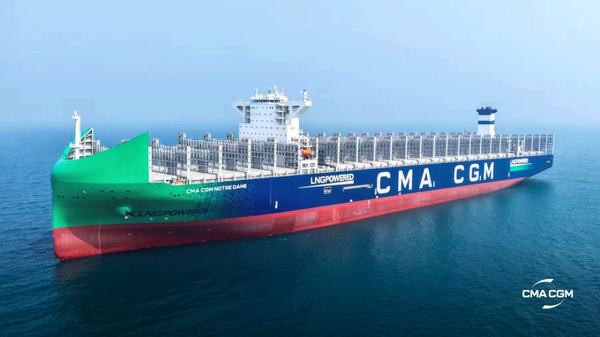
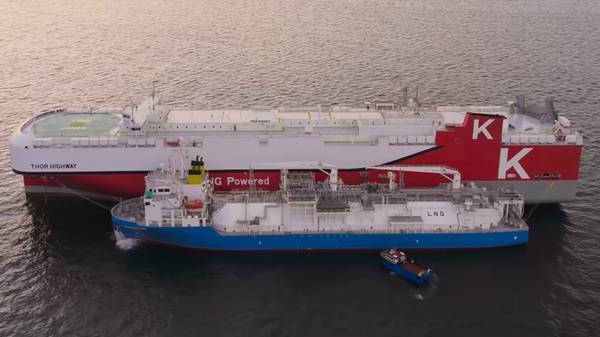
However, IMO is engaged in the development of a code for gas-fuelled ships, as LNG has proven to be a good alternative marine fuel, in particular in emission control areas.
IMO’s energy efficiency measures, such as the EEDI, incorporate the carbon content of the fuel in question and are thereby able to accommodate any low-carbon fuels that may come on the market in the future.
As the international regulator of international shipping, it is important to take a holistic approach and to ensure that the industry has the tools needed to meet the emissions standards.
Although we can all hope for a technological breakthrough that would solve the issue, or a new zero-carbon fuel to come on the market, there will be no magic-bullet or single solution. Hull shape, improved diesel engines and propulsion systems, to mention but a few, will continue to be the focus, besides speed reductions, which may prove to be the single most important issue in energy efficiency.