
 |
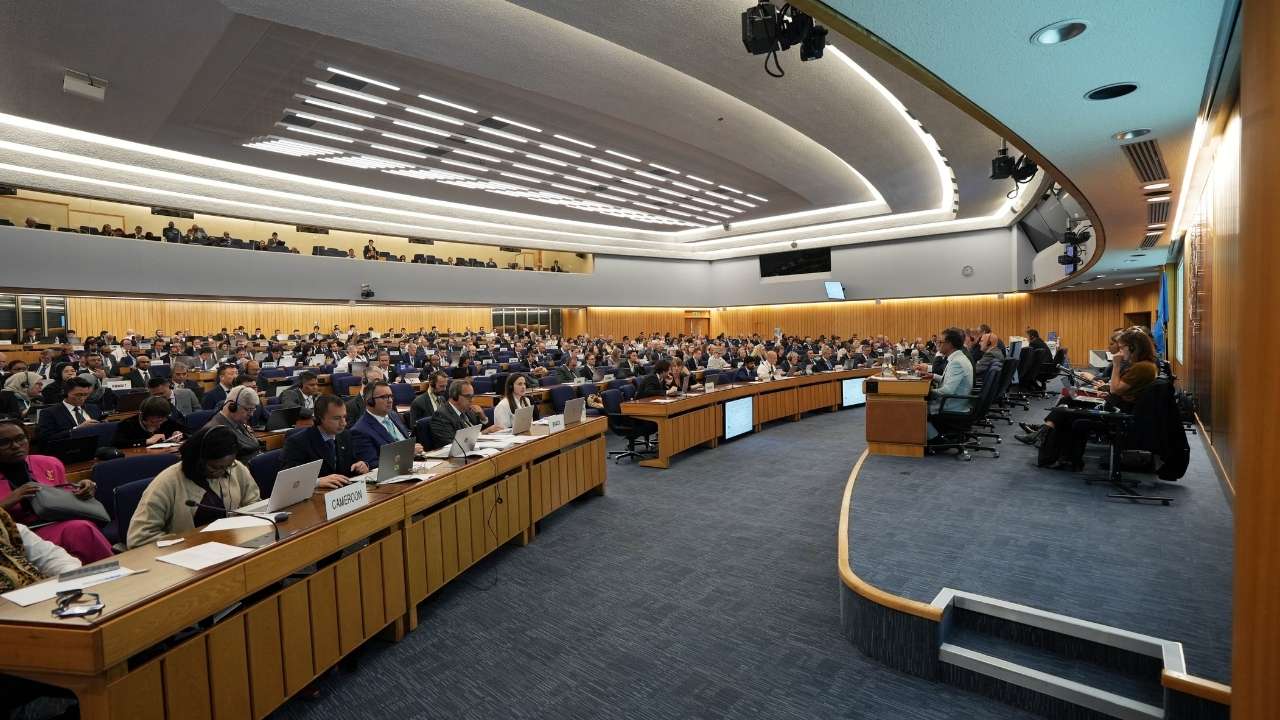
The International Maritime Organization's Sub-Committee on Carriage of Cargoes and Containers (CCC) has finalised a revision of interim guidelines governing the use of methanol and ethanol as marine fuels, according to a summary published by class society DNV.
The 12th session of the sub-committee (CCC 12) met from 14 to 18 September and completed work on the Interim Guidelines for the Safety of Ships Using Methyl/Ethyl Alcohol as Fuel, first issued as MSC.1/Circ.1621. The amendments revise all sections of the existing guidelines to reflect experience gained since their introduction.
According to DNV, the revised guidelines provide more flexibility in fuel tank placement and leakage-handling arrangements, and introduce a new concept for ventilating fuel spaces. The guidelines also expand guidance on the design of bunkering stations and fire-extinguishing systems, and add new guidance on bunkering operations and personal protective equipment.
Work continues on low-flashpoint fuels and fuel cells
The sub-committee also continued discussions on interim guidelines for ships using low-flashpoint oil fuels, defined as fuels with flashpoints between 52°C and 60°C. DNV explained that members agreed not to develop detailed provisions for a temperature-controlled engine room concept, instead focusing on a safety approach more closely aligned with the existing IGF Code, but with major simplifications to the safety barriers. This work will continue via a correspondence group, with finalisation targeted for CCC 13 in 2027.
Separately, revision of the Interim Guidelines for the Safety of Ships Using Fuel Cell Power Installations, along with other proposed amendments to the IGF Code, was not discussed in detail at this session. That work will also proceed through a correspondence group ahead of CCC 13.
Carbon capture guidelines take shape
CCC 12 began work on developing safety guidelines for ships fitted with onboard carbon capture and storage (OCCS) systems. The guidelines are intended to include a technology-neutral main body covering common ship-level requirements, with technology-specific safety requirements placed in individual annexes.
This work will continue through a correspondence group reporting to CCC 13 in 2027, with the guidelines expected to be finalised in 2028.
Recommendations
As CCC operates as a sub-committee, DNV noted that all decisions on rules, regulations and implementation dates remain subject to further consideration and approval by the MSC.
|
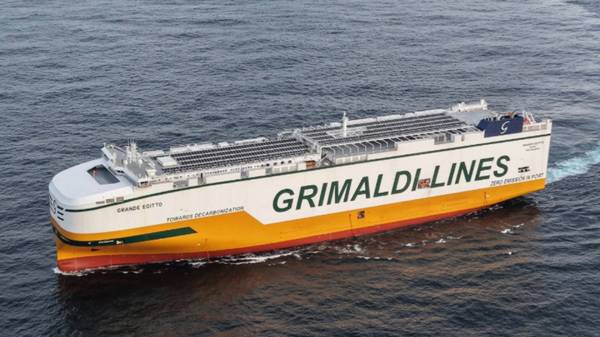
Grimaldi adds fourteenth ammonia-ready car carrier to fleet
Grande Egitto, built by China Merchants Heavy Industries Jiangsu, will operate on the Asia–East Africa trade route. |
|
|
|
||
|
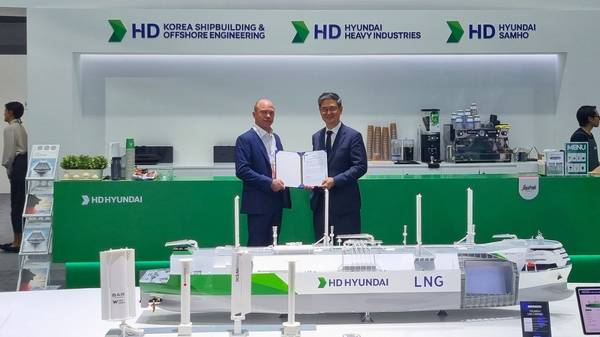
ABS grants design approval for ammonia bunkering vessel from HD HHI and HD KSOE
Approval in principle covers a 22,000-cbm multi-purpose vessel intended to supply ammonia as marine fuel. |
|
|
|
||
|
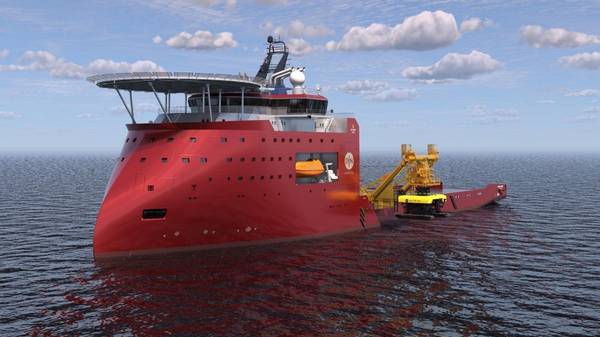
Jan De Nul exercises option for alternative-fuel-capable trenching vessel
Belgian marine contractor confirms option for a second subsea trenching vessel built on Ulstein's customised design platform. |
|
|
|
||
|
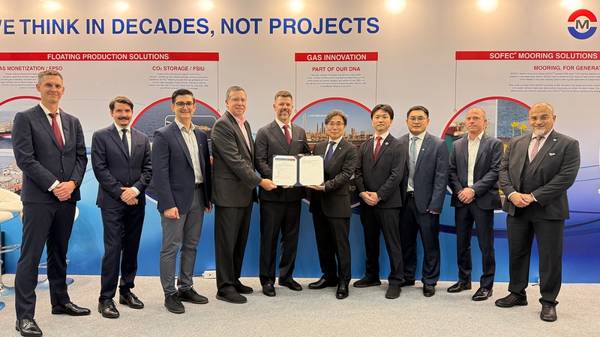
ABS grants technology qualification approval for FPSO fuel cell system
MODEC and Eld Energy’s solid oxide fuel cell system moves towards offshore trials after clearing initial ABS review stages. |
|
|
|
||
|
Trafigura spins off VLCC fleet into new listed shipping company
Volare Shipping established, with eight ammonia-ready vessels on order. |
|
|
|
||
|
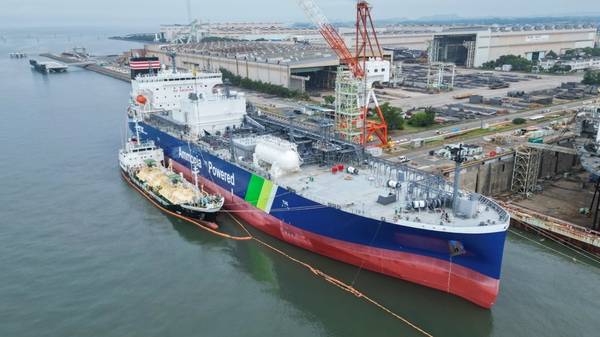
Japan completes world's first ship-to-ship ammonia bunkering to ammonia-fuelled vessel
Ammonia fuel transferred between ships at Ariake Shipyard ahead of gas carrier’s sea trials. |
|
|
|
||
|
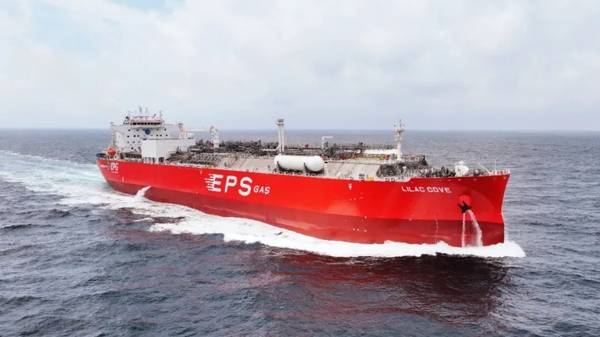
Jiangnan delivers second LPG dual-fuel VLAC in series to Singapore’s EPS
Lilac Cove, the world’s largest liquid ammonia carrier, joins Ivy Cove as Jiangnan advances its six-ship VLAC programme. |
|
|
|
||
|
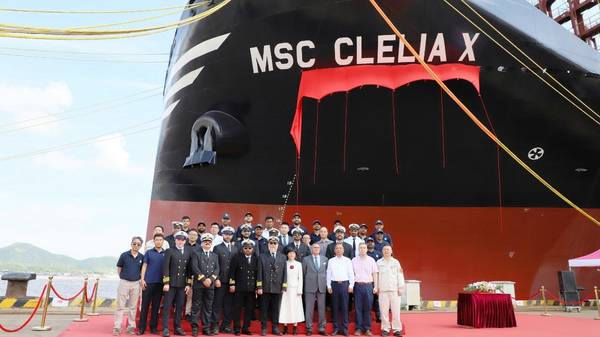
MSC LNG dual-fuel container ship delivered almost a year early
Chinese shipbuilder hands over sixth 10,300-TEU vessel in series to MSC ahead of contract schedule. |
|
|
|
||
|
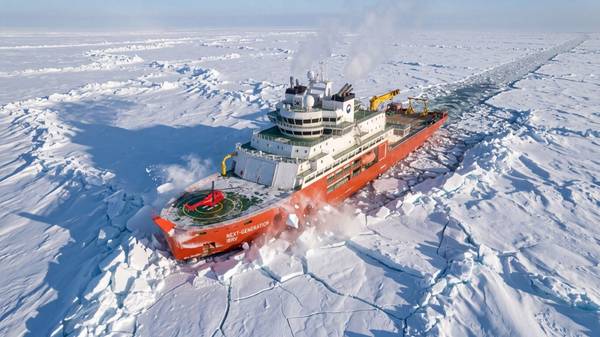
Steel cutting marks start of construction on dual-fuel icebreaking research vessel
Hanwha Ocean begins building a dual-fuel LNG/MGO icebreaker for the Republic of Korea’s Ministry of Oceans and Fisheries, due for delivery in 2030. |
|
|
|
||
|
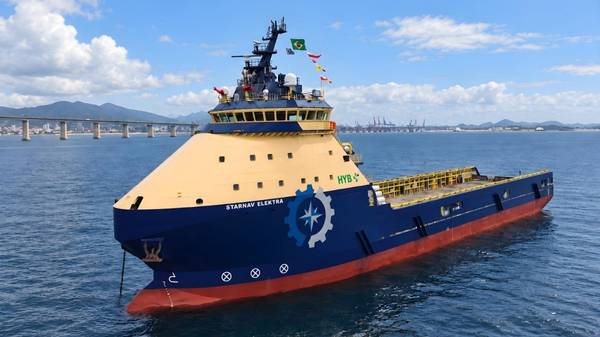
Petrobras christens first vessel under Mar Aberto fleet renewal programme
Platform supply vessel Starnav Elektra, built in Santa Catarina with an all-female crew, marks the first delivery under the fleet initiative. |
|
|
|
||
| Ethanol edges into shipping’s fuel mix as methanol crossover eases adoption barriers [News & Insights] |
| Lloyd's Register confirms suitability of Daphne Technology's emissions monitoring system [News & Insights] |
| IMO issues shipboard biofuel blend checklist developed by IBIA [News & Insights] |
| IMO issues shipboard biofuel blend checklist developed by IBIA [News & Insights] |
| Four firms partner to trial continuous emissions monitoring on LNG carrier [News & Insights] |
