Mon 19 Dec 2011, 08:32 GMT

Initiative launched to expand ship data collection


New environmental program aims to better coordinate the collection of information from ships.


Leading ocean companies have initiated a major new World Ocean Council (WOC) program to increase and better coordinate the collecting of ocean and atmospheric information from ships and offshore structures.

Representatives from shipping, oil and gas, marine technology and other sectors met with scientists, government agencies, and inter-governmental organizations at the first WOC “Smart Ocean / Smart Industries” workshop, hosted by the UNESCO Intergovernmental Oceanographic Commission (IOC) on 12-13 December 2011 in Paris.

The gathering attracted more than double the number of participants anticipated and sparked immediate, concrete action. Within less than 24 hours of the workshop, several participant companies offered to deploy oceanographic sensors from their vessels in areas where more data is needed.

The event was designed to develop a common understanding among ocean industries and the scientific community on voluntary observation programs, understand the key barriers to scaling up these efforts and develop the principles, roadmap and workplan for moving forward. The ultimate goal is a global program to facilitate, coordinate and ramp up the efficient, cost effective ocean and atmospheric information collection by a growing number and range of vessels and platforms.

To foster and coordinate progress towards this goal, the workshop proposed creating a Smart Ocean / Smart Industries steering committee. The committee would bring together representatives of both the industry players interested in advancing observations from their ships and platforms as well as the key scientific, government and intergovernmental organizations engaged in observation efforts.

Eskild Lund Sorensen, Environmental Manager at Maersk Line stated, "The inaugural Smart Oceans/Smart Industries workshop was a tremendous success. Maersk joined the WOC to establish a group for cross-sectoral collaboration between commercial and scientific organizations. The enthusiastic engagement from the high number participants drawn to this unique event confirms our decision that joining the WOC to help lead this effort was a great way for Maersk to further implement our commitment to ocean sustainability."

"The WOC Smart Ocean / Smart Industries Working Group co-chaired by A.P Moeller-Maersk and Transocean will continue to facilitate and organize ocean business community involvement in the initiative. The WOC Working Group will further engage the scientific, government and intergovernmental community to identify the appropriate organizations and representatives to involve in the initiative," the World Ocean Countil said.

IOC Executive Secretary, Wendy Watson-Wright, declared: "The WOC Smart Ocean / Smart Industries workshop was an unprecedented gathering of industry, government and science. The WOC has created major interest and momentum for significantly scaling up ocean and climate observations by industry through a coordinated international program. The IOC was pleased to host the initial workshop and looks forward to continuing to work closely with the WOC and its members, the scientific community and our UN agency colleagues to move this forward."


Sing Fuels logo. Sing Fuels seeks Asia-based supply trader to bolster bunker procurement team  

Singapore bunkering firm is recruiting a supply trader to manage marine fuel purchasing across Asia.

MOL joint naming ceremony. MOL names world's first ammonia-fuelled Capesize bulk carriers  

Naming of Ruri Mirai, Ruri Sekai and Ruri Hikari signals ammonia's arrival as a marine fuel for large bulk carriers.

Washington State Hybrid-Electric 160-Auto Ferry vessel render. ABB wins Washington State Ferries' third hybrid-electric vessel order  

ABB extends its role in the US ferry operator's electrification programme, which targets emission-free operations by 2050.

Aurora Borealis vessel. Kawasaki Heavy Industries delivers LPG-fuelled carrier Aurora Borealis  

Ship could also be modified in future to allow for ammonia-fuelled operation.

Rendering of Estonia's first shore-charged electric ferry. Estonian State Fleet's shore-charged electric ferry completes model testing in Germany  

Hull and propulsion tests show the vessel's energy consumption remains within contracted limits with room to spare.

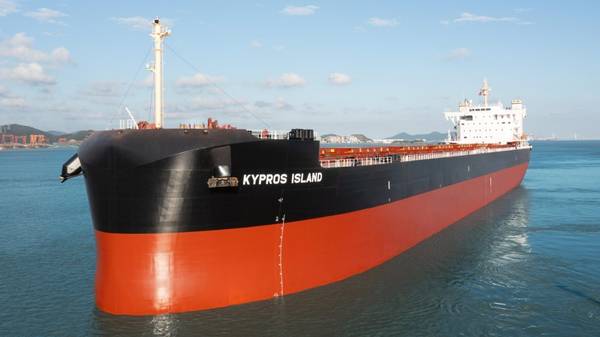
Kypros Island vessel. Tsuneishi delivers first methanol dual-fuel Kamsarmax bulk carrier from Chinese yard  

Shipbuilder claims progress towards establishing a mass-production system for vessels designed to reduce environmental impact.

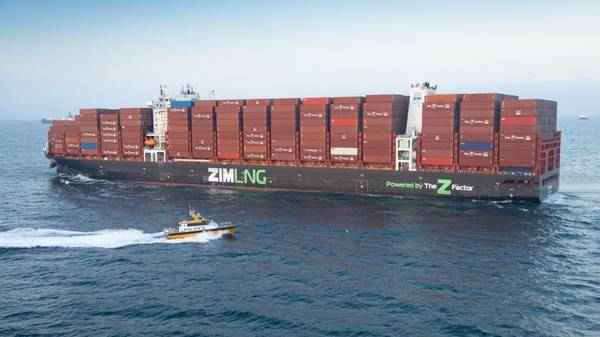
ZIM LNG container vessel. Los Angeles and Long Beach identify LNG and methanol as key near-term marine fuels  

Joint feasibility study maps out demand projections and infrastructure needs to support cleaner shipping fuels at San Pedro Bay

Alexander Treff, Christiania Energy, Christiania Energy welcomes student assistant to Copenhagen office  

Alexander Treff joins marine fuels firm while studying international business at Copenhagen Business School.

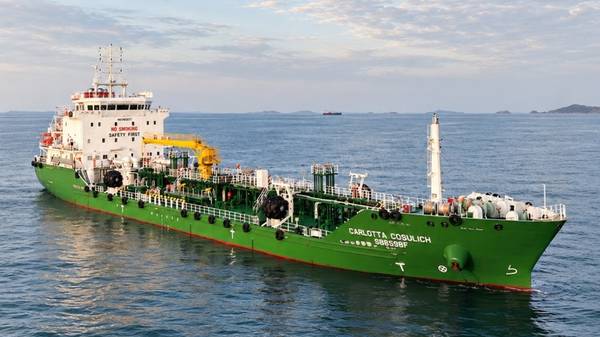
Carlotta Cosulich vessel. Cosulich Marine Energy takes delivery of third methanol-ready bunker tanker  

Carlotta Cosulich joins the group’s fleet, bringing its four-vessel bunkering programme closer to completion.

Rendering of a Wallenius Wilhelmsen vessel Wallenius Wilhelmsen orders four dual-fuel PCTCs, extends fleet renewal programme  

Shipping firm signs for LNG-fuelled car carriers with options for eight more, with deliveries from 2030.