
 |
Retrofitting existing vessels to run on alternative fuels can deliver net-zero emissions cost-effectively, but stronger policy support is needed to make the business case more compelling, according to Swiss marine power company WinGD's latest Fuel Economics Report.
The report models the conversion of a 16,000-TEU container vessel in 2030 to operate on alternative fuels using WinGD's high-pressure dual-fuel engines for LNG (X-DF-HP), methanol (X-DF-M) and ammonia (X-DF-A). Core costs — including conversion investment, fuel and carbon costs — were modelled under a global pricing regime similar to the IMO's Net Zero Framework as currently drafted.
Under these assumptions, all three retrofit pathways are said to outperform continued very low-sulphur fuel oil (VLSFO) operation over the vessel's lifetime, in terms of both cost and emissions reduction. LNG delivers the strongest and earliest financial return, while ammonia and biomethanol offer deeper emissions reductions but require longer payback periods. The best-performing pathway — LNG transitioning to low-greenhouse-gas (GHG) LNG — would, according to the report, pay for itself within six years.
The study also calculates the level of subsidy that would allow a payback within five years, which it puts at between $126 and $330 per tonne of CO₂ equivalent emissions. WinGD says this indicates that a reward mechanism for zero or near-zero emissions fuels under the IMO's Net Zero Framework would need to be at a comparable level to the $100–380 remedial units already under consideration for excess emissions.
A further finding from the modelling is that retrofit capital expenditure is not the dominant factor in the business case. Across the scenarios modelled, fuel cost and regulatory treatment are said to have a considerably greater influence on lifetime economics than the difference in conversion investment.
Carmelo Cartalemi, WinGD's Head of Strategic Marketing, said: "The important finding is that retrofit technology is increasingly not the limiting factor. The commercial outcome is determined far more by fuel price, fuel GHG intensity and the regulatory signal. Shipowners and operators need visibility not only on what a retrofit costs, but on what every tonne of fuel will cost and how its emissions will be treated by regulations over the vessel's remaining life."
Cartalemi added: "The valuable insight for operators is that cost-effective options for retrofitting already exist, although the case is far from settled. For regulators, the modelling shows that without strong policy, the most cost-effective options are unlikely to include the fuels that contribute most to shipping's decarbonisation trajectory."
The alternative fuel retrofits study is the latest in WinGD's Fuel Economics Report series. An earlier edition examined a potential pathway to cost-effective green ammonia uptake, drawing on real bunkering prices and life-cycle emissions analysis from fuel supplier Envision Energy. The series is intended to provide ship operators with data and methodologies to evaluate decarbonisation investments across different fuel choices.
|
IBT Bunkering & Trading appoints Sales Support Specialist
Björn Hauschild joins from shipyard broker CombiTrade. |
|
|
|
||
|
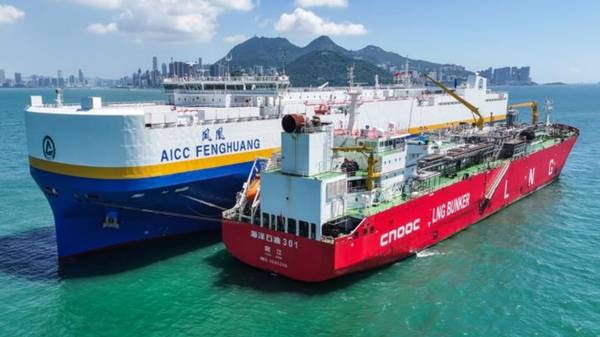
CLPe and CNOOC complete Hong Kong's first LNG bunkering of a pure car and truck carrier
Ship-to-ship operation delivered around 2,600 cbm of LNG to dual-fuel vessel AICC Fenghuang. |
|
|
|
||
|
Mercuria seeks senior sales and account manager for bunker delivery platform
Role can be based either remotely or at one of its offices in London, Geneva, Athens or Las Palmas. |
|
|
|
||
|
Molgas Energy Group appoints Riaan van Kralingen as head of clean fuels
Van Kralingen will oversee the company's liquefied biomethane and EU allowance portfolios, succeeding Caspar Gooren. |
|
|
|
||
|
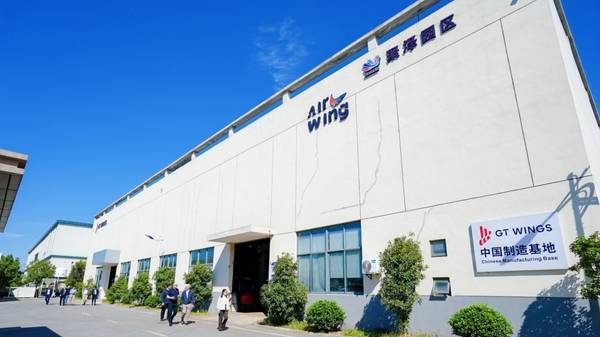
GT Wings launches compact AirWing S Jet Sail for smaller vessels
Wind propulsion developer adds lightweight unit to AirWing range as first customer-ordered AirWing20 units near completion. |
|
|
|
||
|
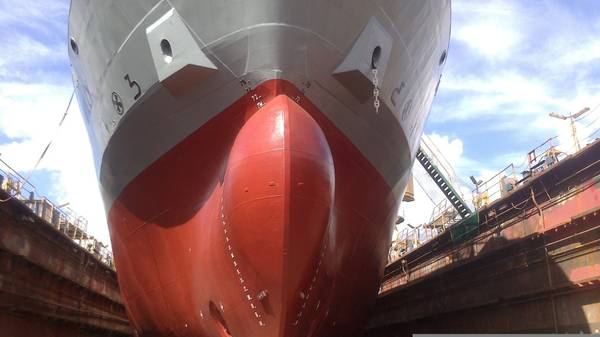
LR publishes retrofit guidance covering alternative fuels and energy-saving devices in one framework
New Guidance Notes address LNG, methanol, ammonia, hydrogen, wind-assisted propulsion and air lubrication retrofits for existing ships. |
|
|
|
||
|
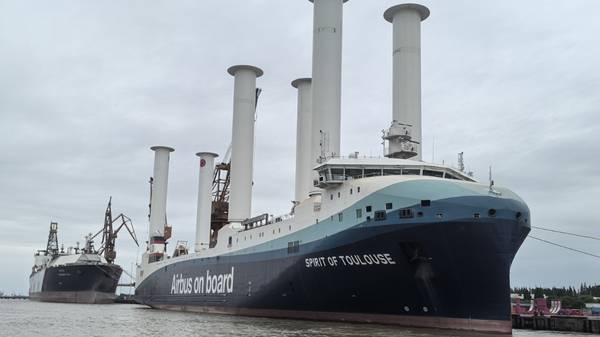
LD Armateurs' Spirit of Toulouse fitted with six Norsepower rotor sails
Six 35m rotor sails installed on the first of three methanol-capable ro-ro ships chartered by Airbus. |
|
|
|
||
|
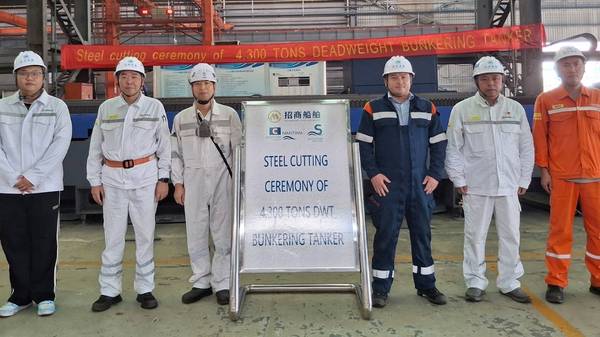
Maritima holds steel-cutting ceremony for Cap Morgiou, first of two Petroineos bunker vessels
Construction starts on bunker vessel able to carry conventional and low-carbon marine fuels, with delivery expected in early 2028. |
|
|
|
||
|
Singapore launches series of measures at SIBCON 2026
MPA announces LNG storage licences, digital bunkering grants and electric harbour craft incentives at 24th conference. |
|
|
|
||
|
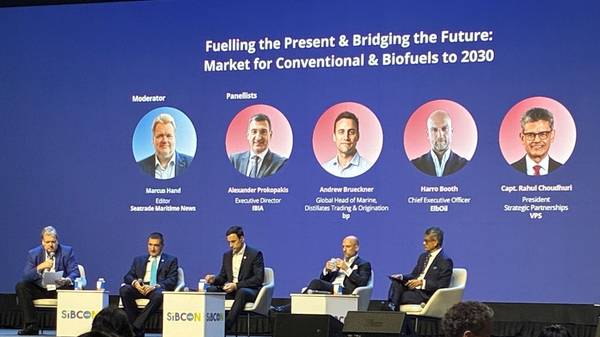
VPS outlines marine fuel standards and quality data at SIBCON 2026
VPS's Rahul Choudhuri addresses Singapore's evolving fuel standards and the quality of conventional fuels and biofuels. |
|
|
|
||
| Study finds methanol dual-fuel retrofit of Kamsarmax bulk carrier would take about 75 days [News & Insights] |
| WinGD signs global service agreement for TMS Cardiff Gas LNG carrier newbuilds [News & Insights] |
| Nuclear-powered LNG carriers cost more upfront but cut lifetime fuel bills, ABS-backed study finds [News & Insights] |
| Electric and hybrid ferries could cut Sea of Marmara emissions by 63%, IMO study finds [News & Insights] |
| Batumi Sea Port officials study decarbonisation practices in Hamburg [News & Insights] |
