
 |
Lloyd's Register (LR) has published new Guidance Notes for Retrofit of Alternative Fuels and Energy Saving Devices in a move designed to address the growing complexity of ship retrofit projects.
LR noted that regulatory and commercial pressures from measures such as FuelEU Maritime, the Carbon Intensity Indicator (CII) and the IMO's greenhouse gas reduction ambitions are making retrofits an increasingly relevant route for owners, with owners using retrofits to improve efficiency, reduce emissions and extend asset life.
LR said the challenge is no longer simply selecting a single fuel or technology. Retrofit projects now require owners to consider fuel storage, engine compatibility, safety systems, crew training, statutory approvals, vessel design and long-term operational impacts.
Single framework
The publication brings alternative fuels and energy-saving devices together in one retrofit framework. It covers the practical considerations of converting vessels to LNG, methanol, ethanol, ammonia, hydrogen and LPG, in addition to the installation of wind-assisted propulsion systems (WAPS) and air lubrication systems (ALS).
A central theme is that many retrofit decisions must be made earlier in the process than owners may expect, and that engine conversion capability, available onboard space, tank location, fuel-system integration and project execution can strongly influence project costs, timelines and operational outcomes.
The guidance stresses early collaboration between owners, shipyards, equipment manufacturers, flag administrations and classification societies to help avoid delays and reduce project risk.
Energy-saving technologies and human factors
The document highlights opportunities for energy-saving technologies, with LR pointing out that WAPS can benefit from incentives under FuelEU Maritime through a reward factor designed to recognise their contribution to lowering greenhouse gas intensity.
LR also identified extensive crew training, revised operating procedures, updated safety management systems and new risk assessments as essential elements of deployment. This applies particularly to fuels such as ammonia and hydrogen, which introduce new safety considerations.
Paul Herbert, principal technology specialist at LR, commented: "With much of the global fleet expected to remain in service well into the next decade, retrofit projects will play a critical role in shipping's decarbonisation journey. The challenge is no longer identifying technologies, but understanding how those technologies can be safely, practically and economically integrated into existing ships while meeting increasingly demanding regulatory requirements."
He added: "As the industry evaluates a wider range of fuel and efficiency solutions, retrofit projects are becoming more complex. This guidance has been developed to give the industry a practical framework for navigating those challenges. By bringing alternative fuels and energy-saving technologies together in a single document, we are helping owners take a more informed and structured approach to retrofit decision-making and project delivery."
The Guidance Notes are available through LR's Retrofit Research programme.
|
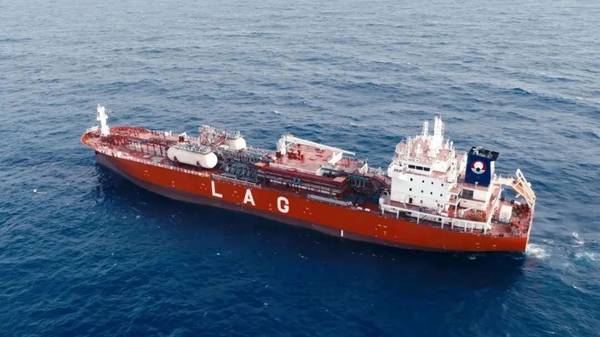
China delivers first domestically built ammonia-fuelled gas carrier
CCS-classed vessel becomes the world's second ammonia-fuelled gas carrier, testing rules for the IMO's zero-carbon shipping transition. |
|
|
|
||
|
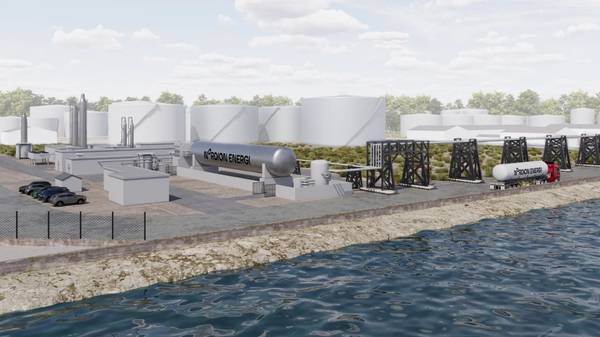
Storage tank installed as Gothenburg's LBG bunkering plant advances towards 2027 completion
Nordion Energi's liquefied biogas facility at the Port of Gothenburg takes a step forward with tank installation. |
|
|
|
||
|
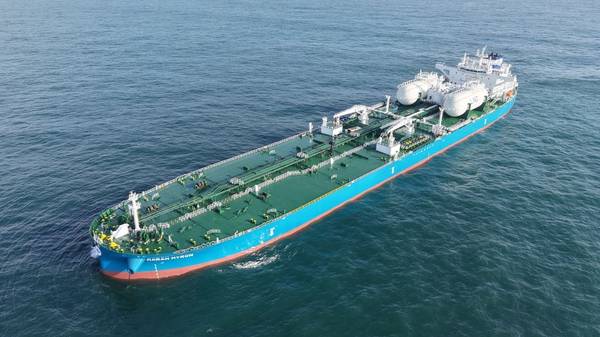
Maran Tankers takes delivery of dual-fuel Suezmax Maran Myron
Vessel is sixth dual-fuel tanker in eight-vessel series built by New Times Shipbuilding. |
|
|
|
||
|
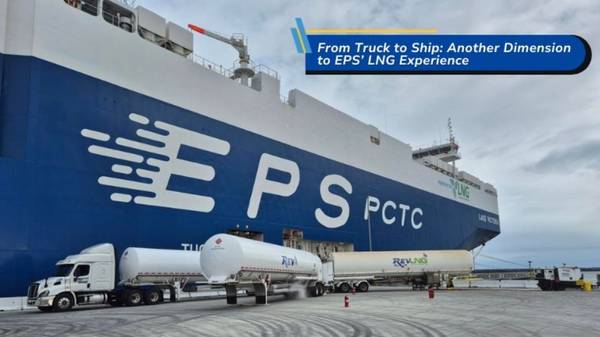
EPS completes first truck-to-ship LNG bunkering operation in Davisville
Fuel delivered to the pure car and truck carrier Lake Victoria whilst at berth. |
|
|
|
||

|
MPA opens applications for LNG floating storage unit licences
Singapore invites applications for up to two LNG floating storage unit licences to bolster bunkering supply resilience. |
|
|
|
||
|
Everllence's small-bore GenSet orders surpass 2,000 in 2026
Engine maker reports strong order intake across its small-bore portfolio, citing demand for reliable, fuel-flexible auxiliary power. |
|
|
|
||
|
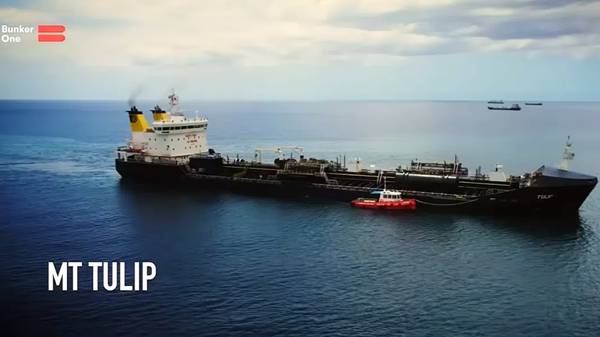
Bunker One renews MT Tulip charter, plans mass flow meter upgrade in Mauritius
Bunker One is keeping its bunker tanker in Mauritius while adding flow metering technology to improve delivery transparency. |
|
|
|
||

|
Fund for Energy Efficiency Technologies becomes first to adopt revised Singapore-Asia Taxonomy
FEET's adoption coincides with Lloyd's Register's independent review of GCMD's methodology for quantifying fuel savings from wind-assisted propulsion systems. |
|
|
|
||
|
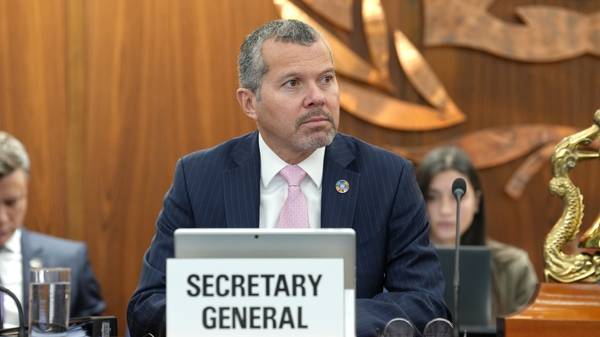
IMO chief urges states to enforce safety rules in Strait of Hormuz amid rising attacks
Arsenio Dominguez says more than 130 attacks on commercial vessels have been verified since February, with at least 25 seafarers killed. |
|
|
|
||
|
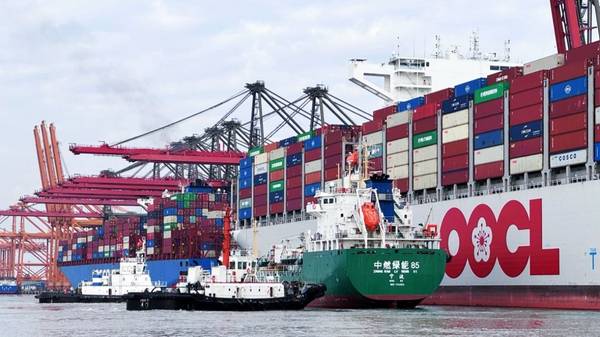
Xiamen Port launches 'green methanol bunkering' with OOCL Wisdom
Boxship received 1,005 tonnes of methanol, corresponding to a reduction of more than 1,600 tonnes in carbon emissions, says COSCO Shipping. |
|
|
|
||
| Fund for Energy Efficiency Technologies becomes first to adopt revised Singapore-Asia Taxonomy [News & Insights] |
| Alternative-fuel ship orders outpace port infrastructure, LR report finds [News & Insights] |
| Ocean Network Express names ammonia- and methanol-ready newbuild ONE Symphony [News & Insights] |
| EmissionLink urges EU to channel ETS revenues into shipping carbon capture trials [News & Insights] |
| Ports told to prepare now for advanced nuclear power [News & Insights] |
