
 |
Shipping faces a growing risk of being charged twice for the same emissions as EU and IMO carbon frameworks converge, according to emissions management firm EmissionLink, which is calling on regulators to provide clear, enforceable rules on how the two systems will interact.
The European Commission has committed to preventing shipping companies from facing duplicate carbon costs as the International Maritime Organization (IMO) advances its own global net-zero framework. EmissionLink says the principle is welcome, but warns that the practical reality is far more complex than the commitment implies.
The maritime sector is already operating under a crowded regulatory landscape. The EU emissions trading system (EU ETS) and FuelEU Maritime are both now in force, while the IMO is moving towards its own carbon pricing mechanism. Each framework carries a different scope, timeline, calculation methodology and commercial logic, EmissionLink notes.
A vessel trading into Europe may be exposed to all three sets of obligations simultaneously; however, EmissionLink points out that the party responsible for compliance will not always be the same under each scheme, that emissions data may not be calculated in the same way across frameworks, and that costs may not be recoverable under existing charterparty terms.
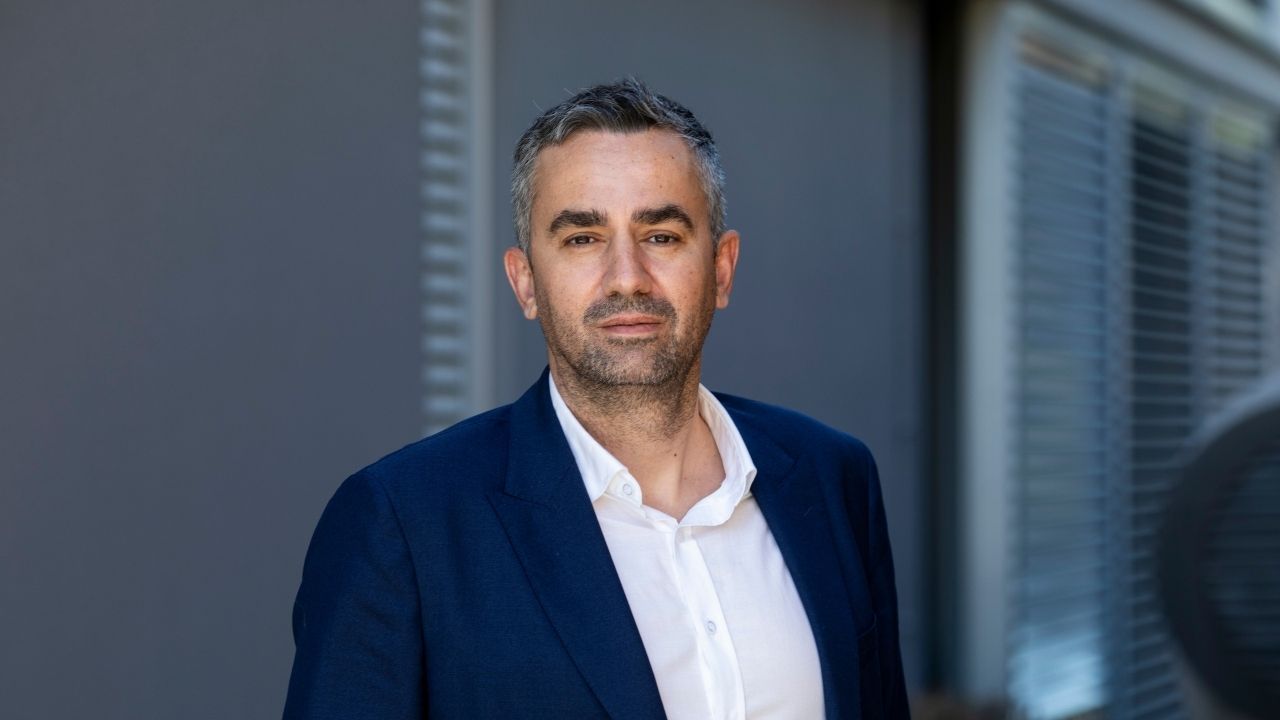
"The industry needs to know how EU and IMO obligations will be reconciled, how equivalent payments will be recognised, and what evidence shipowners will need to prove that the same tonne of emissions has not been penalised more than once," commented Philippos Ioulianou, managing director of EmissionLink. "This will determine whether carbon regulation is seen as a fair transition tool or simply another cost burden."
EmissionLink, which claims to have supported the delivery of FuelEU emissions data for more than 600 vessels, giving it direct insight into the compliance challenges faced across different vessel types and operating profiles, asserts that the risk for shipowners extends beyond paying twice for the same emissions. It also includes reporting twice, calculating twice and building parallel compliance processes — all of which increase cost, complexity and administrative burden.
"Every vessel has a different operating profile, every voyage has a regulatory consequence, and every compliance decision can affect cost exposure, penalties, pooling options, charterparty recovery and future planning," Ioulianou said. "The challenge is no longer simply submitting the right figure into the right system. It is understanding how current and future emissions schemes interact, how they affect the business, and how to avoid double penalties, duplicated processes and unnecessary costs."
EmissionLink also raised concerns about the use of revenues generated through EU ETS and FuelEU-related mechanisms. Speaking at a revent forum during Posidonia, Ioulianou argued that EU member states must set out a clear pathway for directing those funds back into maritime decarbonisation.
"These funds should be directed back into the maritime sector," he stressed. "They should not become a general revenue stream for governments. Demanding that shipping pays more while failing to invest in the infrastructure needed to make decarbonisation possible is not a transition strategy. It is taxation with a green label."
The emissions management specialist is calling for practical, transparent and enforceable rules that support compliance while helping the sector transition to lower-carbon operations.
"Shipping cannot decarbonise on promises alone," Ioulianou remarked. "The sector needs clarity, consistency and confidence that regulation will support the transition rather than simply adding cost and complexity."
|
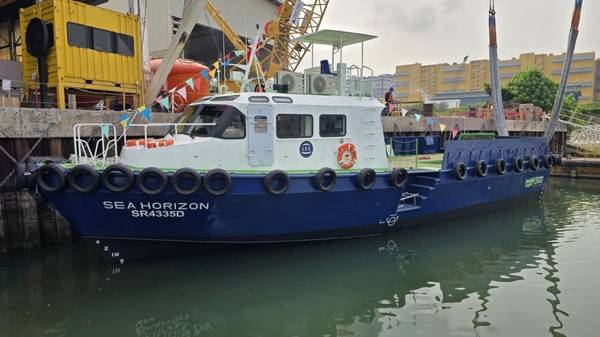
Pinnacle Marine launches second B100-compatible harbour craft for Les Star
Sea Horizon joins Singapore’s harbour craft fleet. |
|
|
|
||
|
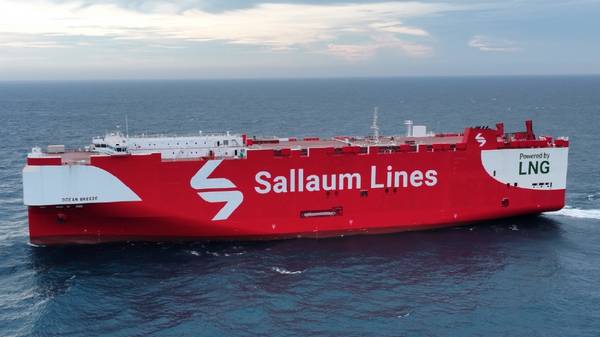
Sallaum Lines orders LNG-fuelled, ammonia-ready PCTCs from Chinese yards
Operator signs shipbuilding agreements for new generation of 8,600-CEU vessels, taking its newbuild investment past $1bn. |
|
|
|
||
|
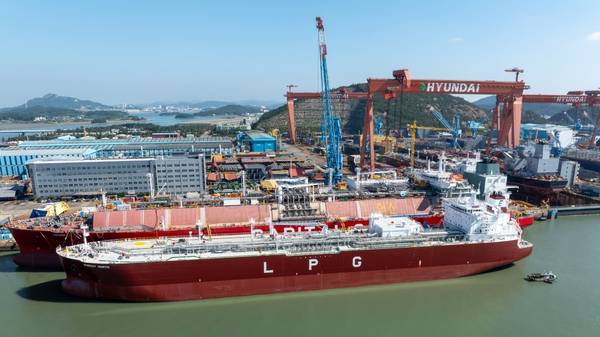
Nakilat takes delivery of dual-fuel carrier in South Korea
Ammonia-ready design positions vessel to play key role in future low-carbon energy supply chains, says Qatari firm. |
|
|
|
||
|
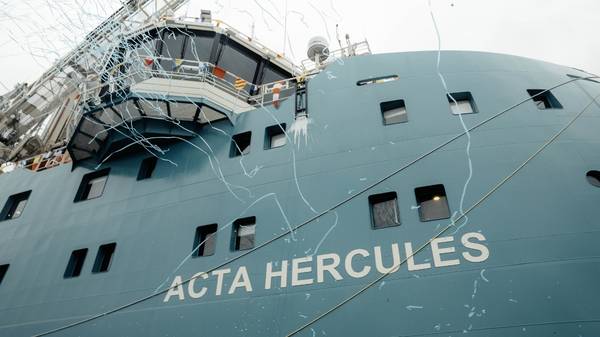
Acta Marine christens methanol dual-fuel vessel Acta Hercules in IJmuiden
Dutch operator marks the christening of its second newbuild CSOV. |
|
|
|
||
|
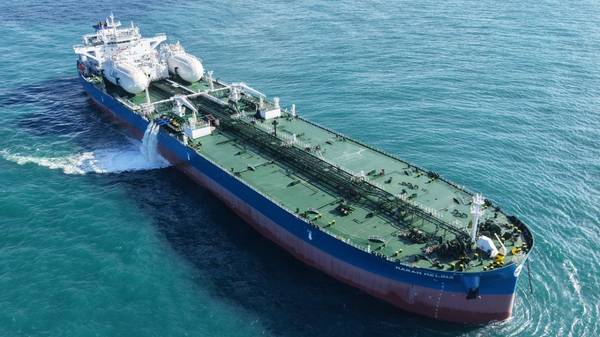
Angelicoussis Group takes delivery of fifth dual-fuel Suezmax tanker
Maran Tankers Management adds the 155,500-DWT Maran Melina to its fleet. |
|
|
|
||
|
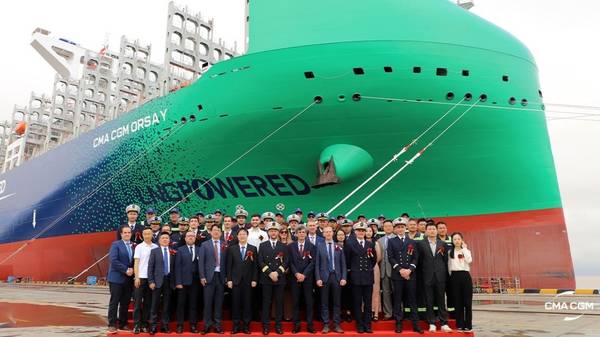
CMA CGM takes delivery of LNG-powered Orsay for Asia-Europe trade
24,212-TEU vessel joins 10-ship series, adding capacity to the carrier's FAL3 route. |
|
|
|
||
|
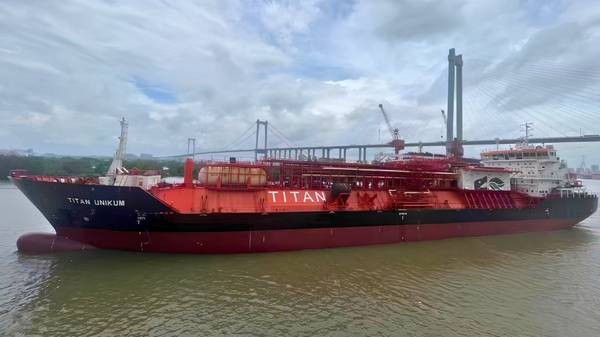
Titan Clean Fuels completes 15-year survey on LNG bunkering vessel Titan Unikum
Multi-gas carrier has undergone dry-docking work at a Chinese yard, preparing it for future upgrades. |
|
|
|
||
|
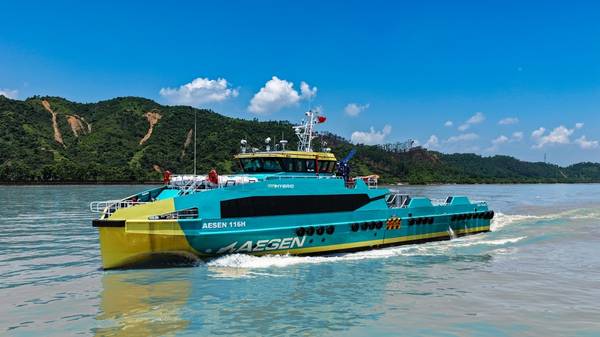
Lehmann Marine’s CUBE battery system debuts in China aboard hybrid crew boat
German battery maker’s first Chinese installation targets fuel savings on a Cheoy Lee-built vessel for a Singapore operator. |
|
|
|
||

|
Iino Lines secures transition loan from Mizuho Bank for LPG dual-fuel VLGC
Japanese shipowner finances the acquisition of Lumi Aurora through a green transition finance framework aligned with ICMA guidelines. |
|
|
|
||
|
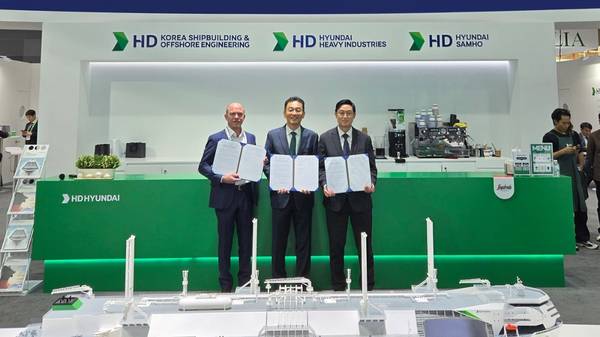
ABS, HD KSOE and Siemens partner on digital twin technology for ammonia-fuelled ship safety
Three firms will combine CFD analysis and digital twin technology to assess ammonia leak scenarios in vessel design. |
|
|
|
||
| Electric and hybrid ferries could cut Sea of Marmara emissions by 63%, IMO study finds [News & Insights] |
| NYK shares two years of ammonia-fuelled tugboat data with IMO [News & Insights] |
| IMO and EMSA gather maritime experts to address seafarer training for alternative fuels [News & Insights] |
| IMO seminar examines technical hurdles facing ammonia as a marine fuel [News & Insights] |
| IMO sub-committee finalises revised methanol fuel safety guidelines [News & Insights] |
