
 |
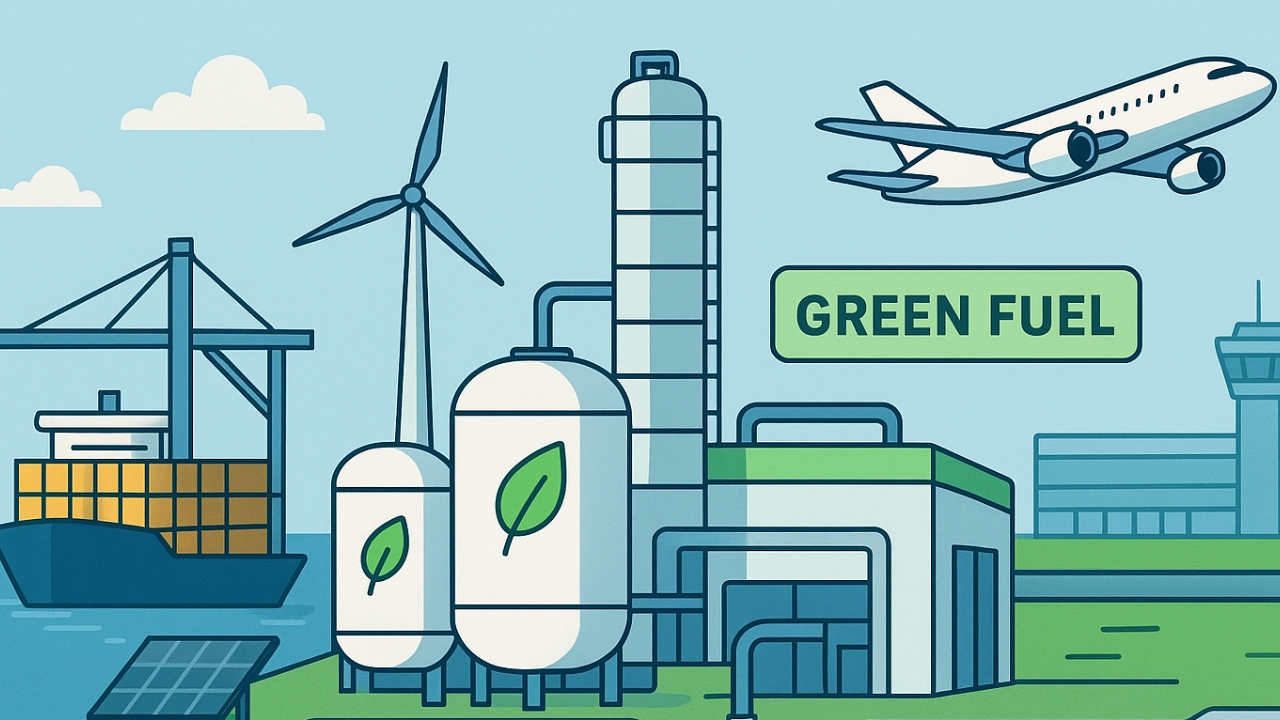
The European Commission's Sustainable Transport Investment Plan (STIP), published on November 5, contains measures to boost e-fuels production but needs rapid implementation if the EU is to retain its industrial leadership in the technology, according to Transport & Environment (T&E).
The plan includes a commitment to establish an EU-wide double-sided auction for maritime and aviation fuels, based on a pilot e-sustainable aviation fuel (SAF) auction, which would provide funding to kickstart production. However, the environmental campaign group argues this should be limited to e-fuels only.
In the short term, STIP proposes relying on existing tools — the Hydrogen Bank and the Innovation Fund — which are now beginning to back e-fuels projects, including e-SAF. According to T&E, while this sends a positive signal, these tools alone have so far been unable to de-risk industrial-scale e-fuels production. The organisation warns that the plan's most impactful measures may arrive too late as action on e-fuels is needed by 2026.
Antony Froggatt, senior director for aviation, shipping, and energy at T&E, said: "The plan clearly acknowledges the important role of e-fuels in decarbonising aviation and shipping. For the first time, the EU will develop an effective financial instrument to kickstart production. The EU must now follow through on these commitments if it is to help preserve Europe's technological leadership in e-fuels. Leaving the door open to biofuels will only detract from this."
The European Commission will "launch preparations" for the creation of a market intermediary to run the double-sided auctions. T&E welcomed this tool, saying it is needed to spur the e-fuels industry and match the requirements of e-fuels producers for long-term certainty with the short-term contracts used in shipping and aviation.
Biofuels concerns
T&E expressed concern that the plan leaves the door open for biofuels being included in double-sided auctions. According to the organisation, biofuels is a more mature industry and could absorb the limited resources of the market intermediary. T&E argues that only e-fuels should be eligible for the auctions as there are no market barriers for biofuels production.
The plan also lacks support for battery-powered vessels and developing the potential of batteries in planes, T&E said.
STIP promotes the continued use of biomethane in shipping. T&E argues that the limited stocks of biomethane should be prioritised for sectors that currently depend on fossil gas and need to urgently reduce their dependence on imports, such as household heating and heavy industry. The organisation said this is concerning because currently ships only buy green certificates for biomethane while the fuel is actually burned in household boilers and other sectors.
Carbon market revenues
STIP only "encourages" member states to use existing carbon market (ETS) revenues to decarbonise shipping and aviation. T&E said that the review of the ETS in 2026 should consider incorporating a requirement to use ETS revenues for e-fuels investments.
Furthermore, according to T&E, STIP does not recognise the untapped potential of higher ETS revenues should the carbon markets be extended in scope. Around €2.4 billion a year in extra revenues could be raised between 2028 and 2035 by including small shipping vessels.
T&E said STIP failed to recommend EU-level supply mandates for marine e-fuels in European ports, which most EU countries have failed to implement despite clear guidance from the EU Renewable Energy Directive. The organisation also said the plan missed an opportunity to mobilise the European Investment Bank to invest in e-fuel production.
The EU measures under STIP are expected to mobilise at least €2.9 billion until the end of 2027. To meet the fuel targets set out in the FuelEU Maritime and ReFuelEU Aviation Regulations, around 20 million tonnes of sustainable alternative fuels (approximately 13.2 million tonnes of biofuels and 6.8 million tonnes of e-fuels) are projected to be needed by 2035, requiring an estimated €100 billion in investment.
|
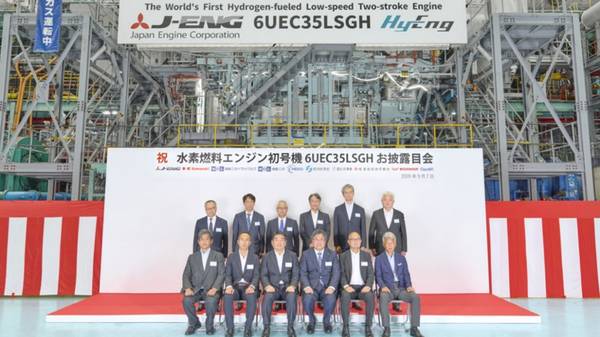
Japan Engine completes land-based testing of landmark hydrogen-fuelled engine for large vessels
Hydrogen co-firing rate of at least 95% achieved during factory testing. |
|
|
|
||
|
Ethanol edges into shipping’s fuel mix as methanol crossover eases adoption barriers
Rising interest from cargo owners, shared technology with methanol and Brazilian production growth push ethanol beyond regional niche status. |
|
|
|
||
|
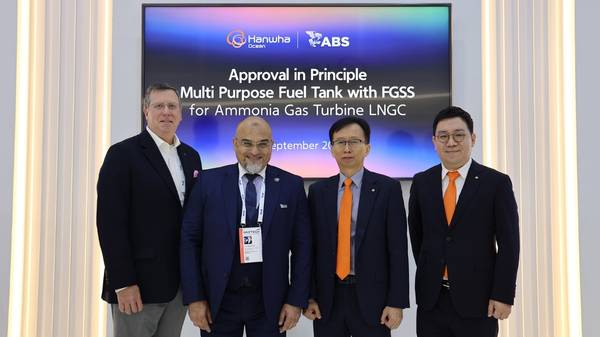
ABS grants Hanwha Ocean approval for dual-fuel tank enabling LNG-to-ammonia switch
In-principle approval awarded for fuel tank and supply system enabling LNG carriers to convert to ammonia without replacement. |
|
|
|
||
|
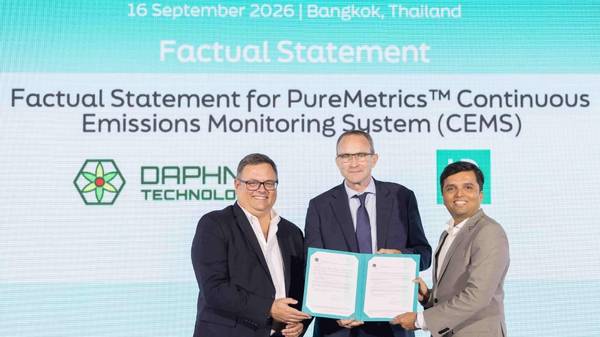
Lloyd's Register confirms suitability of Daphne Technology's emissions monitoring system
Factual Statement validates the PureMetrics design for monitoring greenhouse gas emissions from marine engines. |
|
|
|
||

|
IMO issues shipboard biofuel blend checklist developed by IBIA
Checklist for FAME-based biofuels formally incorporated into IMO document, supporting crews handling biofuel blends for the first time. |
|
|
|
||
|
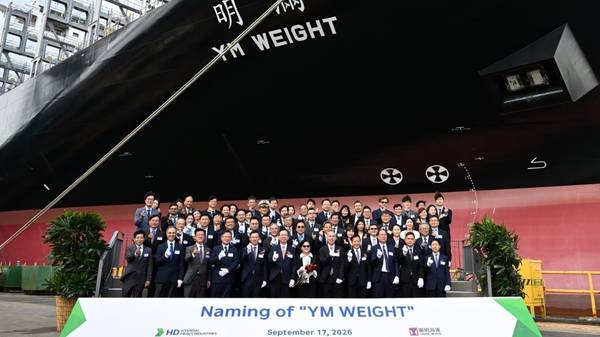
Yang Ming names fourth LNG dual-fuel container vessel YM Weight
Newbuild features high-pressure dual-fuel main engines capable of running on either LNG or low-sulphur fuel oil. |
|
|
|
||
|
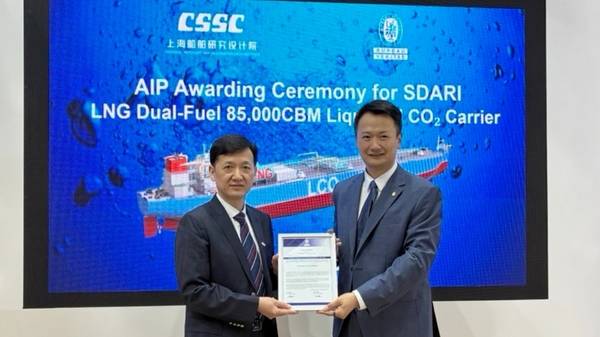
Bureau Veritas grants AiP to SDARI’s LNG dual-fuel liquefied CO₂ carrier design
Classification society approves 85,000-cbm vessel concept designed to support the growing carbon capture and storage sector. |
|
|
|
||

|
JuWonOil looking to strengthen with two Houston hires
Texas-based firm is recruiting a marine lubricants sales executive and a marine fuels and distillates trader. |
|
|
|
||
|
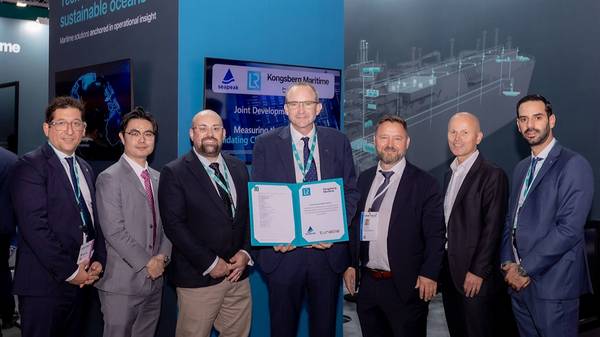
Four firms partner to trial continuous emissions monitoring on LNG carrier
LR, Seapeak, Kongsberg Maritime and Tunable will test onboard CO₂ monitoring against engine data and default emissions factors. |
|
|
|
||

|
Bunker Holding reshuffles commercial leadership across brand portfolio
Appointments announced across KPI OceanConnect, Glander International Bunkering and its digital sales operations. |
|
|
|
||
| 'Excess' fossil fuel profits should be taxed and given back to citizens, says T&E [News & Insights] |
| Study claims biofuels emit 16% more CO₂ than fossil fuels they replace [News & Insights] |
| Wind propulsion offers 'no fundamental barriers' for LNG carriers, study finds [News & Insights] |
| Shipowners risk financial exposure by delaying EU allowance transfers, EmissionLink warns [News & Insights] |
| SEA-LNG urges EU to protect mass-balance pathway for liquefied biomethane [News & Insights] |
| Orlen and Port of Gdynia partner to explore LNG and bio-LNG bunkering options [News & Insights] |
| EmissionLink urges demand aggregation to unlock zero-emission fuel investment [News & Insights] |
