
 |
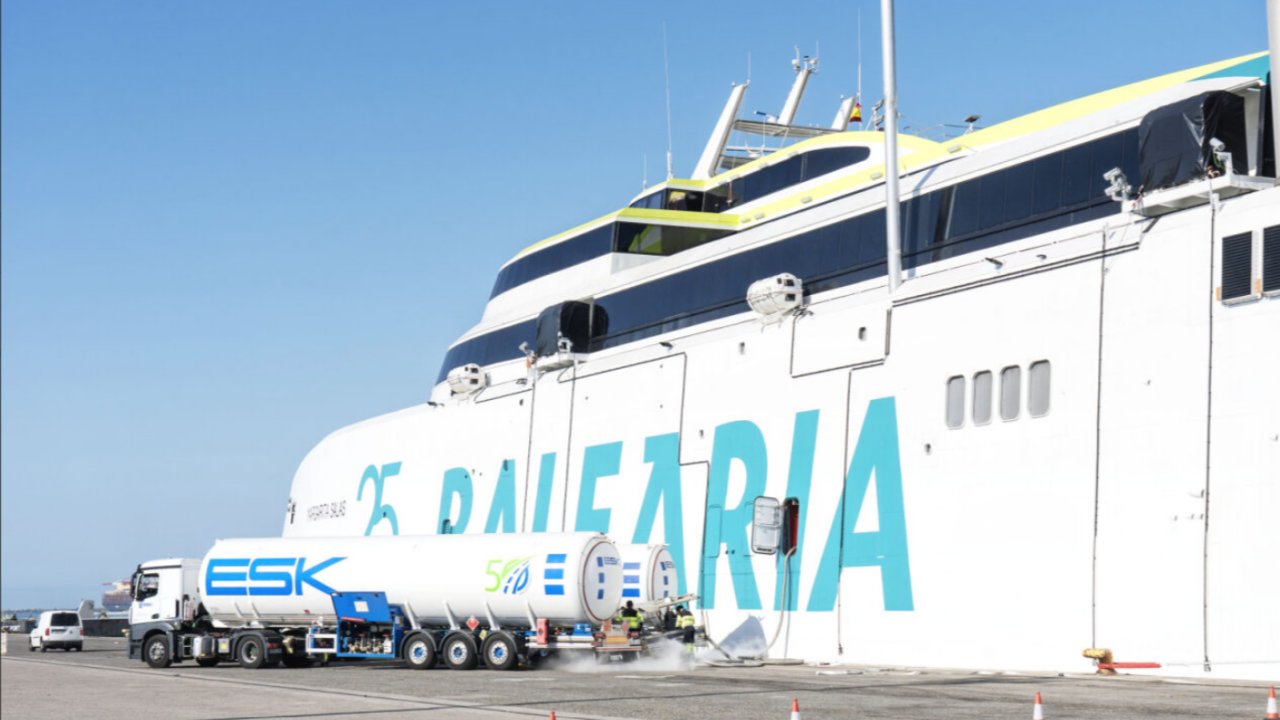
Spanish ferry operator Baleària has begun operating three of its vessels exclusively on bio-LNG, claiming the ships now achieve zero emissions on their regular routes.
The fast ferry Margarita Salas and ferry Abel Matutes, which connect Barcelona-Alcudia-Ciutadella, and the ferry Rusadir operating between Málaga-Melilla, have been running solely on the renewable fuel since early September, the company said on October 2.
Baleària has purchased 132 gigawatt-hours of bio-LNG, which it says will power the three dual-engine vessels emission-free until December 2025. This volume represents 13% of the LNG consumed by the company's entire gas-powered fleet throughout 2024.
The company adds that the bioLNG use will reduce emissions by 80,300 tonnes of CO2 between September and December — equivalent to removing 153,500 cars from roads or planting 160,650 trees annually.
The biomethane used to produce the bio-LNG is said to come from livestock waste. The process captures methane that would otherwise be released into the atmosphere and converts it into navigation fuel through Enagás regasification plants in Huelva, Barcelona, and Cartagena.
"The use of bio-LNG on our regular routes represents real and verifiable progress in our commitment to achieving net-zero emissions," said Georges Bassoul, CEO of Baleària. "The investments made in recent years in our fleet to equip it with dual-engine engines allow us to use this renewable fuel, which prevents the release of greenhouse gases and accelerates decarbonisation."
Baleària conducted its first bio-LNG supply tests at Spanish port terminals in the first quarter of 2025 and completed what it describes as Europe's first decarbonised ferry voyage between Barcelona and Menorca in 2021.
The company has also become the first ferry operator in Europe to receive ISCC EU (International Sustainability & Carbon Certification) accreditation, which guarantees the traceability and sustainability of biofuels through a Proof of Sustainability system.
The ISCC certification adds to Baleària's existing Green Maritime Europe environmental certification as the company pursues its decarbonisation strategy across its Mediterranean operations.
|
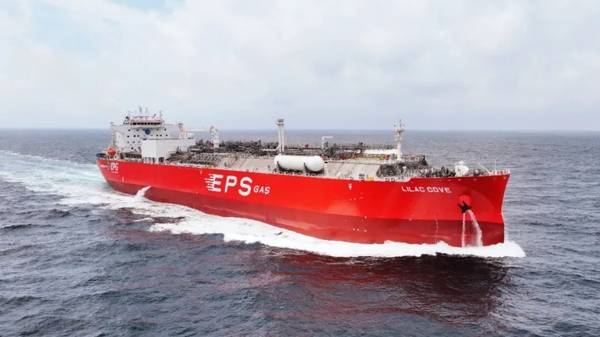
Jiangnan delivers second LPG dual-fuel VLAC in series to Singapore’s EPS
Lilac Cove, the world’s largest liquid ammonia carrier, joins Ivy Cove as Jiangnan advances its six-ship VLAC programme. |
|
|
|
||
|
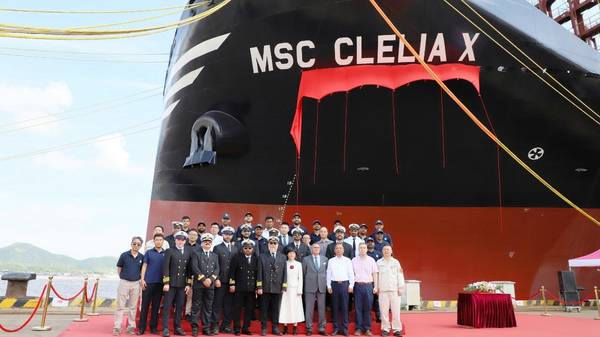
MSC LNG dual-fuel container ship delivered almost a year early
Chinese shipbuilder hands over sixth 10,300-TEU vessel in series to MSC ahead of contract schedule. |
|
|
|
||
|
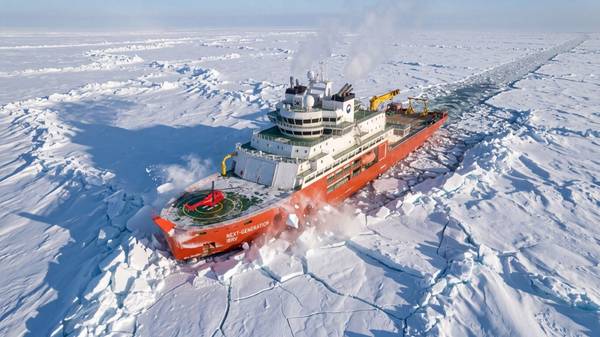
Steel cutting marks start of construction on dual-fuel icebreaking research vessel
Hanwha Ocean begins building a dual-fuel LNG/MGO icebreaker for the Republic of Korea’s Ministry of Oceans and Fisheries, due for delivery in 2030. |
|
|
|
||
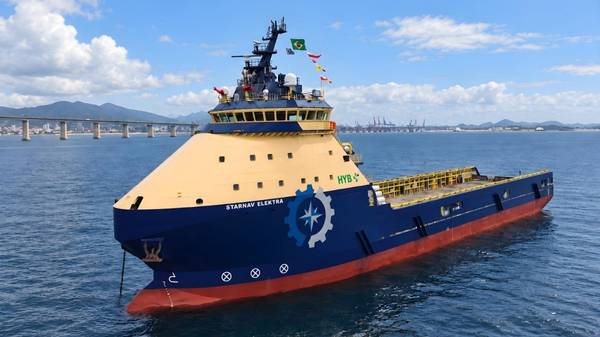
|
Petrobras christens first vessel under Mar Aberto fleet renewal programme
Platform supply vessel Starnav Elektra, built in Santa Catarina with an all-female crew, marks the first delivery under the fleet initiative. |
|
|
|
||
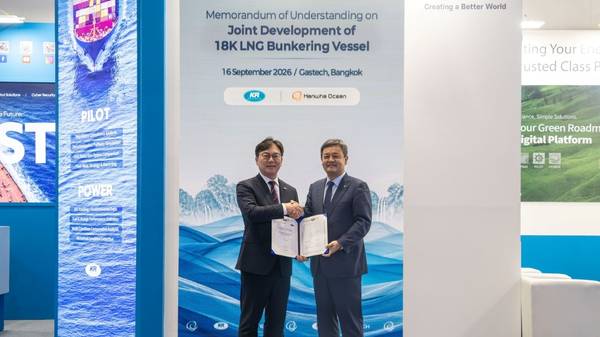
|
KR and Hanwha Ocean agree to develop 18,000-cbm LNG bunkering vessel designs
Pair will jointly explore two design concepts for a new LNG bunkering vessel. |
|
|
|
||
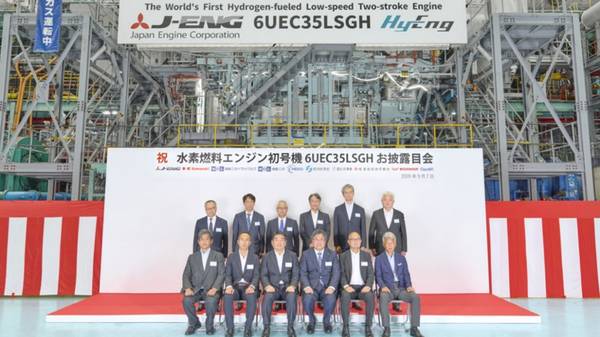
|
Japan Engine completes land-based testing of landmark hydrogen-fuelled engine for large vessels
Hydrogen co-firing rate of at least 95% achieved during factory testing. |
|
|
|
||
|
Ethanol edges into shipping’s fuel mix as methanol crossover eases adoption barriers
Rising interest from cargo owners, shared technology with methanol and Brazilian production growth push ethanol beyond regional niche status. |
|
|
|
||
|
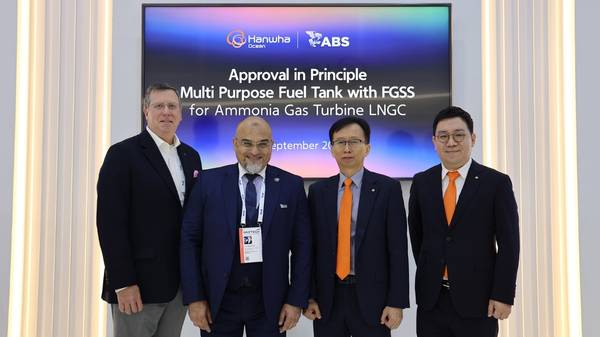
ABS grants Hanwha Ocean approval for dual-fuel tank enabling LNG-to-ammonia switch
In-principle approval awarded for fuel tank and supply system enabling LNG carriers to convert to ammonia without replacement. |
|
|
|
||
|
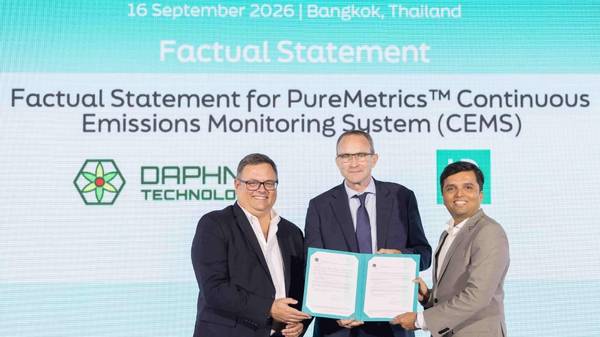
Lloyd's Register confirms suitability of Daphne Technology's emissions monitoring system
Factual Statement validates the PureMetrics design for monitoring greenhouse gas emissions from marine engines. |
|
|
|
||

|
IMO issues shipboard biofuel blend checklist developed by IBIA
Checklist for FAME-based biofuels formally incorporated into IMO document, supporting crews handling biofuel blends for the first time. |
|
|
|
||
| Anthony Veder and Gasum expand bio-LNG partnership for FuelEU Maritime compliance [News & Insights] |
| Van Oord deploys bio-LNG dredger for Dutch coastal project [News & Insights] |
| Viking Line runs vessels on bio-LNG for Gasum's FuelEU Maritime compliance pool [News & Insights] |
| Hapag-Lloyd secures multi-year liquefied biomethane supply deal with Shell [News & Insights] |
| Baleària Canarias completes first truck-to-ship LNG bunkering for fast ferry at Tenerife [News & Insights] |
| MacGregor wins ro-ro equipment contract for TT-Line’s battery-hybrid LNG ferries [News & Insights] |
| ABB wins power, propulsion and automation contract for New Zealand’s new Cook Strait ferries [News & Insights] |
| Flexibility, not fuel choice, is key to energy transition, says Auramarine [News & Insights] |
| GRSE wins West Bengal orders for two hybrid diesel-electric ferries [News & Insights] |
