
 |
Stolt-Nielsen, through its subsidiary Stolt-Nielsen Gas, has entered into a share purchase agreement to acquire all the shares of LNG bunker supplier Avenir LNG Limited owned by Golar LNG and Aequitas Limited — the Høegh family's investment holding company.
The transaction is expected to be finalized during the first quarter of 2025. Upon completion, Stolt-Nielsen Gas is set to control approximately 94.37% of the outstanding shares and votes in Avenir LNG.
As part of the deal, Golar LNG sold its stake in Avenir LNG to Stolt-Nielsen for $40m, but it will remain a 25% shareholder and debt provider to Higas Srl, a small-scale LNG storage terminal in Sardinia, Italy, that was spun off from Avenir LNG in October 2024.
As of end October 2024, the book value of Higas was $40.5m, of which $24.7m was shareholder loans and $15.8m shareholders equity.
Avenir LNG is a leading supplier of LNG and liquefied biomethane (Bio LNG) as marine fuel. It is the owner of five LNG bunkering vessels, with two newbuildings under construction.
Of the five vessels currently in operation, the 20,000-cbm Avenir Achievement, the 7,500-cbm Avenir Advantage and 7,500-cbm Avenir Accolade are chartered to Shell, PETCO Trading Labuan Company Ltd (PTLCL), a trading arm of Petronas, and NFE Transport Partners, a subsidiary of New Fortress Energy, respectively.
The 7,500-cbm Avenir Aspiration, which has been trading alongside the Avenir Ascension in Northwest Europe — performing small-scale supply services and ship-to-ship bunkering operations for Avenir's London-based physical LNG trading division, Avenir Supply and Trading — has recently been leased to LNG Shipping S.p.A., a wholly owned subsidiary of Eni, in a multi-year time charter commencing in 2025.
The Avenir Ascension, also with a 7,500-cbm capacity, is chartered by Avenir Supply and Trading.
As regards the two as-yet-unnamed ships under construction with Nantong CIMC Sinopacific Offshore & Engineering Co. Ltd (CIMC SOE), both with a 20,000-cbm capacity, they are scheduled to be delivered in Q4 2026 and Q1 2027, respectively, with the former having been chartered by Vitol.
Commenting on the transaction, Udo Lange, CEO of Stolt-Nielsen, said: "This strategic move not only strengthens our position in the LNG sector but also underscores our commitment to pursuing more sustainable energy solutions for the maritime, industrial, and power generation markets."
Jonathan Quinn, Managing Director Avenir LNG, remarked: "Today marks an exciting new chapter for Avenir LNG as we continue to execute our strategy to become the leading small-scale LNG shipping and trading company."
"With the increased support from Stolt-Nielsen Limited, Avenir LNG is well positioned to act dynamically as we pursue our growth strategy in this burgeoning market," Quinn added.
Golar CEO, Karl-Fredrik Staubo, commented: "The sale of Golar’s shareholding in Avenir LNG is in line with our strategy to focus on expanding our market-leading FLNG position. Golar is proud to have founded Avenir LNG into one of the largest small-scale LNG shipping companies globally alongside our partners Stolt Nielsen and Höegh. Following the sale of Hygo Energy Transition Ltd. in 2021, our Avenir LNG investment was no longer deemed a core asset of Golar's portfolio. We wish the Avenir LNG team and Stolt-Nielsen all the best for the future development of Avenir."
Subject to completion of the transaction, Stolt-Nielsen Gas is set to offer to buy the shares of all remaining shareholders in Avenir LNG, Stolt-Nielsen said.

|
PetroChina seeks LNG bunker trader to expand Asian marine fuel business
Role requires five to ten years of commercial experience in LNG, bunker trading, marine fuels, commodities, or energy trading. |
|
|
|
||
|
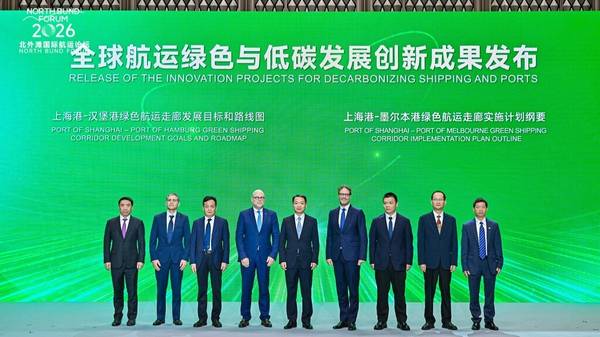
Shanghai and Melbourne ports move green shipping corridor into delivery phase
Ports launch implementation plan targeting green methanol, biofuels and shore power by 2035. |
|
|
|
||

|
WinGD CEO warns of mounting cost due to Net Zero Framework delay
Dominik Schneiter says shipping's fossil-fuelled newbuild boom shows the cost of the IMO's delayed climate policy. |
|
|
|
||
|
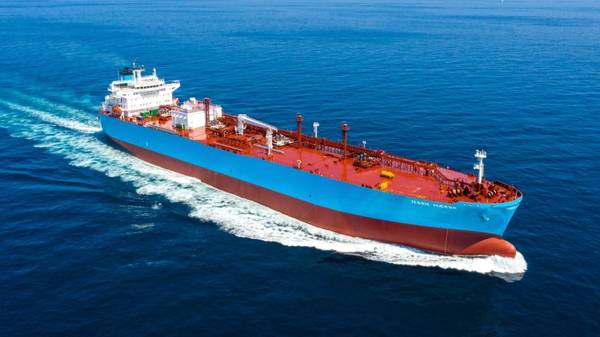
Maersk Tankers names second gas carrier in South Korea
Jessie Maersk, built to carry LPG and ammonia, joins a ten-ship series as the company expands its gas-shipping business. |
|
|
|
||
|
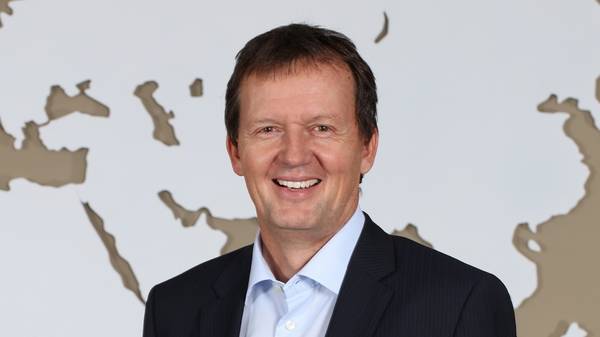
WinGD signs ten-year service deal for six COSCO LNG carriers
Swiss firm to provide global service and maintenance support for six LNG carriers powered by its 6X72DF dual-fuel engines. |
|
|
|
||
|
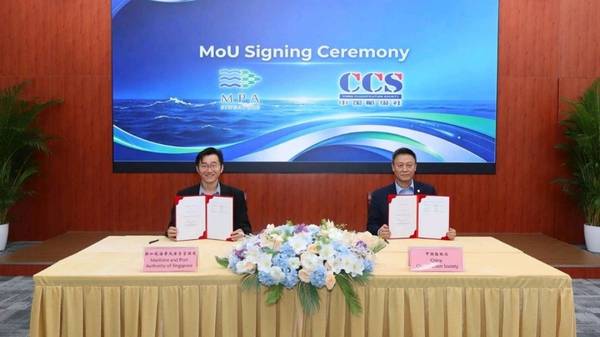
Singapore and China Classification Society deepen maritime ties with renewed decarbonisation pact
MPA and China Classification Society renew MOU, widening cooperation on green fuels, smart ships and talent development. |
|
|
|
||
|
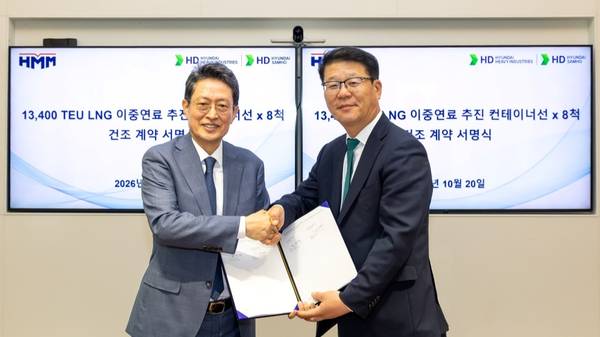
HMM orders eight LNG dual-fuel container ships in newbuild push
South Korean carrier commissions 13,000-TEU vessels from HD Hyundai, with deliveries due to begin in 2029. |
|
|
|
||
|
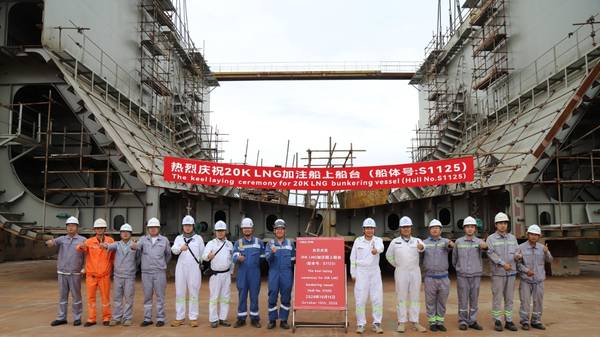
CIMC SOE advances construction on three LNG bunker vessels
Chinese shipbuilder progresses three bunker vessel projects in the same week. |
|
|
|
||
|
Verde Marine Energy adds two staff as it expands bunkering operations in ARA region
Dutch bunker supplier hires former Melroh Trading employees and launches RMG 380 3.5% HSFO barge service following Sunoco Marine tie-up. |
|
|
|
||
|
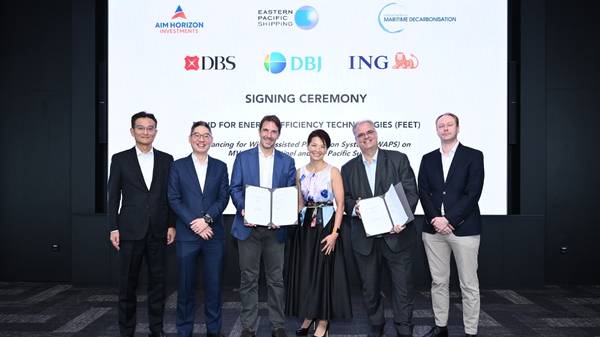
Fund for Energy Efficiency Technologies finances first wind-assisted propulsion projects with Eastern Pacific Shipping
GCMD and AIM Horizon Investments link verified fuel savings to financing for two EPS vessels fitted with wind-assisted propulsion. |
|
|
|
||
| Peninsula CEO seals deal to build LNG bunker vessel [News & Insights] |
| Wärtsilä to supply Scale Gas LNG bunker vessel's cargo handling system [News & Insights] |
| Stolt-Nielsen Gas chief bullish on firm's future role in LNG bunkering [News & Insights] |
| WinGD signs ten-year service deal for six COSCO LNG carriers [News & Insights] |
| HMM orders eight LNG dual-fuel container ships in newbuild push [News & Insights] |
| WinGD signs five-year service deal for NYK LNG carrier fleet [News & Insights] |
| Breeze Ship Design wins contract for Union Vega Offshore's battery-hybrid PSVs [News & Insights] |
| GRSE signs contract with ONGC to build four hybrid platform supply vessels [News & Insights] |
