
 |
Hamburg-based bunker firm ElbOil is marking its 15th anniversary, reflecting on a period of international expansion and growing involvement in the maritime energy transition.
Founded in March 2011 as a specialist broker and trader of marine fuels, the company has since developed into an international operation with offices across Europe, Asia and the Middle East. ElbOil now operates from various locations, including Zug, London, Singapore, Dubai and Shanghai.
According to the company, it works with more than 200 suppliers worldwide and sells around 2 million tonnes of marine fuels annually, having arranged the delivery of fuel to more than 15,000 vessels across global bunkering hubs.
The company established ElbOil Trading AG in Zug, Switzerland, in 2014. This was followed by the opening of offices in London in 2016, Singapore in 2020, Dubai in 2021 and Shanghai in 2024. In 2019, ElbOil launched 4seee, a data-driven platform designed to analyse bunker markets and support price forecasting.
Founder and CEO Harro Booth said the company’s growth reflects wider changes in the bunker sector.
"When we started ElbOil in 2011, the bunker market was far more predictable than it is today. Over the last 15 years, geopolitics, regulation and market volatility have fundamentally changed the environment in which shipping companies operate," Booth said.
He added that regulatory pressure and decarbonisation policies have accelerated change in recent years, including the introduction of frameworks such as the EU emissions trading system for maritime transport.
"Decarbonisation is clearly shaping the future of marine fuels, but the transition is complex. Shipowners are navigating questions around fuel availability, infrastructure and cost, and traders have to support that process with practical solutions," Booth said.
ElbOil has expanded into biofuels trading alongside its conventional marine fuel activities. Since 2020, the company has held REDcert and ISCC certification, sustainability schemes used within biofuel and biomass supply chains. It has also invested in initiatives related to alternative fuels, carbon management and ecosystem restoration.
Despite increasing digitalisation in the bunker sector, Booth said trading activity remains heavily dependent on relationships and industry experience.
"Digital tools can improve transparency and timing, but shipping is still a people industry. Experience, trust and judgement remain essential when markets become volatile or disputes arise," he said.
Looking ahead, Booth expects further structural shifts in the marine fuel market as alternative fuels gradually gain wider adoption.
"Shipping has always adapted to new energy realities. The challenge for the industry now is to manage that transition without losing efficiency or reliability in global trade," he said.
ElbOil GmbH is headquartered in Hamburg and also maintains an office in Jesteburg, Germany, alongside its international locations. The company focuses on marine fuel trading, broking and advisory services.

|
World Fuel seeks marine fuel sales executive in Singapore
Role requires more than five years' experience in bunkering, trading, energy or commodities. |
|
|
|
||
|
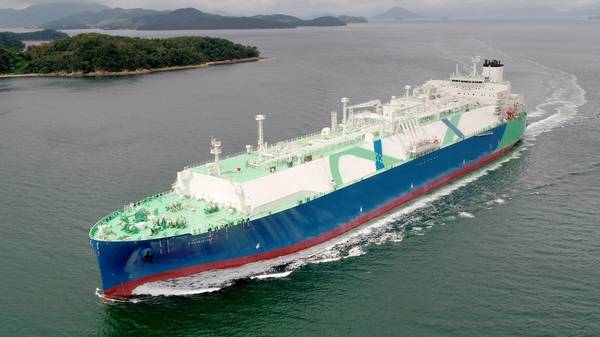
MISC names first of three new LNG carriers for QatarEnergy charter deal
Th'ailib, chartered to QatarEnergy for 15 years, extends MISC's long-term LNG fleet partnership with the energy producer. |
|
|
|
||
|
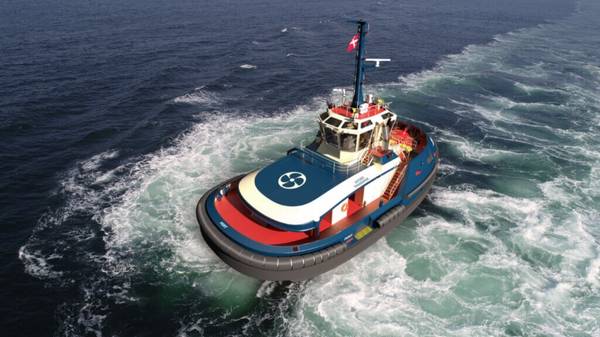
AYK Energy to supply batteries for Kongsberg Maritime’s electric Svitzer tugs
Battery maker AYK Energy expands its workboat portfolio with a deal to power four fully electric Svitzer TRAnsverse tugs. |
|
|
|
||
|
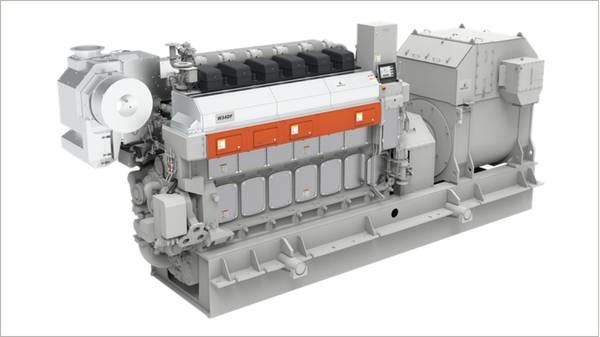
Wärtsilä to supply dual-fuel engines for 12 CMA CGM container ships
Wärtsilä will deliver 36 LNG dual-fuel engines for a dozen new 18,000-TEU container vessels being built for CMA CGM. |
|
|
|
||
|
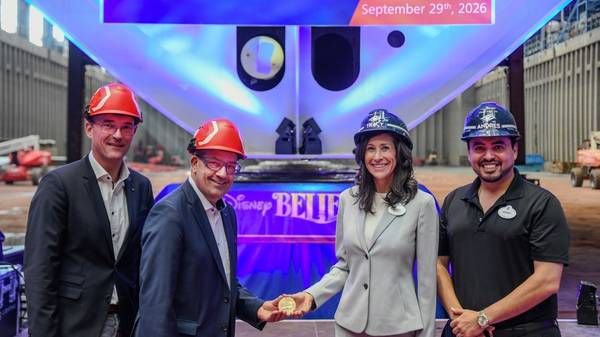
Keel-laying ceremony held for LNG-powered Disney Believe at Meyer Werft
Construction starts on second gigablock of Disney Believe, the fourth vessel in Disney Cruise Line’s Wish class. |
|
|
|
||
|
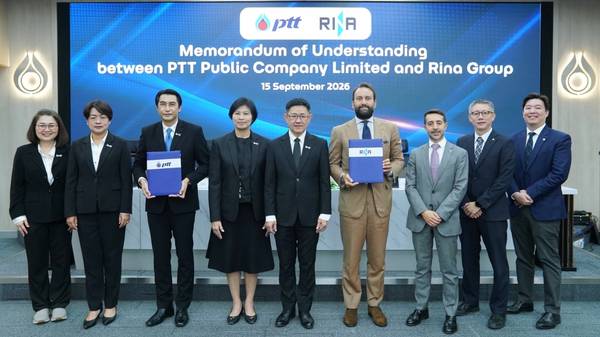
RINA and Thailand’s PTT sign MoUs to collaborate on decarbonisation technologies
Agreements establish a research and knowledge-sharing framework covering alternative fuels, hydrogen readiness and vessel electrification across the energy and maritime sectors. |
|
|
|
||
|
IBIA to host ethanol marine fuel workshop in New York
Limited-capacity session will examine ethanol’s commercial, technical and regulatory prospects as a shipping fuel. |
|
|
|
||

|
Corvus Energy’s Blue Whale NxtGen battery system gains DNV type approval
DNV approval confirms the safety and performance of Corvus Energy’s large-scale battery system for ferries, cruise ships and offshore vessels. |
|
|
|
||
|
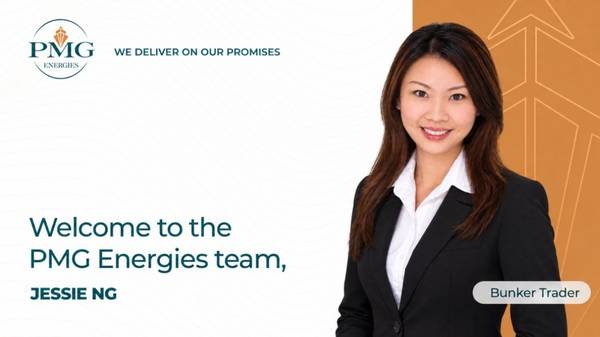
PMG Energies appoints Jessie Ng as bunker trader in Singapore
Bunker firm adds experienced trader to Singapore team. |
|
|
|
||
|
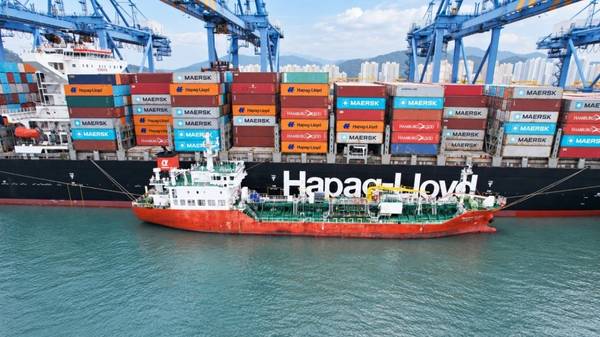
Hapag-Lloyd completes simultaneous-operations biomethanol bunkering in Busan
Container line bunkers ISCC EU-certified biomethanol from Goldwind during SIMOPS, advancing its 2024 supply agreement. |
|
|
|
||
| German commodities trader HMS Bergbau enters marine fuels market [News & Insights] |
| Gasum performs first truck-to-ship LNG delivery in Germany [News & Insights] |
| German ferry operator TT-Line cuts CO₂ emissions with bio-LNG switch [News & Insights] |
| HIF Global signs heads of agreement with German eFuel One for 100,000 tonnes of e-methanol annually [News & Insights] |
| Höegh Autoliners vessel connects to shore power for the first time in Europe [News & Insights] |
| Maersk completes first US ethanol bunkering of a deep-sea container ship [News & Insights] |
| TFG Marine fits mass flow meter to Jamaica-bound bunker barge [News & Insights] |
| Japan completes world's first ship-to-ship ammonia bunkering to ammonia-fuelled vessel [News & Insights] |
| Japan Engine completes land-based testing of landmark hydrogen-fuelled engine for large vessels [News & Insights] |
