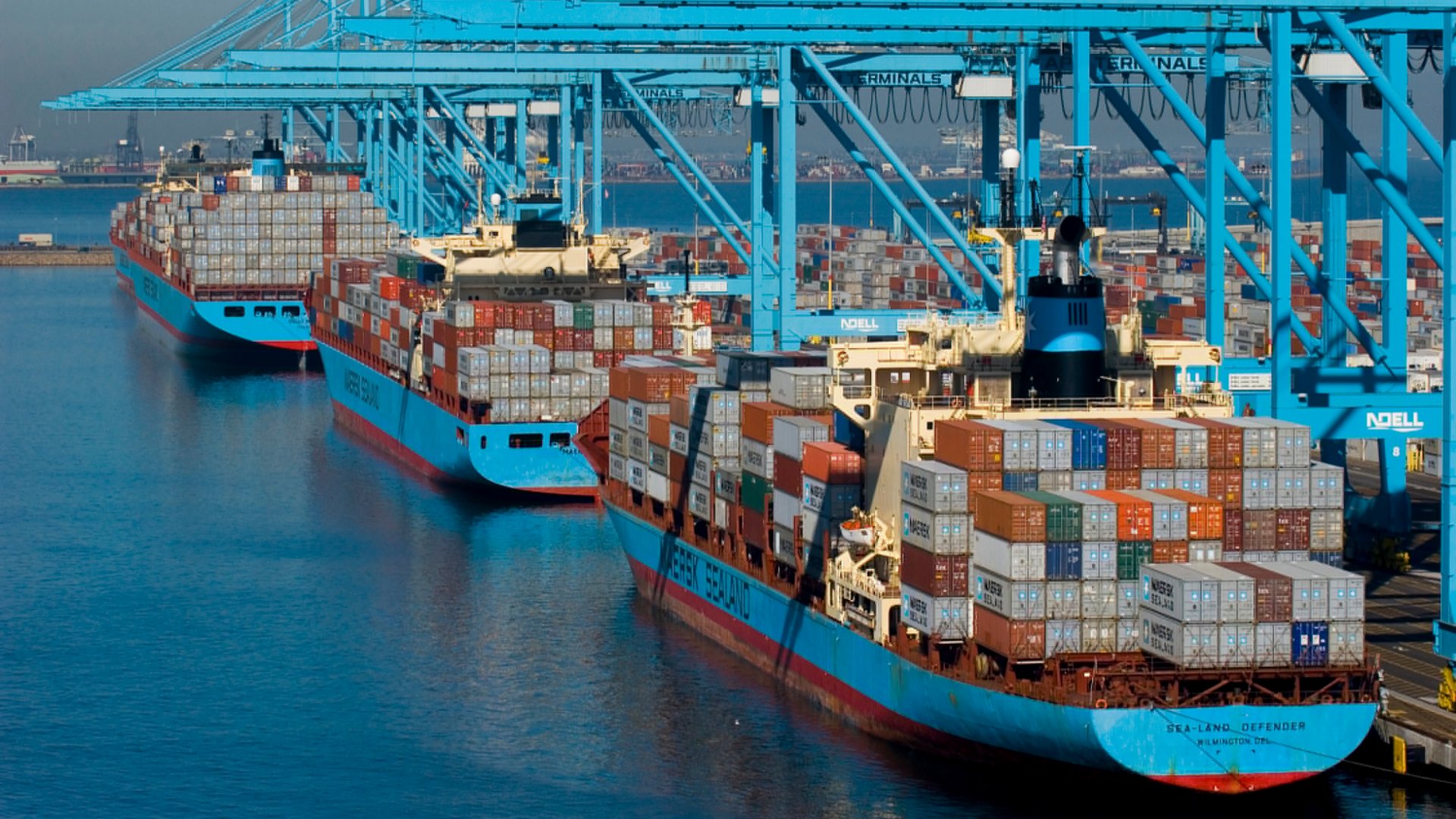
A.P. Moller - Maersk reports that its Ocean segment spent $2.708bn more on bunker fuel in 2022 compared to the previous year.
Maersk: Bunker costs, 2018-2022
| Year | $bn | +/-($bn) | +/-(%) |
| 2022 | 8.077 | +2.708 | +50.4 |
| 2021 | 5.369 | +1.534 | +40.0 |
| 2020 | 3.835 | -0.731 | -16.0 |
| 2019 | 4.566 | -0.476 | -9.4 |
| 2018 | 5.042 | +1.670 | +49.5 |
Maersk: Average bunker price, 2018-2022
| Year | Price($/mt) | +/-($) | +/-(%) |
| 2022 | 763 | +279 | +57.6 |
| 2021 | 484 | +112 | +30.1 |
| 2020 | 372 | -40 | -9.7 |
| 2019 | 412 | -12 | -2.8 |
| 2018 | 424 | +103 | +32.1 |
Maersk: Bunker consumption, 2018-2022
| Year | MMT | +/- MMT | +/-(%) |
| 2022 | 10.579 | -0.511 | -4.6 |
| 2021 | 11.090 | +0.768 | +7.4 |
| 2020 | 10.322 | -0.770 | -6.9 |
| 2019 | 11.092 | -0.802 | -6.7 |
| 2018 | 11.894 | +1.499 | +14.4 |
Ocean results: In its financial results, Ocean's profitability reached historically high levels in 2022 as operating earnings (EBITDA) reached $33.77bn — a YoY improvement of $12.338bn — and profit before financial items (EBIT) of $29.149bn was up $11.186bn on the previous period.
Group performance: As regards overall group results, A.P. Moller - Maersk posted a net underlying profit of $29.703bn — an increase of $11.533bn on the previous year's result.
Analysis, 2023: In its guidance for 2023, Maersk said a $100 change in the price of bunker fuel would lead to the group's EBIT varying by $0.4bn.
|
Uni-Fuels seeks general manager for London bunker trading desk
Nasdaq-listed marine fuel supplier recruits for commercial leadership role with P&L responsibility. |
|
|
|
||

|
NE Atlantic ECA will cause significant change to the current fuel mix | Steve Bee, VPS
The possibility of off-spec issues highlights the continuing need for proactive fuel testing to protect vessels. |
|
|
|
||
|
Smart ships failing to convert data into actionable intelligence, warns SmartSea
Maritime technology firm claims vessels collect vast amounts of data but lack integration to support decision-making. |
|
|
|
||
|
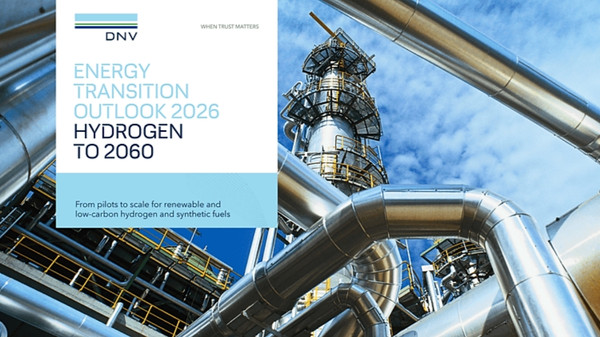
DNV forecasts 100-fold growth in clean hydrogen by 2060, with China leading expansion
Classification society projects $3.2tn investment in hydrogen sector, with maritime accounting for 15% of clean hydrogen use. |
|
|
|
||

|
Dual-fuel container ship and vehicle carrier fleet surpasses 1,200 vessels
World Shipping Council reports 65% year-on-year increase in operational dual-fuel vessels to 440 ships. |
|
|
|
||
|
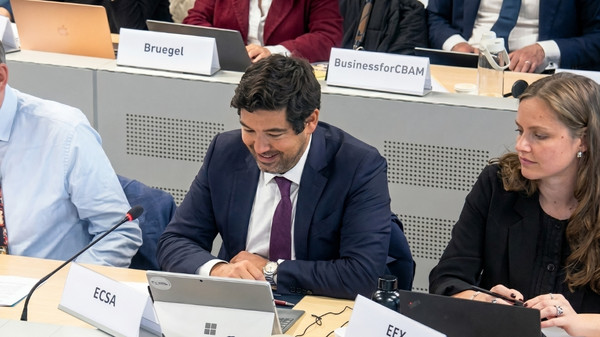
European Shipowners calls for ETS revenue investment and fuel supplier mandate
ECSA urges the EU to invest €9bn in annual ETS revenues in fuel production and infrastructure. |
|
|
|
||
|
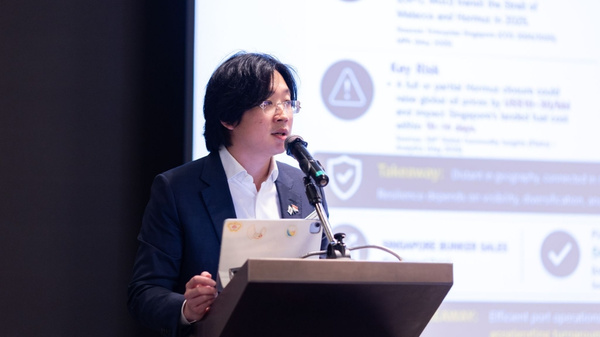
Singapore bunker industry urged to prioritise resilience and collaboration
SSA committee vice chair highlights energy security and crisis readiness at Marine Fuels Forum 2026. |
|
|
|
||
|
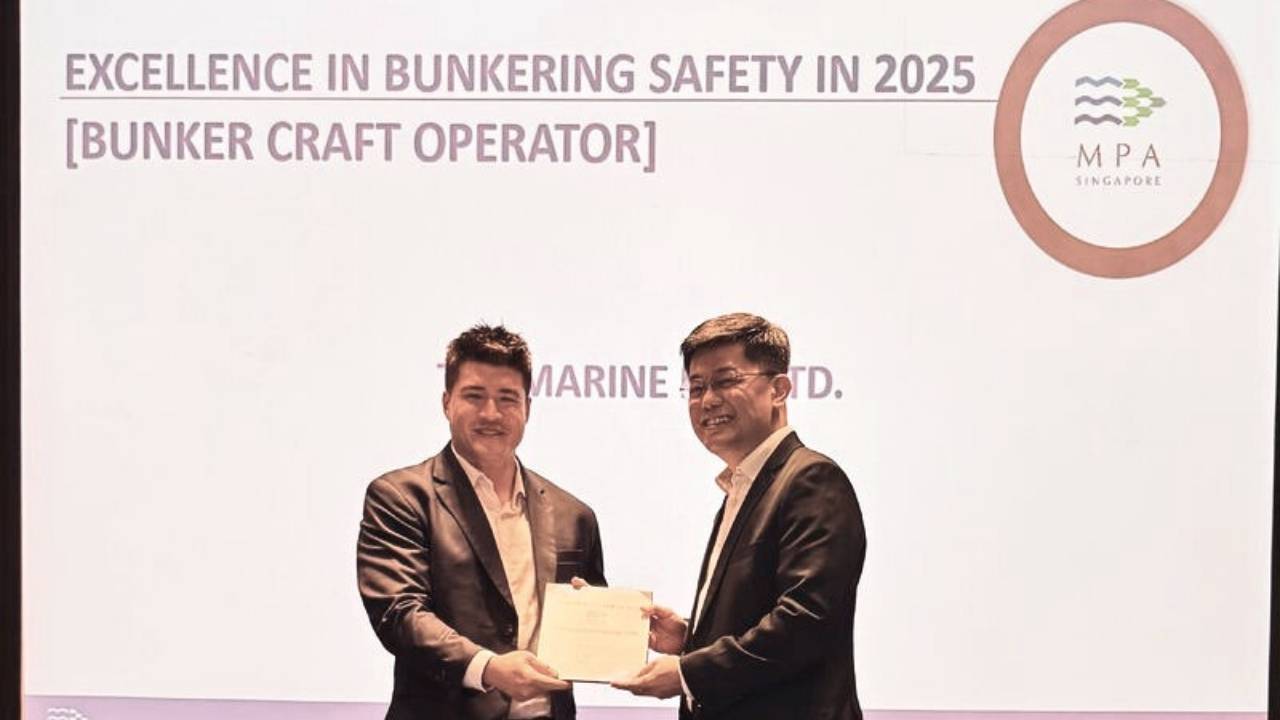
TFG Marine receives bunker safety award from Singapore maritime authority
Marine fuel supplier recognised for safety standards and operational performance at MPA Marine Fuel Forum. |
|
|
|
||
|
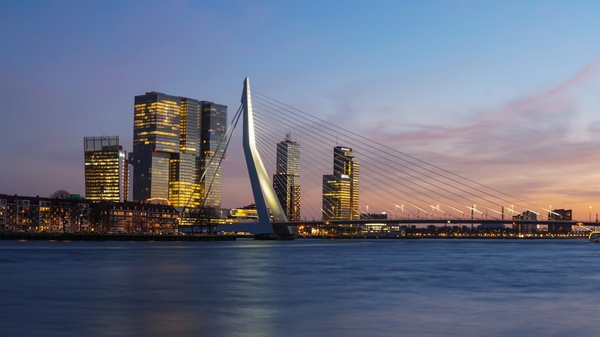
Bunker surveyor sought in Rotterdam to meet increased demand
Dutch firm MCE Marine Surveyors is recruiting for a quantitative fuel inspection role. |
|
|
|
||
|
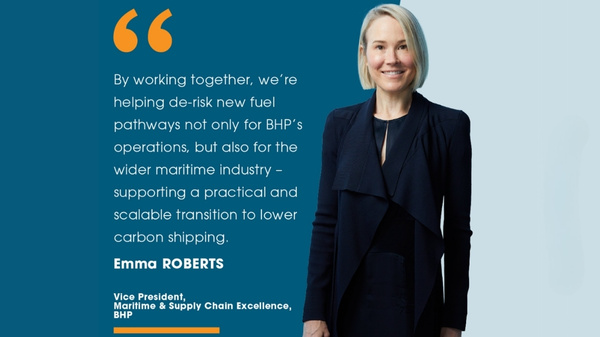
GCMD highlights BHP biofuel trials to address scaling challenges in maritime decarbonisation
Mining company discusses need for traceability and coordinated progress across supply, cost and operational readiness. |
|
|
|
||
| Maersk orders eight large methanol-fuelled boxships [News & Insights] |
| BP and Maersk Tankers complete B30 biofuel trials [News & Insights] |
| CMA CGM takes delivery of fifth dual-fuel methanol containership [News & Insights] |
| Oslo Port launches weekly container service ahead of ammonia-powered vessel deployment [News & Insights] |
| RCL completes maiden biofuel voyage with B24-VLSFO blend [News & Insights] |
| CMA CGM adds 23,000-teu containership to Asia-Europe service [News & Insights] |
| Norwegian Viva receives waste-based biofuel in Piraeus through World Fuel-EKO collaboration [News & Insights] |