Fri 17 Dec 2021, 16:43 GMT

BP and Maersk Tankers complete B30 biofuel trials


Ships sailing from Rotterdam to West Africa receive blend of VLSFO and 30% FAME.


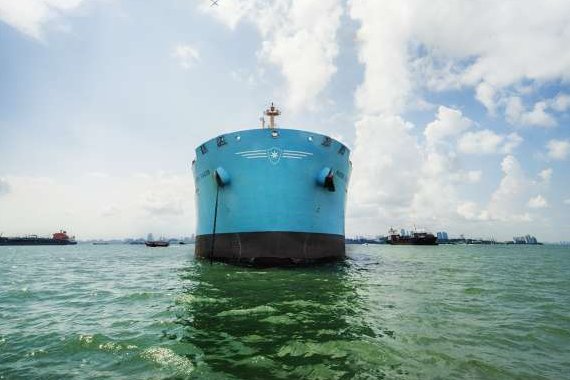
Image credit: Maersk Tankers
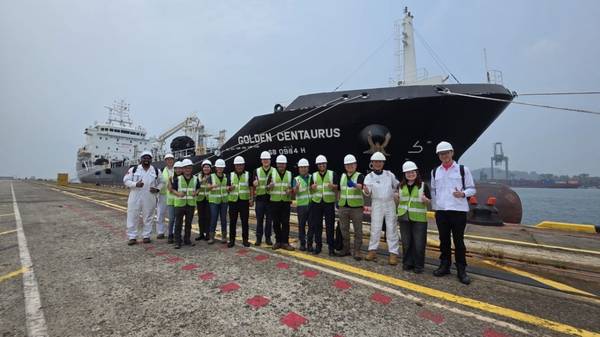
BP and Maersk Tankers, with support from the Danish Maritime Authority, report that they have successfully completed trials using biofuel-blended bunkers as a drop-in fuel for product tankers.

The trials were completed aboard the Maersk Cirrus and Maersk Navigator — product tankers on time-charter to BP from Maersk Tankers, with each vessel supplied with BP Marine B30 biofuel, consisting of 30 percent fatty acid methyl esters (FAME) blended with very-low-sulphur fuel oil (VLSFO).

FAME is a renewable alternative fuel largely produced from recycled cooking oils and renewable oil sources. It has physical properties similar to conventional diesel, and is also non-toxic and biodegradable. The origination and production of the feedstocks used to produce FAME is certified for its sustainability to internationally recognized standards.

The trials saw the vessels sail from Rotterdam to West Africa. Throughout the trials, tests were carried out to assess the reliability and performance of the B30 biofuel blend in each ship's main engine, auxiliary engine and boiler, and any impact on fuel tanks to determine the level of interchangeability with other fuel types.

No adverse effects to equipment or machinery were observed during or after the trials, the trial participants note. Also, no modifications to the engine or infrastructure are said to have been required, thus demonstrating the suitability of sustainable biofuels for use as a drop-in fuel.

Carol Howle, BP's executive vice president of trading and shipping, commented: "At any one time, BP has around 300 ships on the water moving our products around the world. With an ambition to be a net zero company by 2050 and help the world get there too, it's vital we help decarbonize this hard-to-abate sector. We're proud to be working with a partner like Maersk Tankers, to develop new alternative fuels and low-carbon solutions that will help accelerate the shipping industry's energy transition."

Christian M. Ingerslev, Maersk Tankers' Chief Executive Officer, said: "The need to cut emissions is one of the most important challenges facing shipping right now. We are only able to rise to this challenge if we do it in partnerships and explore a multitude of solutions. With BP, we are combining our expertise to play our part in testing and making alternative fuels available."


Container ship near a port. Ammonia emerges as most feasible alternative fuel for deep-sea shipping in 2050 emissions study  

Research combining expert survey and technical analysis ranks ammonia ahead of hydrogen and methanol.

Cargo vessel at sea. EMSA study examines biodiesel blend spill response as shipping adopts alternative fuels  

Research addresses knowledge gaps on biodiesel-conventional fuel blends as marine pollutants and response measures.

BIMCO ETS BARECON clause 2026 graphic. BIMCO adopts ETS clause for bareboat charters, delays biofuel provision  

BIMCO’s Documentary Committee has approved an emissions trading compliance clause while requesting further work on a biofuel charter provision.

SALEFORM 2025 standard form graphic. BIMCO and Norwegian Shipbrokers’ Association launch SALEFORM 2025 ship sale contract  

Updated agreement addresses banking changes, compliance requirements and environmental regulations affecting vessel transactions.

Everllence H2 test engine. Everllence develops hydrogen test bench for marine engines  

German engine maker upgrades Augsburg facility under HydroPoLEn project backed by federal maritime research funding.

CMA CGM Osmium vessel. CMA CGM names 13,000-teu methanol-fuelled containership in South Korea  

CMA CGM Osmium to operate on Asia–Mexico service as part of the carrier’s decarbonisation strategy.

NorthStandard logo. NorthStandard publishes biofuel guide as marine insurance claims emerge  

White paper addresses quality issues and compliance requirements as biofuel testing volumes surge twelvefold.

Clean Maritime Fuels Platform (CMFP) logo. Maritime fuel platform calls for EU shipping ETS revenues to fund clean fuel deployment  

Clean Maritime Fuels Platform urges earmarking of national emissions trading revenues for renewable fuel infrastructure.

Seatransport 73m SLV Lloyd’s Register grants approval for hybrid nuclear power design for amphibious vessels  

Classification society approves Seatransport’s concept integrating micro modular reactors with diesel-electric systems.

Everllence ME-LGIE engine. Everllence and Vale partner on ethanol-powered marine engine development  

Brazilian mining company to develop dual-fuel ethanol engines based on ME-LGI platform.