Fri 2 Nov 2018, 08:50 GMT

Oil prices continue October's downtrend


By A/S Global Risk Management.


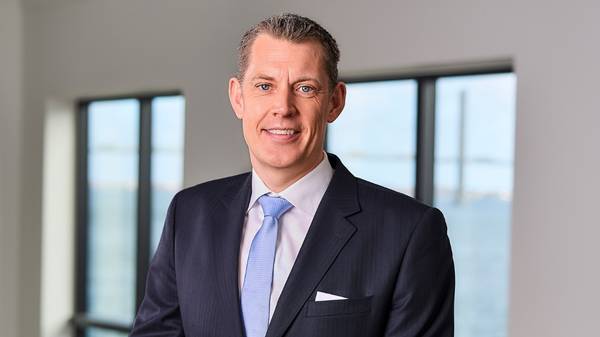
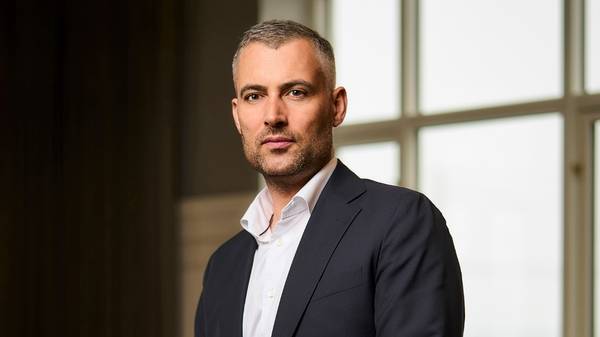
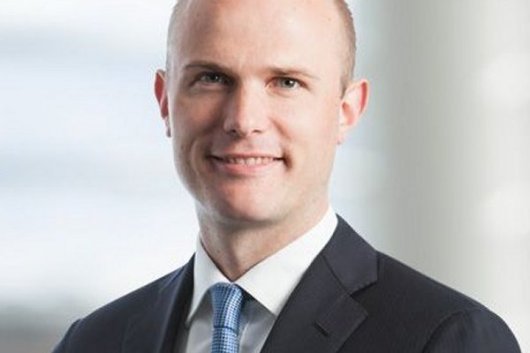
Michael Poulson, Senior Oil Risk Manager at Global Risk Management.
Image credit: A/S Global Risk Management
Oil prices continued October's downtrend last night and so far today. Intraday volatility is high.

Even though we are now in November, the month where U.S. sanctions against Iran kick in, October's downtrend seems to spill over to November.

News of OPEC oil producers lifting production to a 2-year high weighs on prices. Likely OPEC production in October was around 33.31 mio. barrels per day, an increase of around 390,000 barrels per day compared to September. As a recent report from the Energy Information Administration (EIA) estimates U.S. crude oil production to 11.3 mio. barrels per day in August, the U.S. is now the world's largest oil producer followed by Saudi Arabia and Russia.

From 4 November, i.e. Sunday, the wind-down period for importing Iranian oil ends and sanctions are reimposed. The U.S. government has, however, granted waivers to eight countries, i.e. they can continue importing Iranian oil after 4 November. Among the 8 are South Korea, Japan and India. Compared to a year ago, Iranian crude oil exports have already dropped around 700,000 barrels per day to around 1.7 mio. barrels per day - barrels which need to be offset by OPEC and non-OPEC oil producers.

Talks between the U.S. and China are "moving along nicely", according to the U.S. president. Leaders of the two countries will meet later this month in Argentina in connection with the G20 leaders summit. Over the last months, both countries have imposed tariffs against each other on hundreds of goods. The trade war has sparked fears of global economic growth slowdown.

Turning to economic data, today sees a row of European Manufacturing PMIs, U.S. Non-farm Payrolls and unemployment rate figures.


Bermuda Container Line (BCL) logo. Bermuda Container Line imposes emergency bunker surcharge citing Iran War fuel price spike  

Shipping operator to add $150 per TEU charge from 1 May amid geopolitical fuel cost pressures.

China flag. Zhejiang’s first methanol-powered container ship launches in Jiaxing  

Vessel uses methanol propulsion technology to reduce carbon dioxide emissions by 90%.

TES flag with a model vessel in the background. TES joins SEA-LNG coalition to advance e-methane as marine fuel  

Green energy company targets 1m tonnes annual e-methane production by 2030 for shipping decarbonisation.

Ethanol and methanol workshop graphic. IBIA to host workshop on ethanol and methanol marine fuels during Singapore Maritime Week  

Half-day event will examine alcohol-based fuel pathways and integration into shipping’s multi-fuel landscape.

Steel-cutting ceremony for 13,000-dwt vessel. ROC begins construction of second chemical tanker for Essberger  

Chinese shipbuilder holds steel-cutting ceremony for 13,000-dwt methanol-ready vessel with ice class capability.

Norsepower and CHIC sign agreement. Norsepower and Cosco Shipping Heavy Industry Equipment sign wind propulsion cooperation agreement  

Wind propulsion technology provider partners with Chinese shipyard to scale rotor sail production.

Wärtsilä logo. Shipping firms struggle to prioritise decarbonisation investments amid regulatory uncertainty, Wärtsilä survey finds  

Survey of 225 maritime executives reveals 70% say uncertainty hinders investment decisions despite regulatory pressure.

IMT Isca G-Flex vessel render. Longitude Engineering unveils IMT Isca G-Flex PSV design with alternative fuel capability  

Naval architecture firm launches adaptable platform support vessel design based on the IMT-984 G-Class hull.

Philippos Ioulianou, EmissionLink. Shore power infrastructure is key to cutting ferry emissions in European cities, says EmissionLink  

Port electrification is needed to enable vessels to switch off engines at berth, reducing urban pollution.

Maritime and Port Authority of Singapore logo. Singapore prioritises maritime resilience amid geopolitical uncertainty, eyes digitalisation and green fuels  

MPA chief outlines the sector’s adaptation to supply chain disruptions while advancing automation and alternative fuels.