Thu 11 Jan 2018, 14:17 GMT

Global Risk Management releases annual oil report


Report takes a look at the key factors set to affect oil prices over the next 12 months.


A/S Global Risk Management has published its annual outlook for 2018, which looks at the key factors that are set to affect oil prices over the next twelve months.

In the report, the Danish company says it expects the group of OPEC and non-OPEC to continue operating under the limits of the current oil production cut deal of 32.5 million barrels per day - at least until their next meeting in June.

Global Risk also points out that U.S. oil production estimates are that shale oil producers will likely expand production to around 10 million barrels per day this year.

On the geopolitical front, the hedging specialist says: "The current geopolitical risk premium seems elevated and could potentially cause increased oil price volatility should the situation in e.g. Iran, Venezuela or Libya escalate. All in all, the likelyhood of elevated oil prices this year seems imminent."

Fuel oil

In its analysis of the fuel oil market, Global Risk explains: "Fuel oil cracks weakened over the course of last quarter as we expected, with the front month crack against Brent falling from approximately -7/mt to around -9/mt currently. This was mainly due to strong crude flat price which has jumped by more than 10/bbl since the end of last quarter. This weakening of the crack, however, juxtaposed against what is otherwise a supported fuel oil market."

Regarding the marine fuel market, Global Risk says: "Global bunker demand remains solid on the back of robust economic activity, evident from the increase in net tonnage passing through the Panama and Suez canals."

The company warns, however, that the "elephant in the room" for fuel oil cracks is the crude flat price, which the company believes has more upside in 2018.

"Arguably, fuel oil cracks would have been much weaker without the healthy demand, so in the case of any flat price weakness, expect that cracks would strengthen more on a relative basis compared to the weakening of crude and vice versa for as long as this favourable supply and demand picture remains," Global Risk notes.

The Global Oil Strength Index (GOSI)

The Global Oil Strength Index, or GOSI, was introduced by Global Risk in 2010. The GOSI is a single number between 0 and 100 that signals the company's expectations for the development of oil prices. A reading below 50 indicates a declining trend and above 50 an increasing trend.

Global Risk calculates the GOSI by assigning a strength rating or index for each of three factors - fundamentals, financials and geopolitics (defined below) - and then calculating a weighted average based on the three strength ratings.

- Fundamentals - covering the supply and demand balance.

- Financials - covering speculators' interest and the development of the financial market.

- Geopolitics - covering the situation in unstable oil producing regions of the world.

Fundamentals: Jan 2018 - Rating: 55 (+3 vs Oct 2017). Global Risk says: "OPEC and some non-OPEC oil producers continue the oil production cuts, but increased U.S. production could offset the cuts. However, we could see demand picking up as global growth seems to be on the rise and global crude oil inventories are heading lower."

Financials: Jan 2018 - Rating: 50 (same vs Oct 2017). Global Risk says: "U.S. and Chinese growth data is improving while India is still struggling. The U.S. interest rate path is expected to impact oil prices, but as the Fed did not stick to their own projections last year, this year's developments remain mixed. Further, a new FEd chairman will be appointed next month (February 2018) which could spur even more uncertainty."

Geopolitics: Jan 2018 - Rating: 60 (same vs Oct 2017). Global Risk says: "Iran/Saudi Arabia tensions and Venezuela balancing on the verge of bankruptcy contribute to the elevated geopolitical risk premium."

GOSI: Jan 2018 - Rating: 55 (+1 vs Oct 2017). GOSI is above the 50 level - indicating that the oil price expectation is bullish.

Average price forecasts (by Global Risk Management):

Brent Crude (US$ per barrel)

Q1 2018 - 68
Q2 2018 - 65
Q3 2018 - 67
Q4 2018 - 70

3.5% Rotterdam Barges (US$ per tonne)

Q1 2018 - 360
Q2 2018 - 346
Q3 2018 - 356
Q4 2018 - 368

0.1% CIF NWE Cargoes (US$ per tonne)

Q1 2018 - 600
Q2 2018 - 576
Q3 2018 - 592
Q4 2018 - 616

380 cSt Singapore Cargoes (US$ per tonne)

Q1 2018 - 365
Q2 2018 - 349
Q3 2018 - 361
Q4 2018 - 381

0.05% Singapore Gasoil (US$ per tonne)

Q1 2018 - 589
Q2 2018 - 570
Q3 2018 - 585
Q4 2018 - 607

US Gulf HSFO (US$ per tonne)

Q1 2018 - 375
Q2 2018 - 362
Q3 2018 - 375
Q4 2018 - 394

N2 Heating Oil (US$ per tonne)

Q1 2018 - 648
Q2 2018 - 618
Q3 2018 - 626
Q4 2018 - 641

To view the full report, please click here


AuctionConnect and Asyad Shipping logos. Asyad Shipping adopts AuctionConnect digital bunker platform under three-year deal  

Middle East shipping company to implement auction-based procurement system across fleet operations.

Fuel for thought: LNG for Cruise report cover. LNG remains the most deployable decarbonisation option for cruise shipping, Lloyd’s Register report finds  

Classification society’s latest research examines the fuel’s role in the sector’s energy transition and pathway to net zero.

Dr. Ibrahim Muritala, ABS. ABS engineer to discuss performance-based hydrogen framework at SPE symposium  

Dr Ibrahim Muritala to join panel examining shift from colour-based hydrogen labelling to carbon intensity metrics.

Cosco Shipping Peony vessel. Cosco Shipping completes methanol dual-fuel retrofits on four ultra-large container vessels  

Chinese shipping line retrofits 20,000-teu and 13,800-teu vessels with methanol propulsion systems.

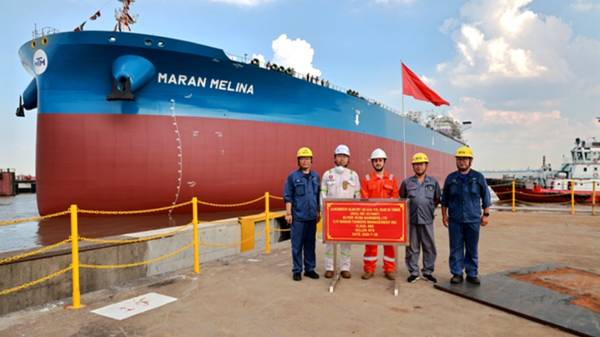
Launching ceremony of Maran Myrto vessel. Chinese yard launches LNG dual-fuel Suezmax  

Crude carrier with LNG propulsion launched in Jiangsu province.

Keel-laying ceremony of a vessel with builder's hull no. 0315846. Keel laid for LNG dual-fuel crude oil tanker  

Chinese yard begins construction on 155,500-dwt vessel with Lloyd’s Register classification.

BW Lesmes alongside Levante LNG vessel. BW LNG vessel completes first gassing-up operation with bunker barge  

BW Lesmes transitions from drydock to cargo readiness using an LNG bunker barge.

Mark Bell, SGMF. LNG marine fuel shows up to 29% emissions reduction in new SGMF study  

Latest life cycle assessment shows improved methane slip control, with well-to-wake reductions of up to 25%.

Michelle McDade, Global Fuel Supply. Blue Energy Partners appoints Michelle McDade as head of operations  

McDade brings more than eight years of bunkering experience to the Oslo-based role.

Person signing a document. Venture Energy signs green methanol supply deal with Shenji Energy  

Hong Kong-based firm to purchase ISCC EU-certified biomass-derived methanol for shipping clients.