Fri 17 Nov 2017, 08:54 GMT

Oil and fuel oil hedging market update


By the Oil Desk at Freight Investor Services.


Commentary

Brent closed down $0.51 last night to $61.36 and WTI closed at $55.14, down $0.19. Well, for a change, compared to recent weeks, Brent and WTI are both down around 3.6%. It has been quite a boring but interesting week - a bit like going out for a pint with John Major, I bet that's boring but kind of interesting at the same time. In essence, crude is still strong and it has certainly followed most analyst's expectations that prior to the OPEC meeting crude will run away with itself. And run away with itself it has. However, looking at the Brent structure, we have seen quite a shift. Yes, we are still backwardated, but Feb/Mar Brent was $0.24 last Friday, today it is $0.17. Brent/WTI has come in as well. I fear that the minute the OPEC meeting is over in just under two weeks that we will see flat price come off and the overall crude structure move to flat. Unless of course the cuts are deepened, which I very much doubt, it seems as if the market has already priced in an extension of the cuts out to end 2018; anything less than this will be a disappointment. Let's assume that US oil production continues its upward trajectory and they could very well be at 10mn bpd by the end of 2017. With flat price up at the $55 levels, who can blame them? In 2016, just four vessels left the U.S. destined for China. But in 2017, China has become the largest single buyer of U.S. seaborne crude, apparently close to 370kbpd. Nice.

Fuel Oil Market (November 16)

The front crack opened at -7.90, strengthening to -7.70, before weakening to -7.80. The Cal 18 was valued at -7.95.

Cash premiums of Asia's high-sulphur fuel oil edged higher on Thursday amid improved deal values in the Singapore trading window.

Meanwhile, despite sharply lower net imports of fuel oil into Singapore, onshore stocks of the industrial fuel were virtually unchanged over the past week, official data from IE Singapore showed. O/SING1

Singapore weekly onshore fuel oil inventories slipped just 0.3 percent, or 10,000 tonnes, to a six-week low of 3.52 million tonnes in the week ended Nov. 15. This came as weekly net imports into Singapore fell to a three-month low of 0.43 million tonnes, down 40% from a week ago. Weekly Singapore fuel oil imports were at 684,000 tonnes, the lowest since February 2016 while exports sank to an eight-month low of 256,000 tonnes.

Economic Data/Events: (UK times)

* 1:30pm: U.S. Housing Starts, est. 1,190k (prior 1,127k)

* ~6pm: ICE weekly commitments of traders report for data through Nov. 14 for Brent, gasoil

* 8:30pm: CFTC weekly commitments of traders report for data through Nov. 14 on various U.S. futures and options contracts

* 6pm: Baker Hughes weekly U.S. oil and gas rig counts

Singapore 380 cSt

Dec17 - 357.75 / 359.75

Jan18 - 356.25 / 358.25

Feb18 - 354.75 / 356.75

Mar18 - 353.25 / 355.25

Apr18 - 351.75 / 353.75

May18 - 350.25 / 352.25

Q1-18 - 354.75 / 356.75

Q2-18 - 350.25 / 352.25

Q3-18 - 345.00 / 347.50

Q4-18 - 339.75 / 342.25

CAL18 - 347.50 / 350.50

CAL19 - 313.00 / 318.00

Singapore 180 cSt

Dec17 - 362.00 / 364.00

Jan18 - 361.00 / 363.00

Feb18 - 360.00 / 362.00

Mar18 - 359.00 / 361.00

Apr18 - 357.75 / 359.75

May18 - 357.00 / 359.00

Q1-18 - 360.00 / 362.00

Q2-18 - 356.25 / 358.25

Q3-18 - 351.50 / 354.00

Q4-18 - 346.75 / 349.25

CAL18 - 353.75 / 356.75

CAL19 - 321.75 / 326.75

Rotterdam 380 cSt

Dec17 339.00 / 341.00

Jan18 338.25 / 340.25

Feb18 337.50 / 339.50

Mar18 336.75 / 338.75

Apr18 335.75 / 337.75

May18 334.75 / 336.75

Q1-18 337.50 / 339.50

Q2-18 335.00 / 337.00

Q3-18 330.00 / 332.50

Q4-18 321.50 / 324.00

CAL18 330.50 / 333.50

CAL19 292.00 / 297.00

BP  

Christos Doulaveris, Flex Commodities. Flex Commodities appoints Christos Doulaveris as general manager for Greece  

Bunker trader strengthens its Greek operations with a new leadership appointment.

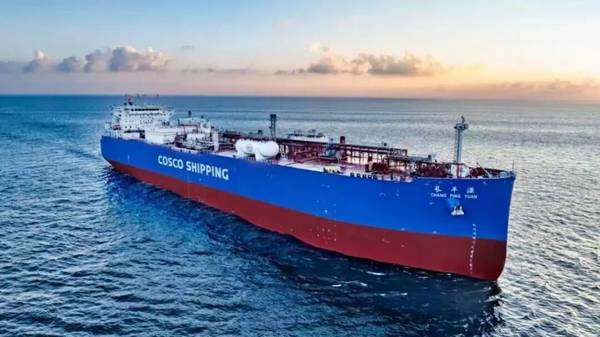
Chang Ping Yuan vessel. China delivers first domestically built VLGC under Chinese flag  

Cosco Shipping’s new 88,000-cbm gas carrier features an LPG dual-fuel main engine.

IMO, GreenVoyage2050 and Republic of Türkiye MoTI logos. Electric and hybrid ferries could cut Sea of Marmara emissions by 63%, IMO study finds  

A GreenVoyage2050 study finds that electrification could slash emissions, avoid €492 million in damage costs and support jobs.

Study visit to Hamburg, Germany, on sustainable port development. Batumi Sea Port officials study decarbonisation practices in Hamburg  

Georgian port representatives visited Hamburg to study emissions accounting, hydrogen technology and automation ahead of their 2026 recertification audit.

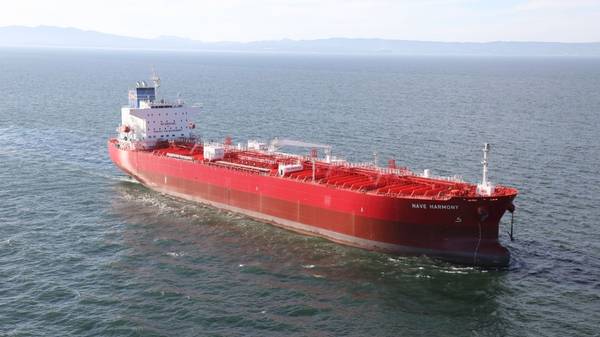
Nave Harmony vessel. Navios Partners takes delivery of methanol-ready MR2 tanker Nave Harmony  

Shipowner adds 49,998-DWT newbuild product tanker equipped with methanol-ready technology.

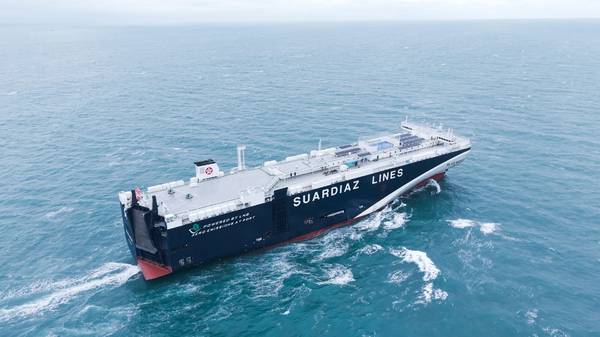
RS Atlantico vessel. Eastern Pacific Shipping delivers LNG dual-fuel PCTC to Suardiaz  

RS Atlantico is the first mid-sized 5,500-CEU car carrier built through the EPS–Suardiaz partnership.

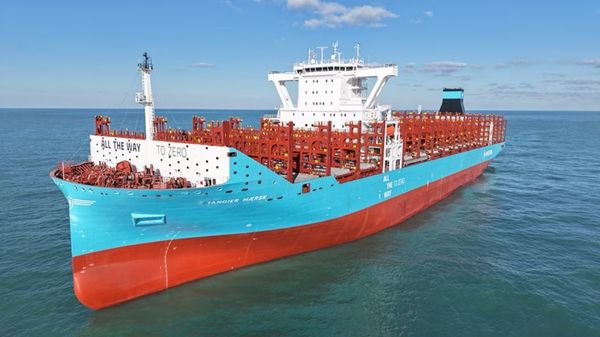
Tangier Maersk vessel. Maersk completes first US ethanol bunkering of a deep-sea container ship  

Shipper tests US-produced corn ethanol as a marine fuel aboard the Tangier Maersk.

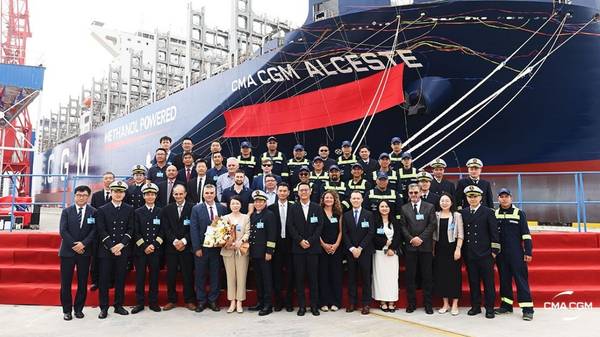
CMA CGM Alceste naming ceremony. CMA CGM names methanol-powered vessel after Molière’s Alceste  

Ship features a MAN B&W 8G85ME two-stroke engine configured to run on conventional marine fuel and methanol.

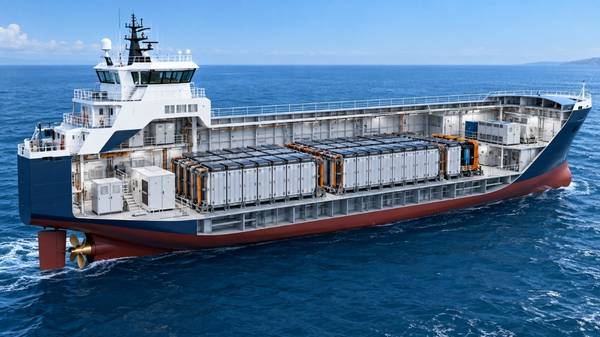
Cutaway illustration of a battery-electric ship. Why batteries still cannot power ships across oceans  

Battery-electric ships dominate short-sea routes, but energy-density and infrastructure constraints keep deep-sea propulsion out of reach.

VPS logo. VPS to run marine fuel management course in Singapore  

Two-day programme in November covers fuel handling, testing and decarbonisation rules, including a laboratory tour.