The '
Blue Baltics' project - an EU initiative aimed at developing and establishing an LNG bunkering network in the Baltic Sea - has won an award at the Baltic Sea Forum (BSF) Awards, held in Berlin on June 14.
The project, which is coordinated by Lithuanian firm
Klaipedos Nafta, won first place in the Baltic Sea Clean Maritime (BSCM) Award's infrastructure category. The category included projects promoting green shipping in maritime transport and port infrastructure.
Main objective
The main objective of the Blue Baltics project is to develop a 'maritime LNG mobile multifunctional
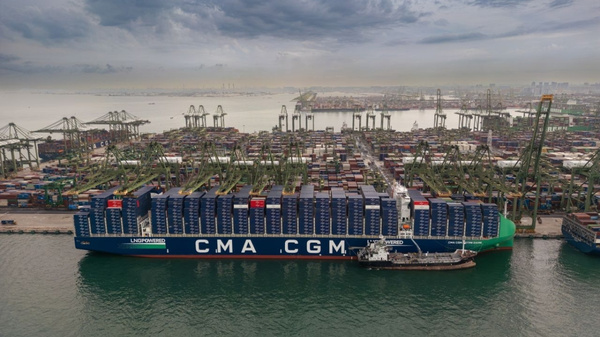
refilling station' (MMRS) that connects the existing floating storage and regasification unit (FSRU) Independence to the LNG reloading station in Klaipeda and enables LNG bunkering to shipping vessels.
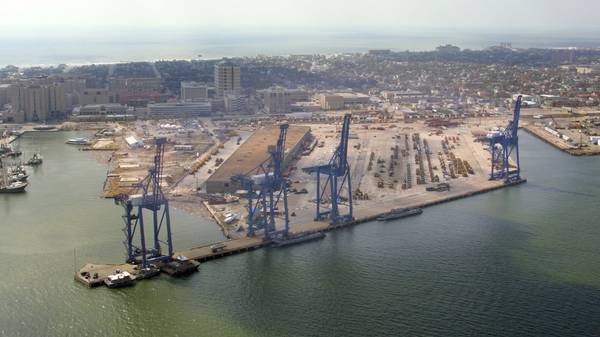
Klaipedos Nafta is the operator of the floating LNG terminal in Lithuania and responsible for the development of the LNG reloading station, which is scheduled to start operating later this year. The company also operates the Klaipeda Oil Terminal.
Estonia and Sweden
As well as Lithuania, the Blue Baltics project also involves EU members
Estonia,
Sweden and
Germany.
As part of the initiative, LNG containers, one mobile LNG/CNG filling station and a LNG/CNG pumping station are to be purchased and deployed to serve customers in Estonia. This will enable the bunkering of cargo vessels and ferries at the Estonian ports of Tallinn, Parnu and their satellite ports, as well as the provision of CNG for urban transportation.
At the LNG terminal in Nynashamn, Sweden, investments are to be made to establish LNG reloading and bunkering facilities to enable LNG reloading as well as its further distribution along the Swedish shore and its neighbouring regions.
Other project members
Meanwhile, Germany's
Bernhard Schulte Shipmanagement (BSM) is implementing an LNG ship transportation project using a 7,500-cubic-metre (cbm) gas supply vessel (GSV) to perform ship-to-ship LNG refuelling in the Baltic Sea. Estonia's
Alexela Energia AS is planning to develop a chain of LNG filling stations for sea, commercial and public consumers; and
Klaipeda State Seaport Authority is involved in modifying the Klaipedos Nafta-operated jetty for the loading of LNG.
Commenting on the Blue Baltics project,
Mindaugas Jusius, Klaipedos Nafta's CEO, said: "Within the framework of the Blue Baltics project, Klaipedos Nafta and its four partners are creating a unique value chain that includes the development of infrastructure of LNG as an environmentally friendly fuel and the distribution of this fuel by means of a special-purpose vessel a network of small-scale LNG stations. The project involves a number of modes of transport.
"Also, solutions implemented in this project will enable the use of LNG in regions that are far away from the gas grid. This award is a very important evaluation of our joint work with partners, aimed at reducing pollution."
Financing
Approximately
EUR 3.1 million is being allocated to the Blue Baltics financing programme for the Klaipedos Nafta LNG reloading station.
The total investment into five projects amounts to
EUR 47.6 million, and the funds allocated under the Connecting Europe Facility's (CEF) Motorways of the Sea (MoS) programme are approximately
EUR 15 million.
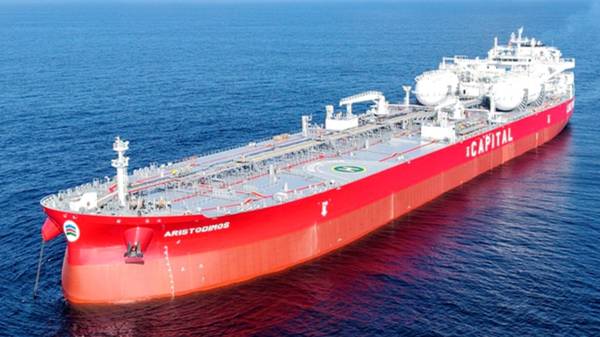
Image: The floating storage and regasification unit (FSRU) Independence, operated by Klaipedos Nafta.