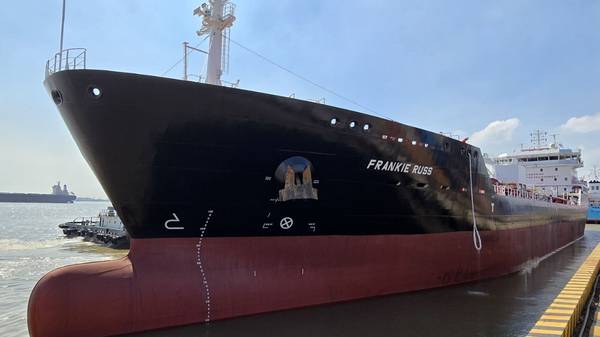
d'Amico International Shipping S.A., a transporter of refined products and vegetable oils, has launched two eco-ships at the shipyards of Hyundai Vinashin Shipyard Co. Ltd in Vietnam, bringing the company's fleet to over 50.
The
Cielo di Ulsan, a handysize Ice Class of 39,000 tons, and
High Trader, a medium range 50,000 tons product tanker, are designed to offer versatility in type of transport, improved performance in terms of energy efficiency and fuel consumption, and a reduction of emissions, allowing them to already meet the international standards that are due to come into force in 2025.
With the addition of the two ships, d'Amico's fleet now comprises 51.83 double-hull tankers, with an average age of 7.6 years, of which 25.33 vessels are owned and 26.50 are chartered. The decimal numbers are due to ships in joint ventures with other companies.
The two eco-ships, worth more than US$62 million, form part of the US$755-million-dollar investment plan that the d'Amico launched in 2012 and which includes, to date, a total of 22 high-performance vessels, of which 10 have already been delivered.
D'Amico already assigned the ships to two major international oil companies at the time of the order, under time-charter contracts, one lasting 30 months and the other three years.
Cielo di UIsan features equipment and systems capable of withstanding temperatures as low as -20°C. This 183-metre-long and 29-metre-wide handysize vessel is to be used mainly for routes in Northern Europe, the Arctic and the Northern Sea.
High Trader, 183 metres long and 32 metres wide, is the 'twin' of two other vessels already delivered to d'Amico. It is said to provide average savings of 6 tonnes of fuel per day (with the ship fully loaded and a constant speed of 14 knots), and consequently a 20 percent reduction in carbon dioxide emissions. Moreover, the profitability of the ship is driven by its great commercial versatility: High Trader can in fact carry up to nine different types of cargo during the same trip.
Cielo di Ulsan and High Trader are equipped with systems for the treatment of ballast water so as to minimise the impact on marine ecosystems and comply with IMO3 and IMO2 requirements.
DIS has currently other 12 new eco-ships, including 3 handysize, 3 medium-range and 6 LR1 vessels, under construction.
Marco Fiori, Chief Executive Officer of d'Amico International Shipping S.A. stated: "We have added two more ships of great construction quality to our young fleet, which are capable of offering our customers safety, efficiency and profitability. In this context, the partnership with the shipyards of Hyundai Vinashin Shipyard has proven to be strategic for the development of our fleet, which today reaches the record number of ships in the history of d'Amico International Shipping. This extremely positive moment on the market and increasingly close relations with major oil companies and multinational manufacturers of vegetable oils, which request our ships more and more often, confirm that DIS has taken the right route. With the addition of other 12 eco-ships currently under construction by 2018, we will further consolidate our competitive position on the global shipping market that today already sees us among the leaders."