Fri 31 Jan 2014, 15:24 GMT

Global Vision Market Report


The low temperatures in the U.S. Northeast keep underpinning the oil prices, heating oil in particular gaining ground because of low stocks. In their wake U.S. crude oil and ICE prices also rise. The expiry tonight of heating oil and gasoline contracts for February delivery might help calming the markets. Although the cold will not continue to last, the current front month February is still strongly bought. As temperatures rise demand and stocks should return to normal which is why heating oil for March delivery is currently about 7.2% below the front month February.

Since the DOE's data on US product stockpiles came in bullish on Wednesday afternoon, oil futures still traded steadier on Thursday morning breaching first resistances. Brent surpassed the bars at 108.00 and 108.05 dollars at that time but its gains were capped by the strong resistance at 108.30 dollars. Gasoil failed to break above 927.00 dollars and edged lower in the course of the day. The cold snap in the USA and the thus tighter distillate supplies in the north-east of the country particularly fostered NYMEX futures in the course of the afternoon. Moreover, WTI was supported by the increasing demand for Cushing crude oil. Demand for crude oil at the WTI delivery hub was bolstered by commissioning (last week) of the southern section of the Keystone XL pipeline. Spreadbets still buoyed US futures whereas Brent and Gasoil leveled off below their first resistances. Thus, the spread between Brent and WTI narrowed to far less than 10 dollars. US economic data released in the afternoon renewedly brought mixed cues. Still, the +3.2%-growth in the US GDP was seen as slightly positive providing at least a slightly bullish tone. Upward potential - particularly at ICE - was limited however by the steadier dollar which prompted investors and speculators outside the USA to take profits. Eventually, there were once again but few new market fundamentals (apart from the economic indicators) and so Brent and Gasoil were hardly changed at the end of European tradeing yesterday, whereas NYMEX futures supported by the Keystone XL pipeline and the cold snap in the north east of the USA marked some gains.

ICE Gasoil contract for February delivery settled at 924.00 USD on Thursday. This was +0.25 USD above Wednesday's settlement. With some 35,800 deals, the traded volume of the front month was below average.

The stochastic indicator is only still slightly bullish at the Gasoil chart this morning, but it gave its buying signal already yesterday. The RSI doesn't provide any new cues either hovering above 70% at the WTI chart. Brent breached its resistances at 108.00 and 108.05 dollars but - like Gasoil - failed to surpass last week's high. Near these levels, a top might form at ICE if the contracts keep bouncing back from them. This might favor a downward move. The supports that have formed since mid-January are still intact however, limiting the downside. Technically, we thus still assess the situation as neutral waiting for more cues.

U.S.

Nymex neutral: Oil futures are currently trading in a relatively tight range as there are no new cues from the technical or the fundamental situation. The traded volume at NYMEX is below average for this time of day. Investors are now eying the development at stock markets waiting as well as for new cues from forex markets. They will also keep an eye on the situation in the geopolitical hot spots. Moreover, they will look ahead to today's economic data.

Houston (ex-wharf indications 31-1)
380cst $594
180cst $677
MGO $1010

New Orleans (ex-wharf indications 31-1)
380cst $605
180cst $663
MGO $1006

Singapore (delivered indications 29-01, Singapore closed due to Chinese New Year.)

380cst $622
180cst $633
MGO $920

ARA (Amsterdam - Rotterdam - Antwerp)

Indications for delivered bunkers:
380cst : $577
(1.0 %) : $613
180cst: $607
MGO 0.1%S: $ 881

MGO  

American Bureau of Shipping (ABS) logo. ABS introduces nuclear-ready notation for marine and offshore assets  

The classification society has released what it describes as an industry-first notation to support future nuclear conversion of vessels and offshore assets.

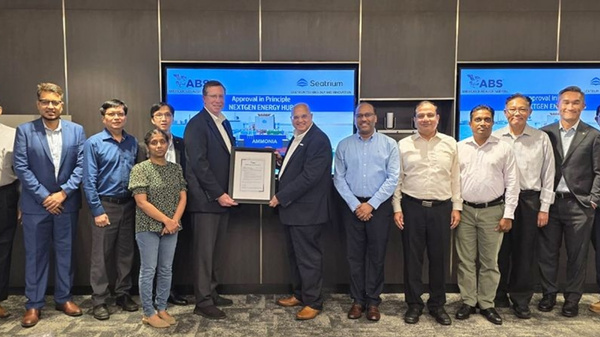
AiP handover ceremony for NEXTGEN Energy Hub (NGEH) design. ABS grants approval in principle for Seatrium’s NEXTGEN Energy Hub design  

The hub concept integrates ammonia bunkering, power generation and electric vessel charging in a single unit.

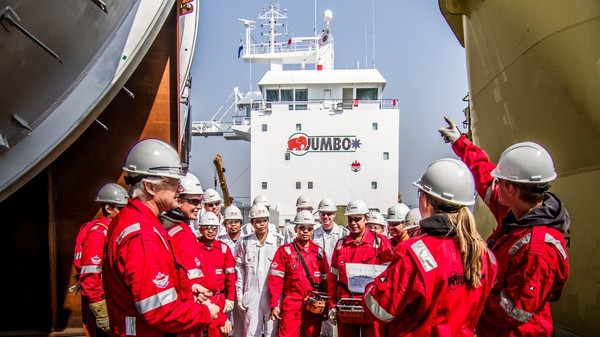
Jumbo Maritime crew aboard vessel. Jumbo orders two methanol-ready L-Class heavy lift vessels from Dajin Heavy Industry  

Dutch heavy lift specialist Jumbo signs newbuilding contract for two 25,000-dwt vessels.

China flag. Zhoushan completes first bonded bunker operation at Majishan port area  

The operation marks full fuel supply coverage across all general cargo terminals in Zhoushan's port system.

US dollar banknotes. Port of Long Beach launches $1m methanol bunkering challenge for oceangoing vessels  

A $1m prize aims to kick-start commercial methanol bunkering at one of North America's busiest ports.

Core Power, Athlos Energy, Deon Policy Institute and ABS logos. Greece floating nuclear study finds no fundamental barriers to implementation  

A PESTLE assessment of floating nuclear power plants in Greece identifies framework gaps, not feasibility barriers.

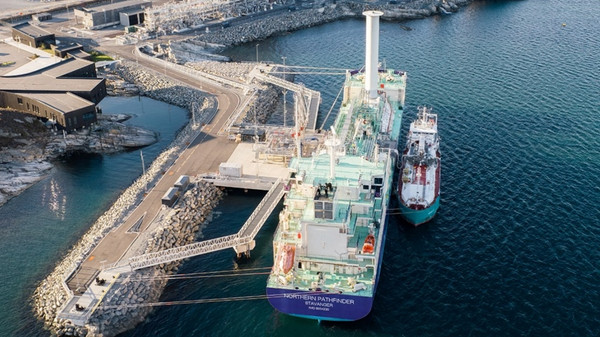
Northern Pathliner alongside Bergen LNG vessel. Molgas completes LNG cool-down and bunkering for Northern Pathliner at Northern Lights terminal in Norway  

Operation carried out at Øygarden facility, with K Line and Integr8 Fuels in the supply chain.

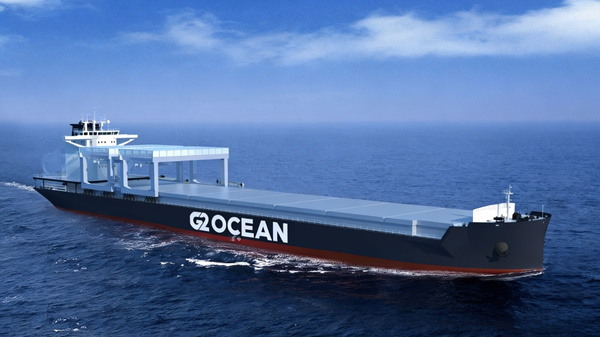
Rendering of a G2 Ocean OHGC vessel. G2 Ocean expands fleet with six future-fuel ready gantry crane vessels  

Open hatch specialist adds vessels and jet sail technology as part of a broad fleet renewal programme.

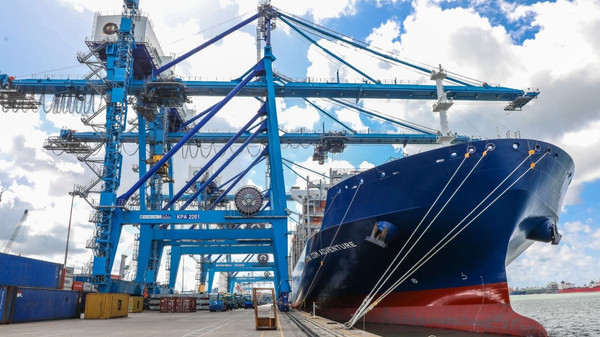
CMA CGM Adventure vessel at Port of Mombasa. LNG-powered CMA CGM Adventure makes first call at the Port of Mombasa  

Kenya Ports Authority receives its first large LNG-fuelled container vessel.

Liam Blackmore, Lloyd's Register. Maritime trio shapes IMO safety guidelines for ammonia as marine fuel  

Real-world operational experience feeds directly into new IMO ammonia fuel safety framework.