This is a legacy page. Please click here to view the latest version.
Wed 30 Nov 2016, 14:33 GMT

End of an era as Cockett relocates to London Bridge


Move is designed to help attract talent and grow Cockett's UK team.


Cockett Group has announced that its UK branch has relocated its office from Kent to London Bridge in a move that is designed to "serve the Group's present and future needs better" as well as attract talent and further grow its team.

The development marks the end of an era for Cockett. Prior to relocating its head office to Dubai (it initially launched a trading operation in the UAE's biggest city in September 2012), Cockett's address in Petts Wood, Orpington (Kent), had been the company's headquarters. According to filing records, it was first officially registered as Cockett Marine Oil's UK address in April 1998.

Commenting on the news, Robin van Elderen, Commercial Head - Europe, who was formally appointed as a director of Cockett Marine Oil Ltd on 1st November, said: "This is an exciting move for Cockett and I wish our UK branch and team all the best for the future."

Cem Saral, chief executive officer for Cockett Group, remarked: "Location and environment are key to business success and I am confident this location change to London will bring new opportunities to the UK branch and to the Group."

Cockett Group is one of the world's leading providers of marine and petroleum products and services; it is owned by Vitol Group (50%) and Grindrod Limited (50%).

Headquartered in Dubai, UAE, Cockett operates from 16 offices and claims to currently have a trading volume in excess of 7 million metric tonnes per annum.

Contact detaiils for Cockett Group's new London office [pictured] are as follows:

Address:
Suite 19, Swan Court
9 Tanner Street
London SE1 3LE
United Kingdom

Telephone: +44 203 893 7600
Email: enquiries@cockett.com
Website: www.cockett.com


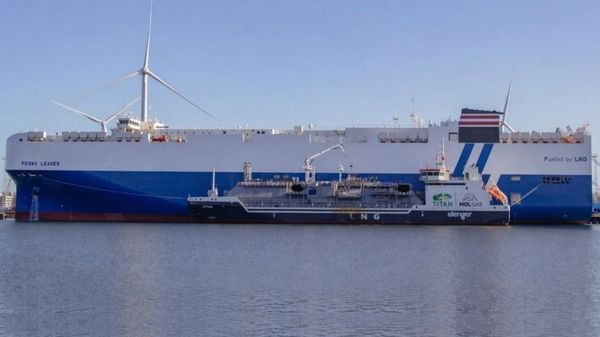
Titan Optimus alongside Peony Leader vessel. Titan Clean Fuels completes first FuelEU Maritime pooling exercise with DNV verification  

Pool included several hundred vessels, with LNG and biomethane helping balance compliance deficits.

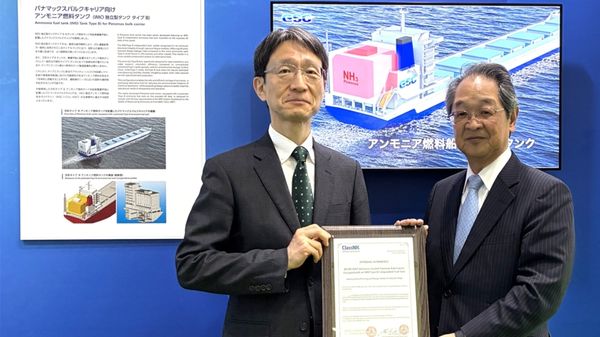
AiP handover ceremony for ammonia-fuelled Panamax bulk carrier. ClassNK grants world-first approval for ammonia-fuelled bulk carrier with Type B fuel tanks  

Japanese classification society issues AiP for Panamax design with tanks installed on exposed deck.

Philippos Ioulianou, EmissionLink. EmissionLink warns UK ETS preparations at risk amid Strait of Hormuz focus  

Maritime emissions compliance provider says regulatory deadline cannot be delayed despite geopolitical disruptions.

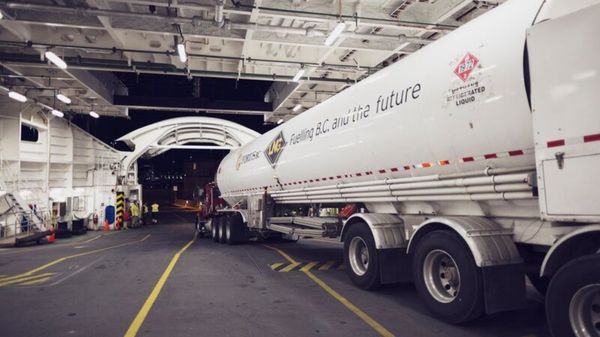
FortisBC Tanker truck. FortisBC completes 10,000th LNG bunkering operation for marine vessels  

Canadian utility reaches refuelling milestone as West Coast LNG marine fuel demand grows.

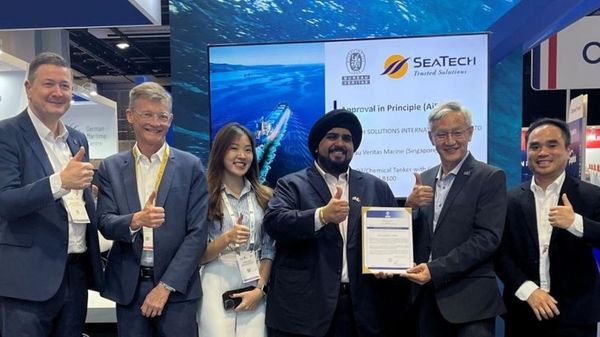
AiP handover ceremony for two next-generation 80m tanker designs. Bureau Veritas approves dual-fuel tanker designs for Australian coastal operations  

SeaTech Solutions receives approval in principle for 80 m vessels designed to carry methanol and biofuels.

Kawasaki Kisen Kaisha (K Line), Sumitomo Corporation and NYK Line logo. Japanese shipping firms secure government funding for Singapore ammonia bunkering trial  

Sumitomo, K Line and NYK to demonstrate ship-to-ship ammonia fuel supply operations.

Kota Ocean vessel. PIL and PSA launch Singapore’s first joint land-sea green shipping service  

DNV-verified service allows shippers to reduce Scope 3 emissions through lower-carbon fuel allocation.

Mercedes Pinto vessel. Baleària begins sea trials of dual-fuel catamaran Mercedes Pinto in Gijón  

Third LNG-powered fast ferry expected for delivery in May, destined for Canary Islands routes.

Nave Amaryllis vessel. Navios Partners takes delivery of dual-fuel-ready Aframax tanker  

Nave Amaryllis is equipped with LNG and methanol readiness alongside shore power capability.

IBIA logo. IBIA backs IMO as global shipping regulator ahead of MEPC 84  

Marine fuel industry body supports joint shipping statement emphasising multi-stakeholder approach to decarbonisation.


↑  Back to Top