Wärtsilä is to supply its 'fuel-saving' X72 engines [pictured] to power six new vessels for two
Singapore-based shipping firms.
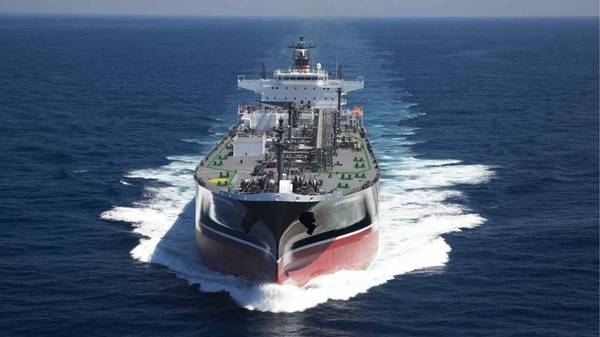
Wärtsilä equipment will be installed on four container vessels that
Pacific International Lines (PIL) has ordered from
Dalian Shipbuilding Industry Company (DSIC), in China, and on two bulk carriers being built by
Bohai Shipbuilding Heavy Industry Co. Ltd. (BSHIC), also in China.
The Wärtsilä X72 has been selected as the main engine for these ships, with delivery of the first engines scheduled for early 2014. The order was received in the third quarter of 2012.
Commenting on the fuel-saving capability of the new engine, Wärtsilä said: "The Wärtsilä X72 engine offers exceptional efficiency and fuel consumption performance to provide a favourable Energy Efficiency Design Index (EEDI). Furthermore, the improvement in fuel consumption, when compared to conventional marine engine options, results in correspondingly reduced CO2 emissions," Wärtsilä said.
Martin Wernli, Vice President, Wärtsilä Ship Power, 2-stroke, commented: "The maritime sector continues to confront the need to achieve lower operational costs and better environmental performance. The Wärtsilä Generation X engines were specifically developed to address these needs, and we are confident that in selecting the Wärtsilä X72 engine for their new ships, these owners will reap substantial benefits,"
"In fact, compared to similar vessels that have recently been delivered, the bulk carriers' fuel consumption can be reduced by approximately 5 tonnes/day, while the container vessels can achieve savings of 4 tones/day."
The Wärtsilä Generation X engine series
Wärtsilä launched its low-speed Generation X engine series in May 2011 with two mid-sized engines, the Wärtsilä X62 and Wärtsilä X72, designed specifically for merchant vessels that use mid-size, low-speed engines, such as Panamax to Capesize bulk carriers, Aframax to Suezmax tankers, and Feeder to Panamax container vessels.
The series also includes the Wärtsilä X35 and X40, which cover the small bore end of the market, such as small bulk carriers, product tankers, general cargo vessels, reefers, feeder container ships, and small LPG carriers.
The first of these electronically controlled, low speed engines was started in November 2011 and passed its factory test in February 2012. The recently introduced Wärtsilä X92 is a direct response to the container shipping industry's move towards larger ship sizes and more efficient propulsion systems. To date, a total of 24 Wärtsilä Generation X engines have already been ordered since their market introduction.
This new engine series includes a number of features aimed at providing greater operational efficiencies with a reduced environmental impact. These include extended rating fields that offer the optimum propeller speed for different applications, low fuel consumption resulting from the stroke-to-bore parameters, the Wärtsilä electronically controlled common-rail system for high performance, an extended interval period of five years between overhauls, various tuning methods optimized for several vessels applications, and stable operation down to 12% of the nominal engine speed for easier manoeuvring.
"The overall reliability of these engines, together with the lower fuel costs and reduced maintenance expenditures that they offer, leads inevitably to a lower total cost of ownership," Wärtsilä said.
Image: Wärtsilä's new X72 engine.