
 |
Australia’s Orica has reached a final investment decision (FID) for the Hunter Valley Hydrogen Hub (HVHH), a project that will partially convert its existing natural gas-based ammonia production to renewable ammonia, according to a monthly update published by the Green Energy and Nitrogen Alliance (GENA).
The decision, announced on 1 July, covers a facility on Kooragang Island, Australia, where the project will produce 4.7 kilotonnes per year of renewable hydrogen to replace a portion of the natural gas-based hydrogen currently used at Orica’s existing ammonia plant. According to GENA, this volume of hydrogen will be sufficient to produce approximately 26.6 kilotonnes per year of ammonia — around 7% of the facility’s conventional ammonia capacity. Shortly after reaching FID, Orica awarded the engineering and procurement contract and ordered 50 MW of proton-exchange membrane (PEM) electrolysers.
Despite this development, GENA noted that the decision has only a limited effect on the overall structure of the project pipeline by status, with approximately 5% of renewable ammonia projects having reached FID or operational status, and a further 12% in the engineering stage.
US cancellation weighs on pipeline
The update was accompanied by a contraction in the global low-carbon ammonia project pipeline, driven primarily by the cancellation of Air Products’ Louisiana Clean Energy Complex (LCEC) — a 2.8 megatonnes per year greenfield project in Louisiana, United States. The pipeline shrank by 2.6 megatonnes, or million metric tonnes (MMT) month-on-month after Yara decided not to proceed with acquiring the ammonia portion of the project. In a statement cited by GENA, Yara said: “The project’s expected financial returns do not meet Yara’s investment criteria.”
As of July 2026, GENA’s Project Navigator Ammonia tracks 332 projects and operational facilities, representing a total capacity of 85 MMT by 2030 and 140 MMT by 2034. The pipeline comprises 297 renewable ammonia projects and 35 low-carbon ammonia projects, with total capacity of 108 MMT and 32 MMT by 2034, respectively.
Three new projects were added to the tracker over the past month — two renewable ammonia projects and one low-carbon ammonia project — while four frozen projects were excluded, including three renewable and one low-carbon project.
Capacity outlook tempered
Despite the scale of the tracked pipeline, GENA’s estimates point to a considerably smaller volume of capacity actually coming online. The organisation estimates that renewable ammonia capacity is likely to reach 5–8 MMT by 2030, while low-carbon ammonia capacity could grow to 6–8 MMT over the same period — a fraction of the pipeline totals currently logged.
The global renewable ammonia project pipeline stands at 63 MMT by 2030 and 108 MMT by 2034, while the global low-carbon ammonia pipeline totals 22 MMT by 2030 and 32 MMT by 2034, according to GENA’s data.
The share of post-FID low-carbon ammonia projects has increased to 19%, though GENA attributed this in part to the contraction of the overall project pipeline rather than an acceleration in project development.
|
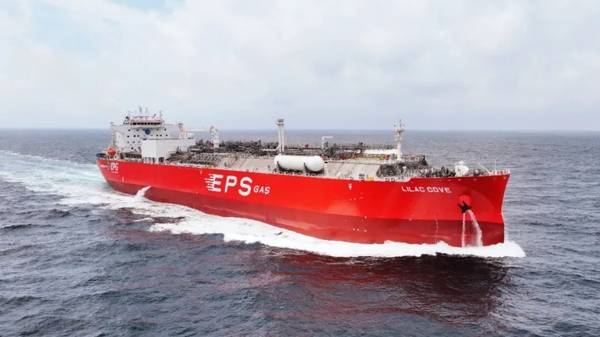
Jiangnan delivers second LPG dual-fuel VLAC in series to Singapore’s EPS
Lilac Cove, the world’s largest liquid ammonia carrier, joins Ivy Cove as Jiangnan advances its six-ship VLAC programme. |
|
|
|
||
|
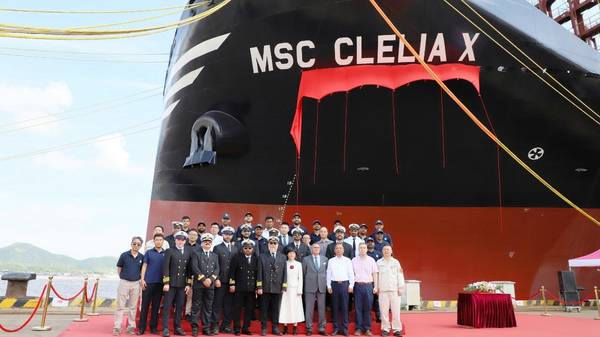
MSC LNG dual-fuel container ship delivered almost a year early
Chinese shipbuilder hands over sixth 10,300-TEU vessel in series to MSC ahead of contract schedule. |
|
|
|
||
|
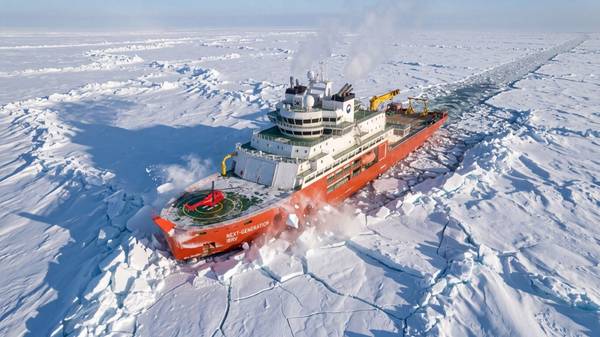
Steel cutting marks start of construction on dual-fuel icebreaking research vessel
Hanwha Ocean begins building a dual-fuel LNG/MGO icebreaker for the Republic of Korea’s Ministry of Oceans and Fisheries, due for delivery in 2030. |
|
|
|
||
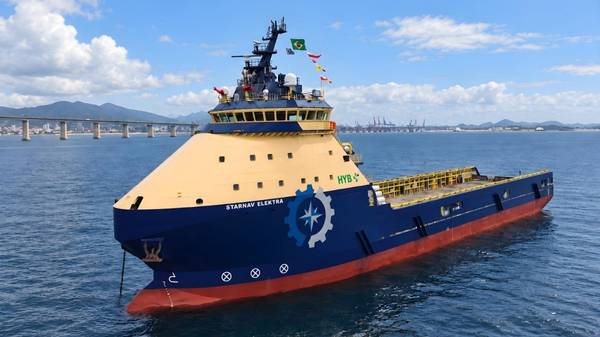
|
Petrobras christens first vessel under Mar Aberto fleet renewal programme
Platform supply vessel Starnav Elektra, built in Santa Catarina with an all-female crew, marks the first delivery under the fleet initiative. |
|
|
|
||
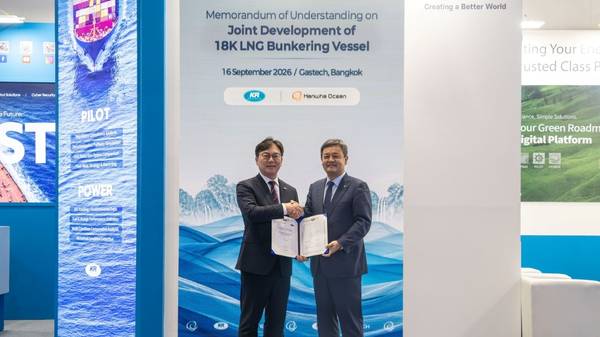
|
KR and Hanwha Ocean agree to develop 18,000-cbm LNG bunkering vessel designs
Pair will jointly explore two design concepts for a new LNG bunkering vessel. |
|
|
|
||
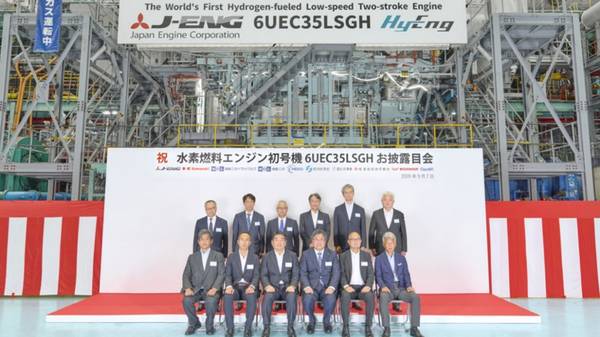
|
Japan Engine completes land-based testing of landmark hydrogen-fuelled engine for large vessels
Hydrogen co-firing rate of at least 95% achieved during factory testing. |
|
|
|
||
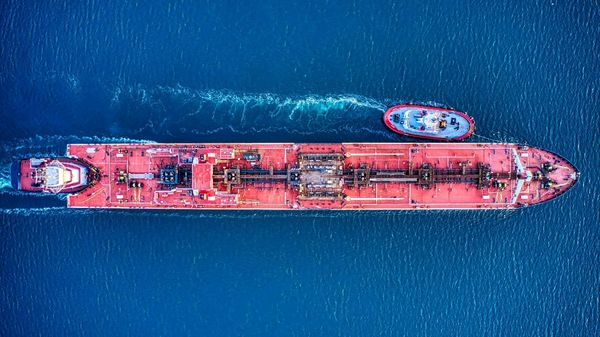
|
Ethanol edges into shipping’s fuel mix as methanol crossover eases adoption barriers
Rising interest from cargo owners, shared technology with methanol and Brazilian production growth push ethanol beyond regional niche status. |
|
|
|
||
|
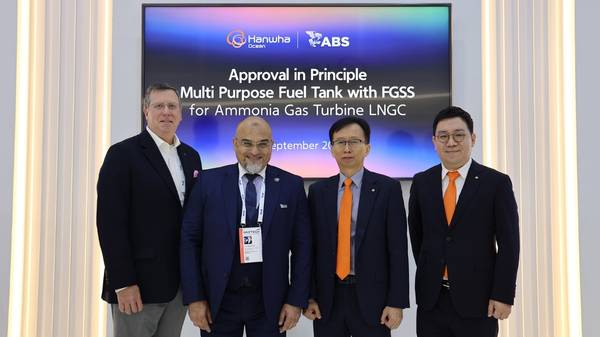
ABS grants Hanwha Ocean approval for dual-fuel tank enabling LNG-to-ammonia switch
In-principle approval awarded for fuel tank and supply system enabling LNG carriers to convert to ammonia without replacement. |
|
|
|
||
|
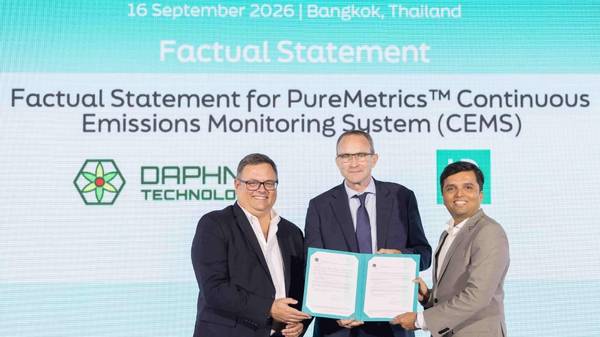
Lloyd's Register confirms suitability of Daphne Technology's emissions monitoring system
Factual Statement validates the PureMetrics design for monitoring greenhouse gas emissions from marine engines. |
|
|
|
||

|
IMO issues shipboard biofuel blend checklist developed by IBIA
Checklist for FAME-based biofuels formally incorporated into IMO document, supporting crews handling biofuel blends for the first time. |
|
|
|
||
| Jiangnan delivers second LPG dual-fuel VLAC in series to Singapore’s EPS [News & Insights] |
| ABS grants Hanwha Ocean approval for dual-fuel tank enabling LNG-to-ammonia switch [News & Insights] |
| Bureau Veritas grants AiP to Jiangnan Shipyard's electric-propelled ammonia carrier concept [News & Insights] |
| World's first operational ammonia bunker vessel enters service [News & Insights] |
| Amogy and LOTTE Fine Chemical sign MoU to advance ammonia solutions in South Korea [News & Insights] |
