
 |
Compliance pooling mechanisms under the EU’s FuelEU Maritime regulation could be adapted to help aggregate demand and unlock investment in scalable zero-emission fuels (SZEFs) such as e-methanol and e-ammonia, according to a new insight brief published by the Getting to Zero Coalition and the Global Maritime Forum.
The brief — authored by Femke Spiegelenberg, Project Manager, Getting to Zero Coalition; Joe Boyland, Project Manager, Global Maritime Forum; and Joost Weterings, Head of Customer Sales and Strategy, C2X — examines how regulatory compliance frameworks could be restructured to provide the revenue certainty that fuel producers require to reach a final investment decision (FID) — a threshold that most planned production facilities have yet to cross.
The authors argue that while the technology challenge for alternative-fuel vessels is slowly resolving — with more than 100 methanol-capable vessels now in service, over 300 on order, and nearly 50 ammonia-capable vessels in the pipeline — the financing challenge for the fuels themselves persists. Long-term offtake agreements, typically required to secure project financing, often exceed $1bn over ten years or more, representing a level of financial and operational risk that only a limited number of shipowners are currently willing or able to assume.
Current pooling models fall short for e-fuels
According to the brief, fuel producer-led compliance pools have gained traction in the biofuels and bio-LNG segments, with companies including FincoEnergies, STX, and Gasum offering pooling services that act as intermediaries between over-compliant and under-compliant vessels. However, the brief finds that these existing structures are not designed to support long-term investment in e-fuels.
Current pools operate on single-year commitments with market-based credit pricing, which the authors say introduces too much volatility to underpin bankable long-term offtake. Credit prices during the first FuelEU Maritime compliance year ranged from approximately €250 per tonne of CO₂ equivalent (CO₂e) in mid-2025 to around €170–€200 per tonne in early 2026, with the lower end of prices driven down by the large availability of LNG-generated credits, which carry a lower abatement cost than biofuels or e-fuels.
The brief identifies three structural barriers preventing current pooling models from supporting SZEF investment: the annual rather than multi-year nature of commitments; volatile credit pricing; and the absence of sufficiently robust commercial entities to act as counterparties for fuel producers and project lenders.
Adapting pooling to bridge the cost gap
The brief proposes that compliance pooling models could be adapted by shifting to multi-year commitments aligned with fuel plant offtake tenors of seven to ten years, introducing semi-fixed credit pricing with floor-and-cap mechanisms, and establishing dedicated joint ventures or special-purpose vehicles (SPVs) to consolidate counterparty risk and aggregate demand.
As an illustrative example, the brief models a biomethanol compliance pool in which an SPV — either a joint venture with anchor shipowners or a producer-managed structure — sells FuelEU surplus credits generated by methanol-capable vessels to compliance buyers on multi-year, semi-fixed pricing terms.
According to the brief’s analysis, the cost gap between e-methanol and the lowest-cost conventional compliance option — estimated at $933 per tonne of very-low-sulphur fuel oil (VLSFO) equivalent — could be covered by between 60% and 88% by credit revenues in the $170–$250 per tonne CO₂e range observed in the first compliance period. The authors note that while these revenues alone would not fully close the gap or guarantee FIDs, they could reduce revenue uncertainty and improve the risk profile of production projects.
“Many first-mover shipowners indicated a need for clarity about the cost gap rather than the need to fully close it,” the brief states, suggesting that stable and auditable credit revenue streams may be sufficient to support investment decisions even where full cost parity is not achieved.
Green corridors as a testing ground
The brief also identifies green shipping corridors — trade routes where zero-emission shipping is supported through coordinated public and private action — as environments where innovative pooling models could be piloted.
Two routes are cited as examples where pooling has been applied in practice. On the Vaasa–Umeå route, Wasaline has been operating its Aurora Botnia ferry on waste-based biomethane supplied by Gasum since August 2025, selling the FuelEU surplus credits generated to Stena Line. On the Stockholm–Turku route, Viking Line has increased its biogas consumption on the Viking Glory and Viking Grace to a projected 3,800 tonnes this year — up from around 10 tonnes in 2023 — with the vessels now running on 50% waste-based biogas also supplied by Gasum, selling surplus credits through a Gasum-managed pool.
The brief notes that both initiatives benefited from long-standing commercial relationships and the relatively modest cost gap associated with biomethane, compared with biomethanol or electrofuels.
For green corridors applying this model to SZEFs, the brief identifies two potential structures: one in which compliance buyers and anchor vessels are drawn from within the same corridor consortium, and another in which anchor vessels are corridor participants while compliance buyers come from outside. Both structures face limitations, the authors note — the former may encounter competitive tensions among shipowners on the same route, while the latter may struggle to attract outside buyers willing to commit to long-term credit purchases given current market liquidity.
Sector archetypes
The brief also outlines which vessel segments are likely to act as credit generators and buyers in an e-fuel-focused compliance pool. Ammonia and methanol tankers — which can burn their own cargo — along with feeder container vessels and ferries operating on predictable routes, are identified as the most promising credit generators. Tramp shipping segments, including bulk carriers and traditional tankers, are more likely to act as compliance buyers, given the difficulty of sourcing drop-in fuels or committing to long-term SZEF offtake against unpredictable trading patterns.
The brief concludes that while innovative compliance pooling is not described as a solution to all barriers facing SZEF deployment, it could reduce uncertainty, distribute risk across multiple actors, and create more predictable revenue streams at a stage where waiting for perfect market conditions risks delaying the energy transition.
|
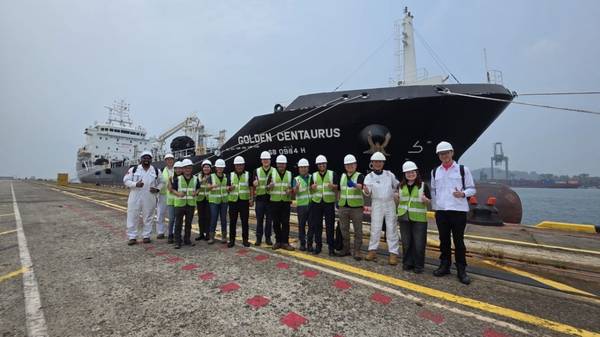
Singapore safety council inspects methanol bunker tanker Golden Centaurus
NMSSC members 'encouraged' by integration of structural and operational safety into newly commissioned IMO Type II vessel. |
|
|
|
||
|
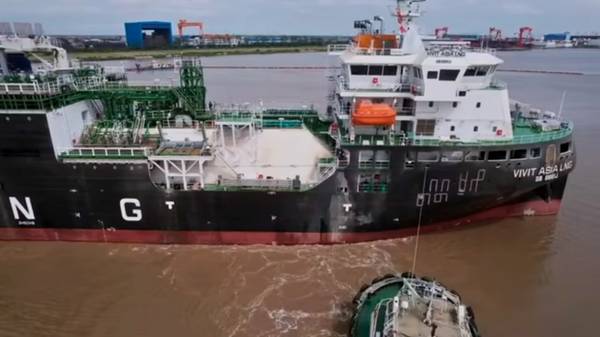
Vitol to start LNG bunkering in Asia from late 2026 after vessel sea trials
12,500-cbm Vivit Asia LNG completes trials, with regional operations due to begin later this year. |
|
|
|
||
|
PetroChina International seeks bunker sales manager to grow European marine fuels business
The state oil major’s trading arm is hiring in Rotterdam or London to expand bunker sales across the ARA region. |
|
|
|
||
|
WinGD signs global service agreement for TMS Cardiff Gas LNG carrier newbuilds
WinGD will support six dual-fuel engines on three new LNG carriers for the Athens-based operator throughout their operational lives. |
|
|
|
||
|
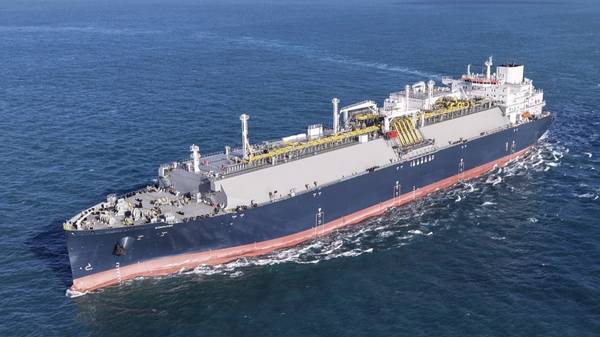
Yangzijiang Xinfu delivers first 175,000-cbm LNG carrier built by Chinese private shipyard
Vessel features two dual-fuel MAN B&W 5G70ME-C10.5-GA-EGR engines fitted with cryogenic units. |
|
|
|
||
|
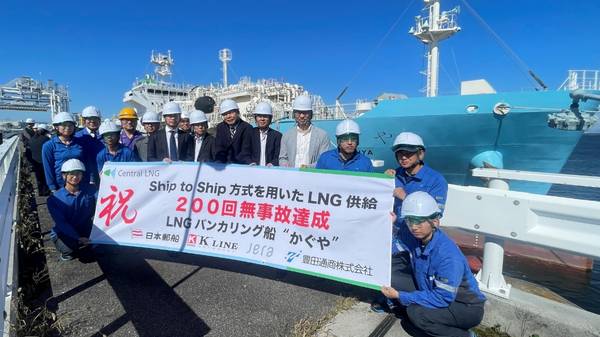
LNG bunkering vessel Kaguya completes 200th ship-to-ship operation in Japan
K Line’s joint venture vessel reaches milestone in Mikawa Bay. |
|
|
|
||
|
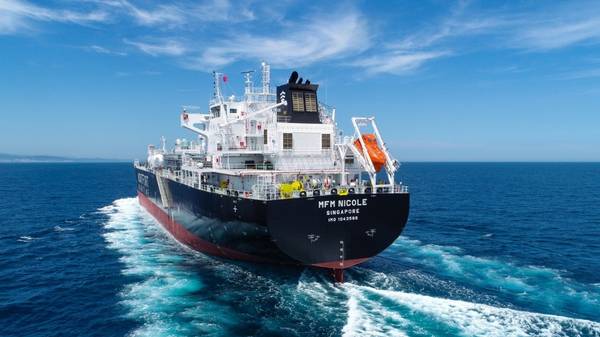
Synergy Marine adds dual-fuel LPG carrier to managed fleet
MFM Nicole joins Synergy’s gas carrier portfolio as owners weigh fuel choices ahead of MEPC 85 negotiations. |
|
|
|
||
|
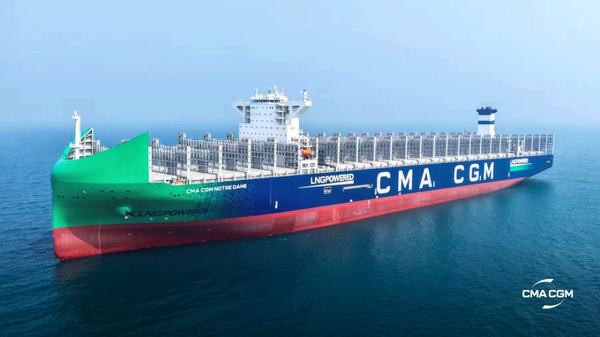
DSV to use CMA CGM’s ACT+ solution to slash shipping emissions
Danish firm targets 12,000-tonne reduction in CO₂ emissions over two years through the use of UCOME-based biofuels. |
|
|
|
||
|
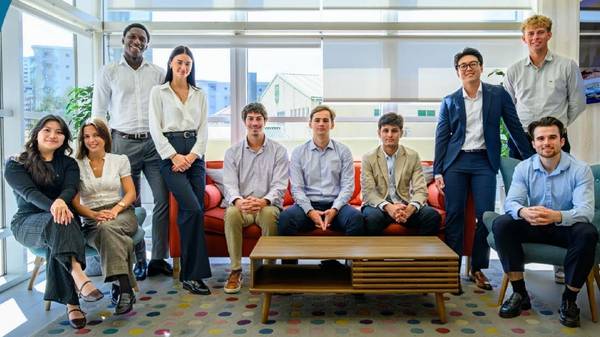
Peninsula welcomes 2026 graduate cohort across global bunkering network
Bunker firm brings new graduates into roles spanning Houston, Singapore, Gibraltar, Monaco and Las Palmas. |
|
|
|
||
|
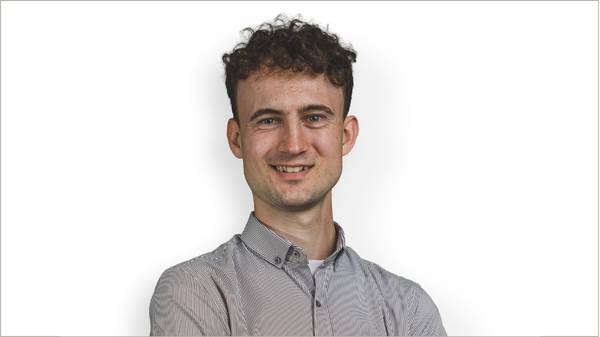
Malik Supply appoints Mathias Krogsgård as bunker trader
Danish bunker firm adds trader with export and technology background to growing team. |
|
|
|
||
| Wind propulsion offers 'no fundamental barriers' for LNG carriers, study finds [News & Insights] |
| Shipowners risk financial exposure by delaying EU allowance transfers, EmissionLink warns [News & Insights] |
| SEA-LNG urges EU to protect mass-balance pathway for liquefied biomethane [News & Insights] |
| Orlen and Port of Gdynia partner to explore LNG and bio-LNG bunkering options [News & Insights] |
| EmissionLink urges demand aggregation to unlock zero-emission fuel investment [News & Insights] |
