The current situation
Since the closure of the Strait of Hormuz to most commercial shipping in late February 2026, an estimated 1,550 vessels, carrying approximately 20,000 seafarers, have been unable to transit, or have chosen to remain at anchor in the Arabian Gulf, Gulf of Oman, and approaches. Traffic through the Strait, which normally averages around 138 vessels per day, has fallen to near-zero on most days. The conflict began on 28 February 2026, resulting in vessels being idle for approximately 90 days. Many are expected to remain idle until a navigable resolution to the situation emerges, which cannot be predicted at this time.
For vessel owners and operators responsible for such vessels, there is a need to focus on the technical consequences of extended idle upon fuel quality and what needs to be done in order to protect the vessel, crew and the environment.
Fuel quality deterioration during extended idle
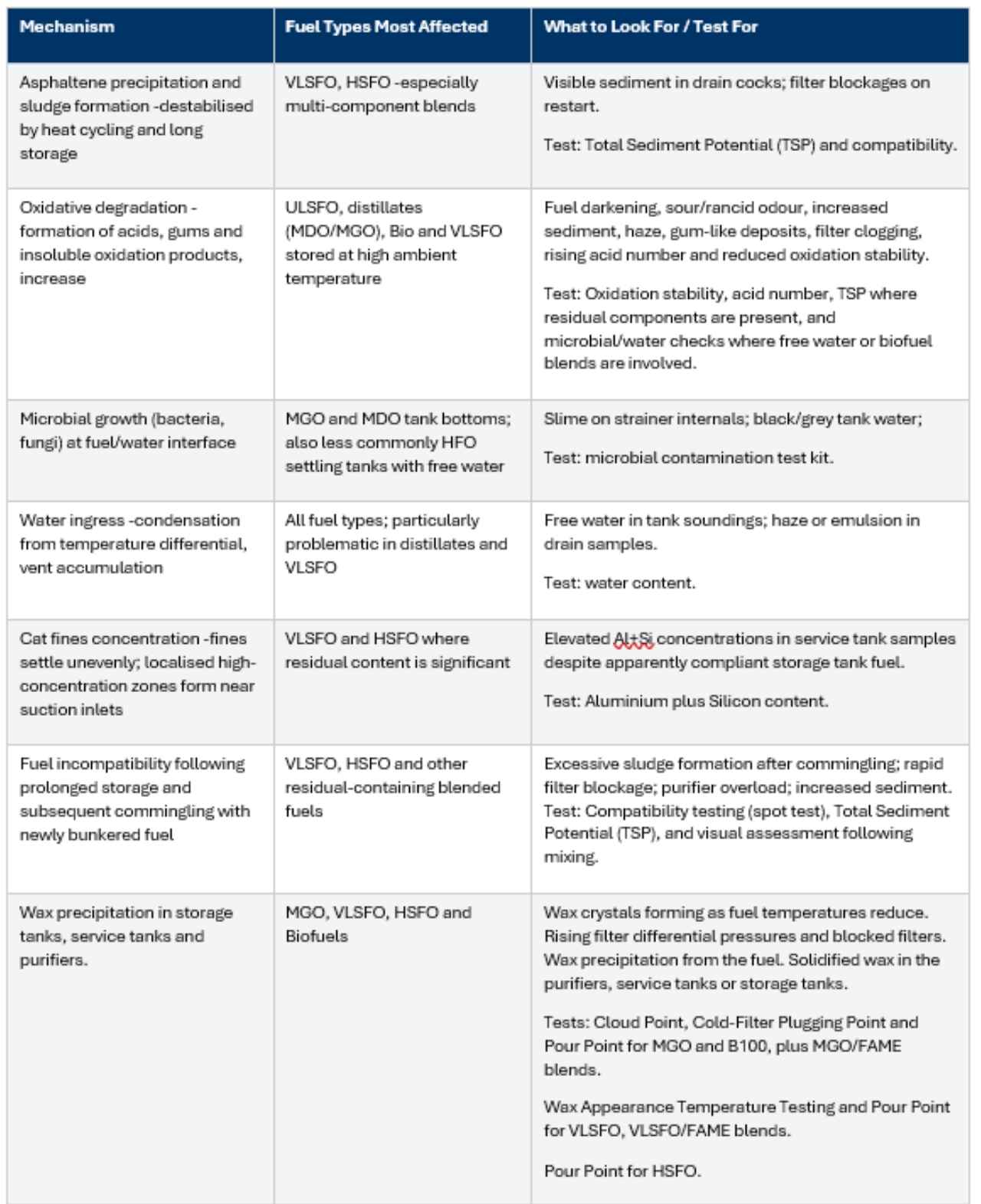
Fuel deterioration in idle vessels is caused by a combination of time, temperature, water ingress, and inactivity. Each mechanism reinforces the others. The Arabian Gulf summer (June–September) is one of the most demanding storage environments in global shipping, with bunker tank temperatures on unshaded anchored vessels regularly reaching 50–55°C.
Biofuel blends
The UAE, principally Fujairah and Jebel Ali, has begun supplying ISCC-certified marine biofuel blends, primarily FAME (UCOME) blended into VLSFO, at concentrations typically ranging from B10 to B30 (10–30% FAME by volume). Vessels that bunkered biofuel blends before going idle face additional degradation risks that do not apply to conventional fuel:
Before returning to service
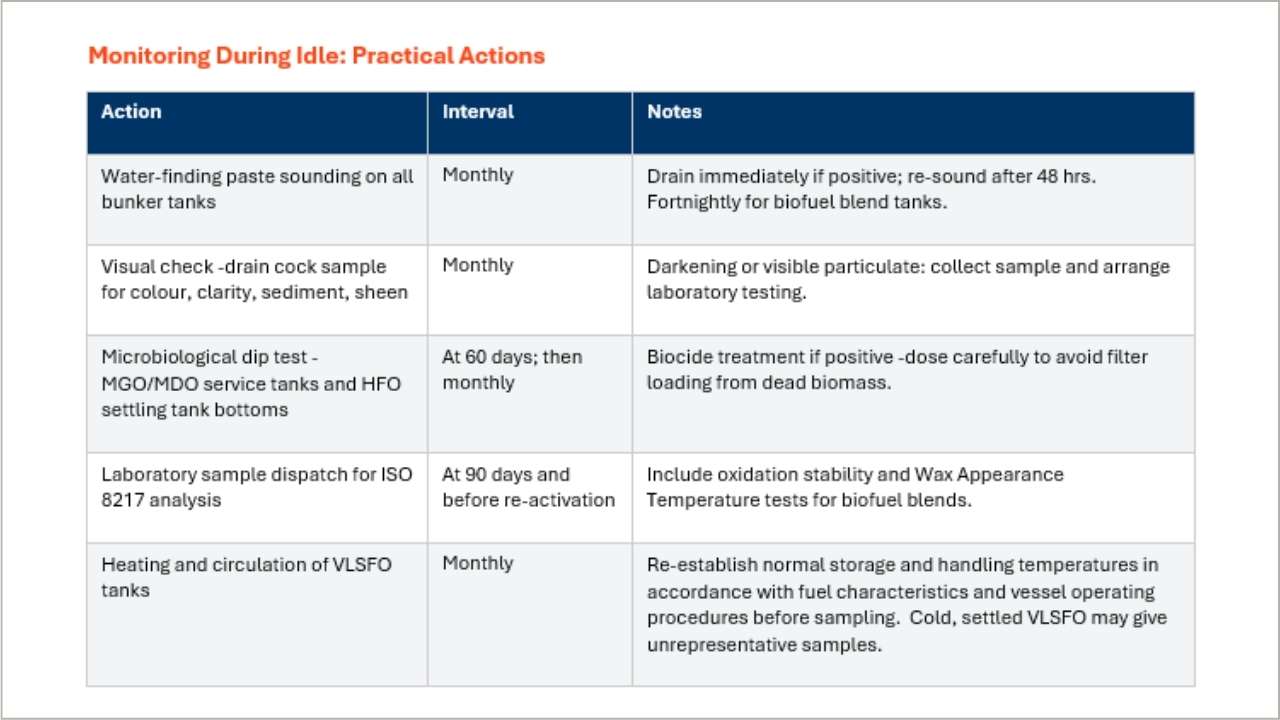
Reactivation without verifying fuel quality is the highest-risk point of the idle period.
The following should be completed before sailing:
Vessels already returned to service
A number of vessels that were idle in the Gulf region have now resumed trading, in some cases without the opportunity to complete pre-departure fuel quality verification. The absence of immediate operational symptoms does not confirm that fuel quality is acceptable.
Sludge that consolidated in tank bottoms during idle can be disturbed progressively by vessel motion and fuel draw-down, causing filter blockages or purifier upsets days or weeks after departure.
Elevated cat fines cause liner and piston ring wear that accumulates silently and is not visible until lube oil analysis.
Owners and operators of vessels already back in service should arrange sampling of all tanks currently in use at the earliest opportunity and submit for full ISO 8217 analysis.
Precautionary measures in the interim: increase purifier throughput, increased frequency of filter inspections, plus elevated manual drain frequency. These actions reduce risk exposure but do not replace laboratory confirmation.
Article by Captain Rahul Choudhuri – VPS President of Strategic Partnerships, VPS; with editing by Bunker Index Staff

|
Japan Engine completes land-based testing of landmark hydrogen-fuelled engine for large vessels
Hydrogen co-firing rate of at least 95% achieved during factory testing. |
|
|
|
||
|
Ethanol edges into shipping’s fuel mix as methanol crossover eases adoption barriers
Rising interest from cargo owners, shared technology with methanol and Brazilian production growth push ethanol beyond regional niche status. |
|
|
|
||
|
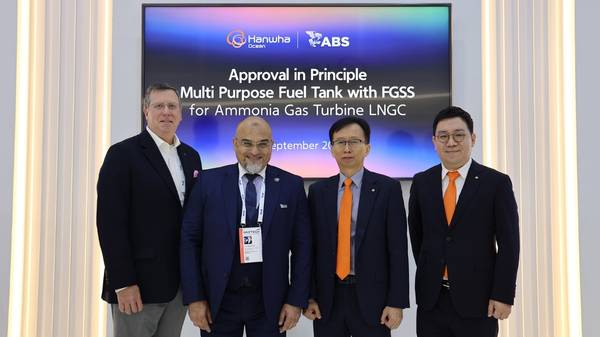
ABS grants Hanwha Ocean approval for dual-fuel tank enabling LNG-to-ammonia switch
In-principle approval awarded for fuel tank and supply system enabling LNG carriers to convert to ammonia without replacement. |
|
|
|
||
|
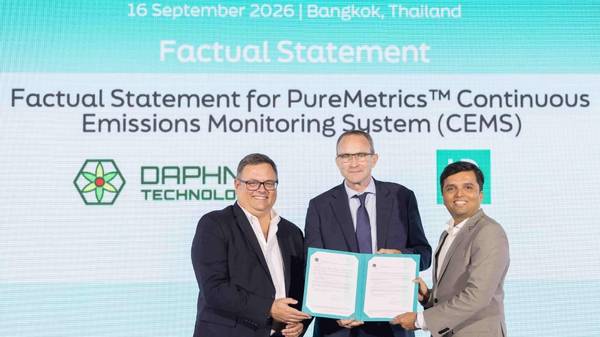
Lloyd's Register confirms suitability of Daphne Technology's emissions monitoring system
Factual Statement validates the PureMetrics design for monitoring greenhouse gas emissions from marine engines. |
|
|
|
||

|
IMO issues shipboard biofuel blend checklist developed by IBIA
Checklist for FAME-based biofuels formally incorporated into IMO document, supporting crews handling biofuel blends for the first time. |
|
|
|
||
|
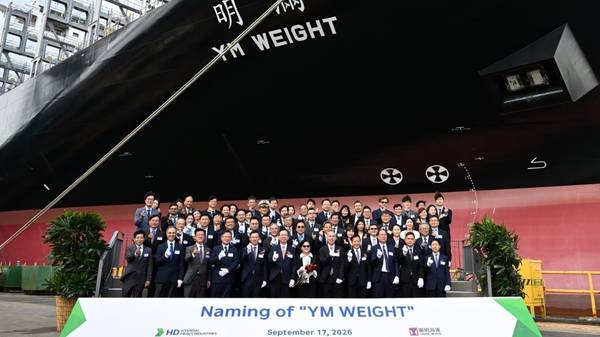
Yang Ming names fourth LNG dual-fuel container vessel YM Weight
Newbuild features high-pressure dual-fuel main engines capable of running on either LNG or low-sulphur fuel oil. |
|
|
|
||
|
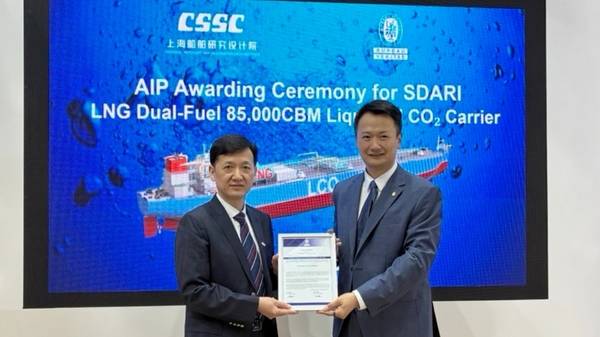
Bureau Veritas grants AiP to SDARI’s LNG dual-fuel liquefied CO₂ carrier design
Classification society approves 85,000-cbm vessel concept designed to support the growing carbon capture and storage sector. |
|
|
|
||

|
JuWonOil looking to strengthen with two Houston hires
Texas-based firm is recruiting a marine lubricants sales executive and a marine fuels and distillates trader. |
|
|
|
||
|
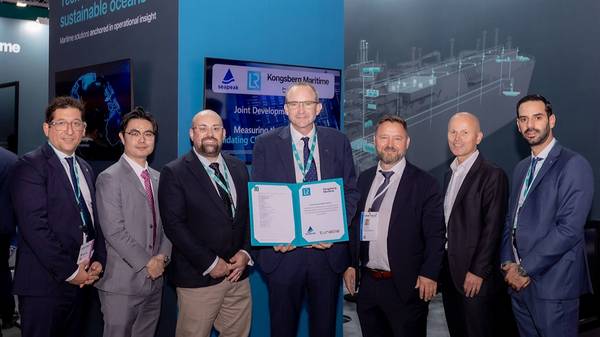
Four firms partner to trial continuous emissions monitoring on LNG carrier
LR, Seapeak, Kongsberg Maritime and Tunable will test onboard CO₂ monitoring against engine data and default emissions factors. |
|
|
|
||
|
Bunker Holding reshuffles commercial leadership across brand portfolio
Appointments announced across KPI OceanConnect, Glander International Bunkering and its digital sales operations. |
|
|
|
||
| VPS to host Dutch seminar on marine fuel quality, lubricants and decarbonisation [News & Insights] |
| VPS to host Dutch seminar on marine fuel quality, lubricants and decarbonisation [News & Insights] |
| Perfect storm at sea: High bunker prices meet declining fuel quality | Steve Bee, VPS [News & Insights] |
| Perfect storm at sea: High bunker prices meet declining fuel quality | Steve Bee, VPS [News & Insights] |
| VPS to host Bergen seminar on marine fuel quality, lubricants and decarbonisation regulation [News & Insights] |