
 |
The Regional Marine Pollution Emergency Response Centre for the Mediterranean Sea (REMPEC) has convened an expert meeting to advance proposals for designating the entire Mediterranean as a Nitrogen Oxides Emission Control Area (Med NOx ECA) under MARPOL Annex VI.
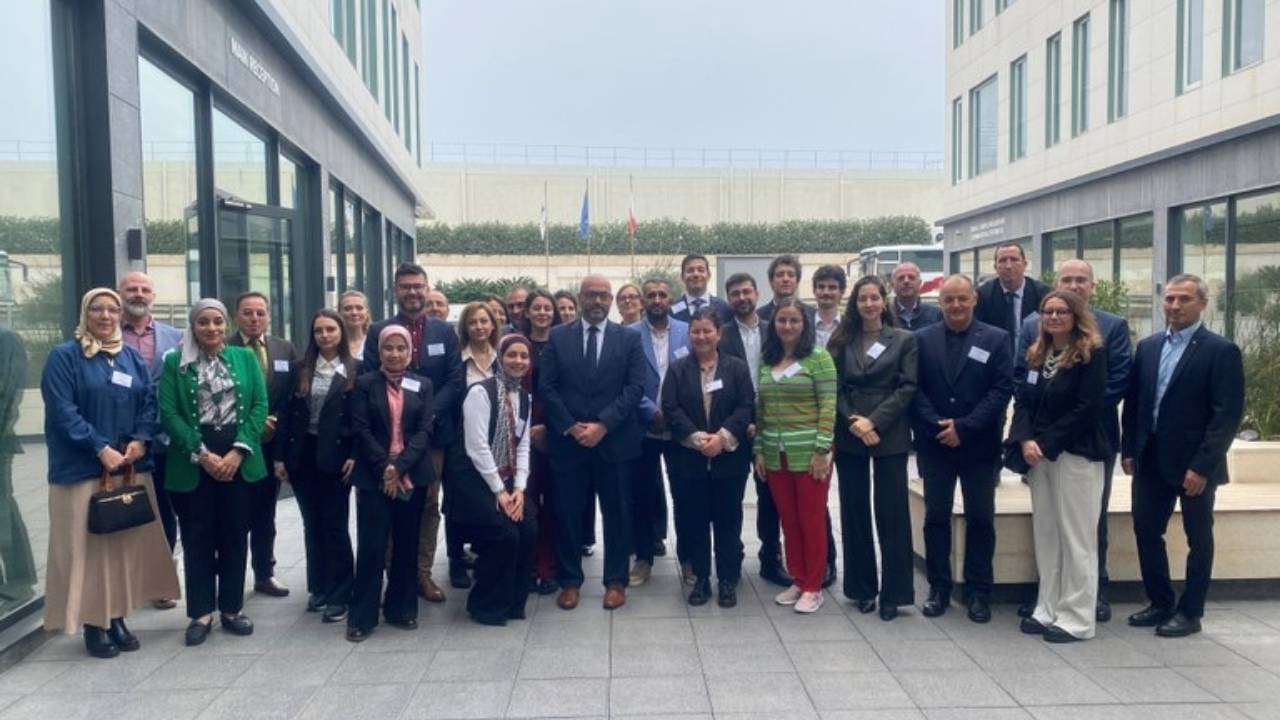
The meeting, held in Malta on November 18-19, brought together over 40 participants from 20 of the 22 Contracting Parties to the Barcelona Convention, alongside representatives from regional and international organizations. The event was financed by the International Maritime Organization's (IMO) Integrated Technical Cooperation Programme and the Mediterranean Trust Fund.
Government officials responsible for the ratification, implementation, and enforcement of MARPOL Annex VI attended the meeting, which focused on reviewing a draft Technical and Feasibility Study examining the possible designation of the Mediterranean Sea as an emission control area for nitrogen oxides.
The study, which was financed by the IMO's technical cooperation programme, the French Ministry for Europe and Foreign Affairs, and the Mediterranean Trust Fund, aims to assist Mediterranean coastal states in preparing a submission to the IMO. The document addresses the criteria set out in Appendix III of MARPOL Annex VI relating to the designation of Emission Control Areas.
Participants assessed the expected environmental benefits of reducing NOx emissions, including improved air quality and public health gains. The meeting also examined technical feasibility, potential entry into force dates, compliance mechanisms, and economic impacts associated with the possible designation.
The discussions built on experience gained from the Mediterranean Sulphur Oxide ECA, which entered into effect on May 1, 2025.
The meeting endorsed the final draft Technical and Feasibility Study and recommended that the earliest possible entry into force date for a Med NOx ECA should not be earlier than 2032, taking into consideration various challenges and diverse capacity building within the region.
Participants emphasized the urgency of ratification and effective implementation of MARPOL Annex VI, urging Contracting Parties that have not yet ratified the convention to complete the process by the date of submission of the Med NOx ECA proposal to the IMO.
The meeting also requested REMPEC to continue providing technical assistance and capacity building, including financial support and resource mobilization, to Contracting Parties seeking to ratify and effectively implement MARPOL Annex VI.
REMPEC will consolidate the outcomes of the meeting, including expert recommendations and priority considerations, to support the next steps in the decision-making process within the UNEP/MAP system. The conclusions and recommendations will be submitted to the Seventeenth Meeting of the Focal Points of REMPEC, tentatively scheduled for 2027.
Participants highlighted the importance of coordinated regional action, harmonized regulatory approaches, and continued capacity-building to ensure effective implementation should a NOx ECA proposal be formally advanced to the IMO.
|
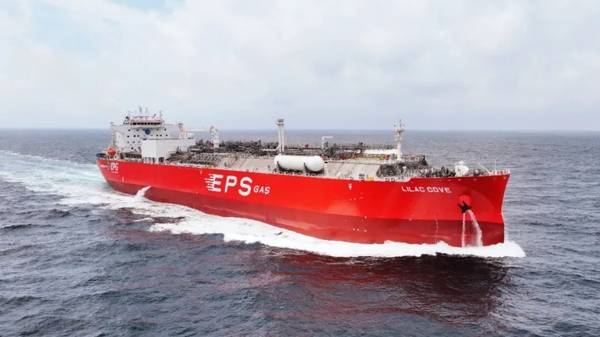
Jiangnan delivers second LPG dual-fuel VLAC in series to Singapore’s EPS
Lilac Cove, the world’s largest liquid ammonia carrier, joins Ivy Cove as Jiangnan advances its six-ship VLAC programme. |
|
|
|
||
|
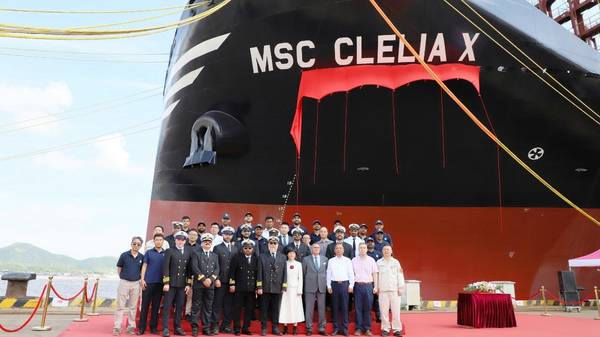
MSC LNG dual-fuel container ship delivered almost a year early
Chinese shipbuilder hands over sixth 10,300-TEU vessel in series to MSC ahead of contract schedule. |
|
|
|
||
|
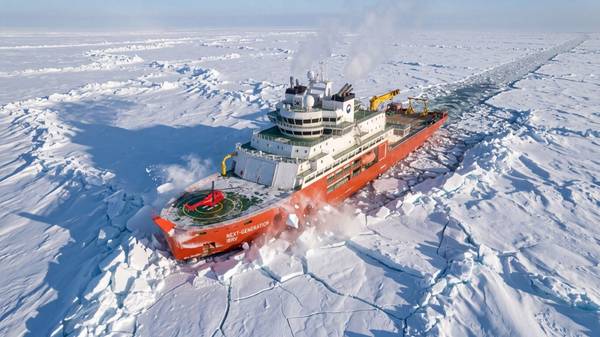
Steel cutting marks start of construction on dual-fuel icebreaking research vessel
Hanwha Ocean begins building a dual-fuel LNG/MGO icebreaker for the Republic of Korea’s Ministry of Oceans and Fisheries, due for delivery in 2030. |
|
|
|
||
|
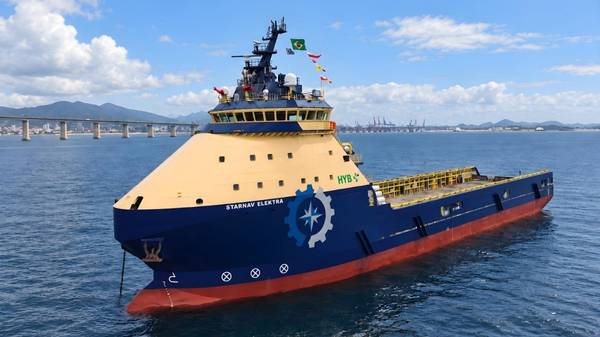
Petrobras christens first vessel under Mar Aberto fleet renewal programme
Platform supply vessel Starnav Elektra, built in Santa Catarina with an all-female crew, marks the first delivery under the fleet initiative. |
|
|
|
||
|
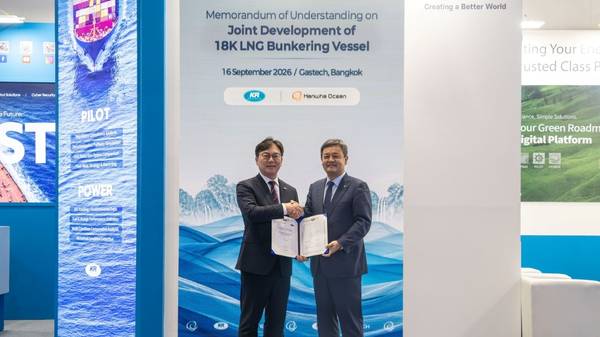
KR and Hanwha Ocean agree to develop 18,000-cbm LNG bunkering vessel designs
Pair will jointly explore two design concepts for a new LNG bunkering vessel. |
|
|
|
||
|
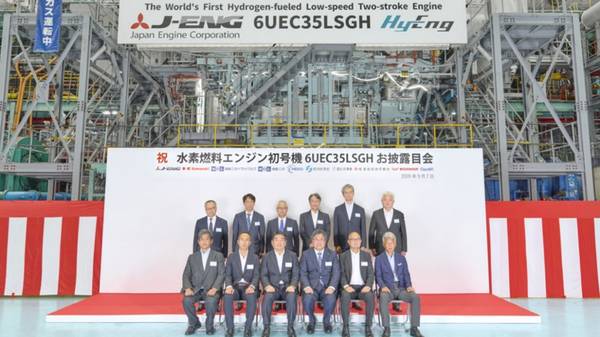
Japan Engine completes land-based testing of landmark hydrogen-fuelled engine for large vessels
Hydrogen co-firing rate of at least 95% achieved during factory testing. |
|
|
|
||
|
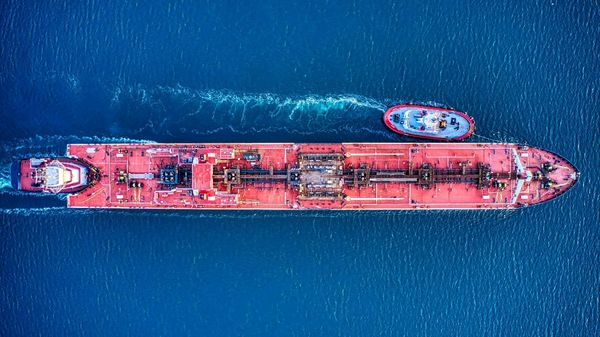
Ethanol edges into shipping’s fuel mix as methanol crossover eases adoption barriers
Rising interest from cargo owners, shared technology with methanol and Brazilian production growth push ethanol beyond regional niche status. |
|
|
|
||
|
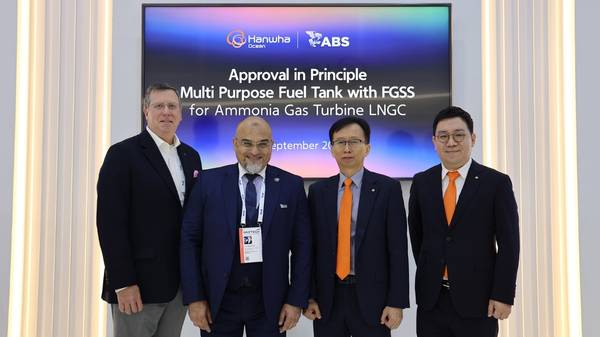
ABS grants Hanwha Ocean approval for dual-fuel tank enabling LNG-to-ammonia switch
In-principle approval awarded for fuel tank and supply system enabling LNG carriers to convert to ammonia without replacement. |
|
|
|
||
|
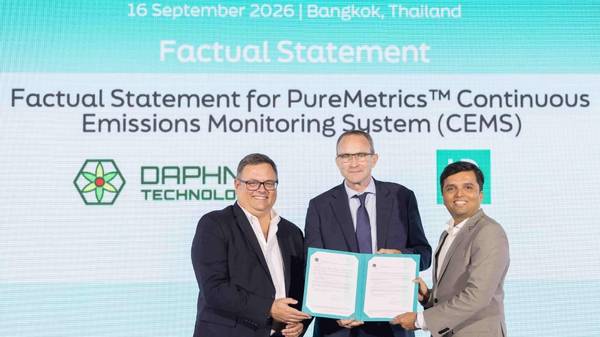
Lloyd's Register confirms suitability of Daphne Technology's emissions monitoring system
Factual Statement validates the PureMetrics design for monitoring greenhouse gas emissions from marine engines. |
|
|
|
||

|
IMO issues shipboard biofuel blend checklist developed by IBIA
Checklist for FAME-based biofuels formally incorporated into IMO document, supporting crews handling biofuel blends for the first time. |
|
|
|
||
| SEA-LNG claims LNG emissions cuts ahead of IMO meeting [News & Insights] |
| Shipping associations back IMO Net-Zero Framework ahead of key vote [News & Insights] |
| Lloyd's Register confirms suitability of Daphne Technology's emissions monitoring system [News & Insights] |
| IMO issues shipboard biofuel blend checklist developed by IBIA [News & Insights] |
| Four firms partner to trial continuous emissions monitoring on LNG carrier [News & Insights] |
| SGMF publishes first ISO-compliant life cycle assessment of methanol as a marine fuel [News & Insights] |
| K Shipbuilding and Lloyd’s Register to jointly develop ethanol-fuelled tanker design [News & Insights] |
