
 |
Whether or not the EU Emissions Trading System (EU ETS) will turn shippers towards greener fuel and inspire innovation remains to be seen. The current evidence that it will work is sparse. For example, industry expert Greg Knowler notes that Hapag-Lloyd expects just 1% of its annual fuel usage to be its ShipGreen product, and, in 2022, only 2% of Maersk’s 480,000 TEUs used its ECO delivery biofuel.[1]
Shipping may be late to the party, but data from current Carbon Pricing Instruments (CPIs) hardly paint an inspiring picture. A World Bank report from 2022 states that there are 37 carbon taxes and 34 emissions trading systems currently in operation around the world and that, in the majority of cases, the “carbon prices remain significantly below what is needed to achieve net zero by 2050 and meet the goals of the Paris Agreement”.[2] It describes this as a “gap between policies and pledges”.[3]
In a comprehensive review of 37 peer-reviewed, ex-post studies of emissions reductions caused by carbon pricing policies, Green points to four key findings.[4] First, that there is very little data on the issue. Second, that the effect on reductions for both taxes and ETSs is small, between 0% and 2% per annum. Third, that on the whole, taxes perform better than ETSs. Fourth, that the impact of the world’s largest scheme (the EU’s ETS) has so far been minimal.
These findings must be understood in the context of a general lack of data as well as the fact that those studies that have been carried out for the EU, for example, focused only on Phase 1, which was considered a pilot scheme where countries were allowed to set their own caps. Nonetheless, Green highlights how emissions prices have generally not been high enough to have an impact as well as the widely recognised problem of carbon leakage, where responsibility for emissions is simply shifted to another geographical area where there are less strict policies.
Zhu et al. explain that whether or not carbon pricing will have an effect depends on the bunker fuel price. In situations where the bunker fuel price is high (up to $583 per tonne), even countries with lax rules around emissions can inspire an emissions reduction of up to 8%.[5] When bunker prices are low ($348 per tonne), there are no emissions reductions. Koesler, Achtnicht and Köhler also suggest that bunker prices trump all other concerns around CO2 costs.[6]
Even if regulators manage to make enough of an intervention to change this, it could still be the case that biofuels will need to be cheaper than regular fuels because of costs incurred when changing the ship's fuel system. In the past, these changes have been absorbed by enhanced energy efficiency, so it is difficult to know where they will land with biofuels.
On the positive side, demand from traders and speculators has pushed ETS prices higher. And particular policy shifts are able to create expectation. For example, the publication of recommendations by the New Zealand Climate Change Commission in 2021 and the Republic of Korea’s change in climate targets heavily influenced and moved markets. Investors have managed to drive prices in the California-Quebec market.[7]
Perhaps the biggest challenge for the shipping industry will be offsets, where compliance is achieved by paying for emissions as part of other costs.[8] A study from Haites shows that even if there have been reductions in emissions in Europe of about 6.5% over several years, those countries without a carbon pricing policy reduced emissions faster than those with a tax![9]
There is also very little evidence that CPIs have resulted in more technological innovation. For example, Liliestam et al.’s study found no effects[10] and Van den Bergh and Savin found a small, but positive, effect on low-carbon innovation.[11]
One of the most cited innovations to tackle emissions is to reduce the speed of ships. The World Bank report points to studies that suggest 50% possible reductions from slower speeds, although this is largely dependent on fuel prices and charter and freight rates. A ship may slow down through certain parts of the route but speed up during others. Other possible innovations that may result from the EU ETS regulatory changes include designing more efficient ship hulls; more efficient optimization of ship routes to avoid bad weather, for example; the optimization of propulsion efficiency; sky sails (large sails that fly 200 metres above the ship and help pull it along); using low carbon fuels; and more efficient port management.
It is clear, however, that any technological innovations offshore will need to be matched by onshore infrastructure, and investors will want to ensure that ships use the facilities provided. The obligatory system in California ensures that ships use the onshore power facilities. In Norway, there were simultaneous government subsides for battery-powered ships and electric charging stations. But costs for onshore infrastructure are high and could be up to seven times more than onboard changes.[12]

|
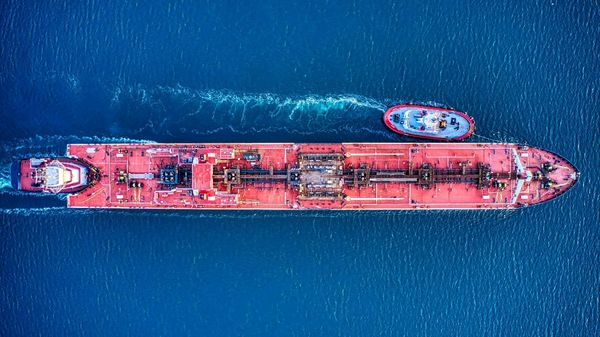
Japan Engine completes land-based testing of landmark hydrogen-fuelled engine for large vessels
Hydrogen co-firing rate of at least 95% achieved during factory testing. |
|
|
|
||
|
Ethanol edges into shipping’s fuel mix as methanol crossover eases adoption barriers
Rising interest from cargo owners, shared technology with methanol and Brazilian production growth push ethanol beyond regional niche status. |
|
|
|
||

|
ABS grants Hanwha Ocean approval for dual-fuel tank enabling LNG-to-ammonia switch
In-principle approval awarded for fuel tank and supply system enabling LNG carriers to convert to ammonia without replacement. |
|
|
|
||
|
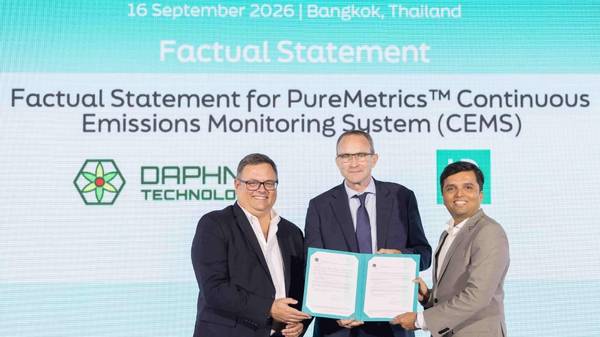
Lloyd's Register confirms suitability of Daphne Technology's emissions monitoring system
Factual Statement validates the PureMetrics design for monitoring greenhouse gas emissions from marine engines. |
|
|
|
||

|
IMO issues shipboard biofuel blend checklist developed by IBIA
Checklist for FAME-based biofuels formally incorporated into IMO document, supporting crews handling biofuel blends for the first time. |
|
|
|
||
|
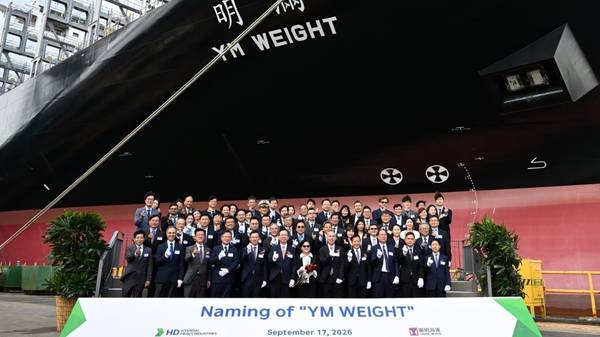
Yang Ming names fourth LNG dual-fuel container vessel YM Weight
Newbuild features high-pressure dual-fuel main engines capable of running on either LNG or low-sulphur fuel oil. |
|
|
|
||
|
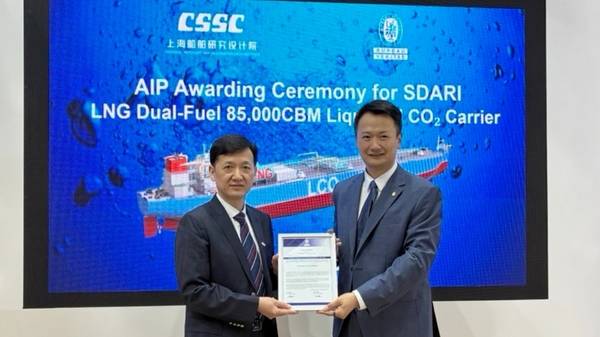
Bureau Veritas grants AiP to SDARI’s LNG dual-fuel liquefied CO₂ carrier design
Classification society approves 85,000-cbm vessel concept designed to support the growing carbon capture and storage sector. |
|
|
|
||

|
JuWonOil looking to strengthen with two Houston hires
Texas-based firm is recruiting a marine lubricants sales executive and a marine fuels and distillates trader. |
|
|
|
||
|
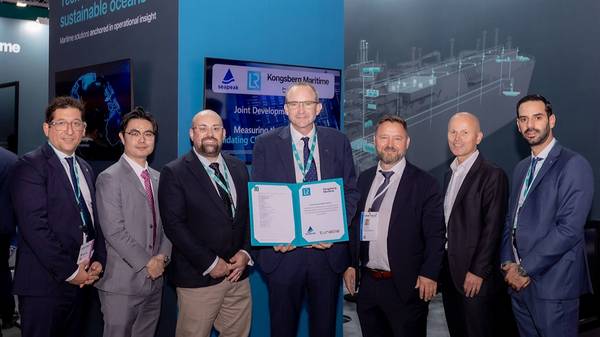
Four firms partner to trial continuous emissions monitoring on LNG carrier
LR, Seapeak, Kongsberg Maritime and Tunable will test onboard CO₂ monitoring against engine data and default emissions factors. |
|
|
|
||

|
Bunker Holding reshuffles commercial leadership across brand portfolio
Appointments announced across KPI OceanConnect, Glander International Bunkering and its digital sales operations. |
|
|
|
||
| Who will bear the cost of EU emission allowances? [News & Insights] |
| How the EU ETS impacts non-EU nations and shippers [News & Insights] |
| Four cornerstones for a regulatory environment for sustainable fuels [News & Insights] |
| Formula for change: UECC solution for EU ETS gives clients clarity on emission costs | UECC [News & Insights] |
| Lloyd's Register confirms suitability of Daphne Technology's emissions monitoring system [News & Insights] |
| Four firms partner to trial continuous emissions monitoring on LNG carrier [News & Insights] |
| Shipowners risk financial exposure by delaying EU allowance transfers, EmissionLink warns [News & Insights] |
| SEA-LNG urges EU to protect mass-balance pathway for liquefied biomethane [News & Insights] |
| SEA-LNG urges EU to protect mass-balance pathway for liquefied biomethane [News & Insights] |
