
 |
The World Shipping Council (WSC) has made recommendations in a paper to the Marine Environmental Protection Committee (MEPC) concerning the need to establish a regulatory environment that encourages the use of sustainable fuels.[1] To meet 2050 net-zero targets, the WSC highlights four cornerstones of a legal instrument that would result in ships cutting greenhouse gas emissions (GHG) and using cleaner energy. The International Maritime Organization's (IMO's) Fourth GHG study 2020 outlined that the shipping industry currently accounts for 3% of global annual GHG.[2] Heavy fuel oil, marine gas oil, very-low-sulphur fuel oil and, more recently, the use of liquefied natural gas make up 99% of the sector's energy demand. Proposals to cut GHG emissions mean turning to renewable fuels, such as advanced biofuels, biomethane, hydrogen, renewable methanol and ammonia.
The first of the cornerstones refers to the goal-based, phased reduction of marine fuel's GHG intensity. It suggests ship owners and operators need to know well in advance what the 2030 and 2040 targets will be (with the 2023 IMO GHG Strategy envisaging a reduction in carbon intensity of at least 40% by 2030).[3] Clearer goals would mean that energy providers would see an obvious increase in demand for sustainable fuel as ship owners and builders accommodate new sources of energy. As outlined in an April report from the MEPC,[4] decarbonisation pathways are not dependent on the technical and commercial readiness of candidate fuels and technologies but rather the clarity given to the sector over the ambition of policy.
The second cornerstone is about setting a pricing mechanism that offers incentives for the changes. Different market-based measures to cut GHG emissions have been considered by the committee since 2006. Among the proposals have been levies and incentives based on the respective ports of the voyage, ship efficiency standards, emissions trading systems, trade and development penalties and rebate mechanisms for developing countries.
Discussions are ongoing, and the WSC remains open-minded; however, it emphasises that price interventions must be significant and must be implemented soon. The price mechanism needs to ensure that companies that make the changes and adopt new fuels can compete in a market where companies will continue to use non-renewable energy. This means taking into account the higher operating costs that come with sustainable fuel and rewarding operators, proportionally, should they exceed current targets.
The report recognises that there are a number of different options but outlines specific details of two possible pathways. The first is based on a credit system whereby those that meet or pass their targets are able to sell credits to those that do not. Another system, proposed by the Chinese, is for non-compliers to pay an amount that is related to the scale of excess of GHG intensity into a central fund. Getting the prices right for either system will depend on calculations that take into account the movement of the fuel from its source to the ship (well-to-wake) and the additional costs for operating expenses. The WSC makes it clear that this cornerstone for creating a successful market intervention is closely related to the fourth cornerstone, which calls for standardised calculations for the values of GHG emissions of different fuels.
The third cornerstone outlines measures that will need to be taken concerning the classification of near-zero fuel ships alongside older GHG-emission-intensive vessels. The WSC suggests companies should be given the option of grouping them together for regulatory purposes as the newer sustainable fuel ships replace the others. This was included as part of the FuelEU maritime regulation, and the WSC is adamant that pooling facilitates transparency and helps to share best practice.[5] Groups of companies within member states can work together to accelerate reductions through co-operation. Pooling can spread the credit for using low-GHG-intensity ships across a company's fleet but also across different companies. This will help single ship owners and small companies to be included in the changes and have incentives for change. Pooling can also help in the global availability and supply of greener fuel as companies and states organise its transport between greener ships.
The last cornerstone highlights the benefits of using rigorous well-to-wake values in the calculation of GHG intensity. Unlike tank-to-wake measurements that look at emissions once the fuel is already in the ship's tank, well-to-wake refers to emissions from every stage in the life cycle of a fuel and includes other gasses than CO2. Ship emissions are scrutinised more closely using this measure, and all emission values — including tail pipe gasses, for example — will be included. Hydrogen is usually considered a successful tank-to-wake zero-emission fuel, but using the well-to-wake approach means accounting for how it is extracted and transported, which often involves GHG emissions. The WSC is concerned that interim values using current tank-to-wake calculations could cause problems; and the organisation stresses that a more standardised set of calculations, which takes into account the extraction and transport of sustainable biofuels, is needed. This calculation will also have to be relatable to accepted norms in GHG-related accounting practices that usually split emissions created by end users, such as ships, from the production of fuel. At the same time, the WSC warns against applying default values to group together different fuels (calling all fuels that are close to zero, "zero", for example). It sets out a three-part approach and offers a timeline for the move from the interim default values to the more robust well-to-wake calculations.
The 2021 International Renewable Energy Agency (IRENA) report on the decarbonisation of the shipping sector suggests that in the medium to long term, hydrogen will be the foundation of the changes.[6] The report also points to the development of ammonia as being essential if the industry is to hit net-zero targets. Ammonia is a carbon-free fuel and hydrogen carrier; however, most ammonia today is produced by natural gas and coal. Recognising the need for full well-to-wake calculations, IRENA's 2022 report suggests that the ammonia market could be set to take off in light of the recommendations made by the WSC.
|
IBT Bunkering & Trading appoints Sales Support Specialist
Björn Hauschild joins from shipyard broker CombiTrade. |
|
|
|
||
|
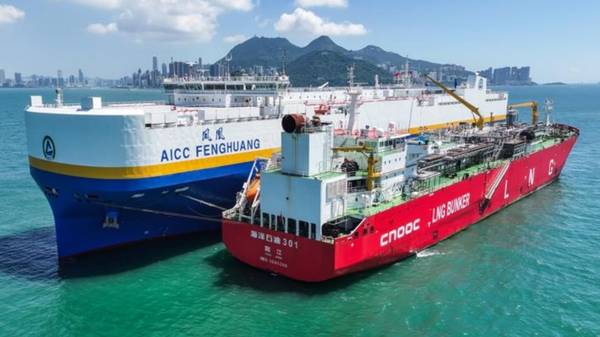
CLPe and CNOOC complete Hong Kong's first LNG bunkering of a pure car and truck carrier
Ship-to-ship operation delivered around 2,600 cbm of LNG to dual-fuel vessel AICC Fenghuang. |
|
|
|
||
|
Mercuria seeks senior sales and account manager for bunker delivery platform
Role can be based either remotely or at one of its offices in London, Geneva, Athens or Las Palmas. |
|
|
|
||
|
Molgas Energy Group appoints Riaan van Kralingen as head of clean fuels
Van Kralingen will oversee the company's liquefied biomethane and EU allowance portfolios, succeeding Caspar Gooren. |
|
|
|
||
|
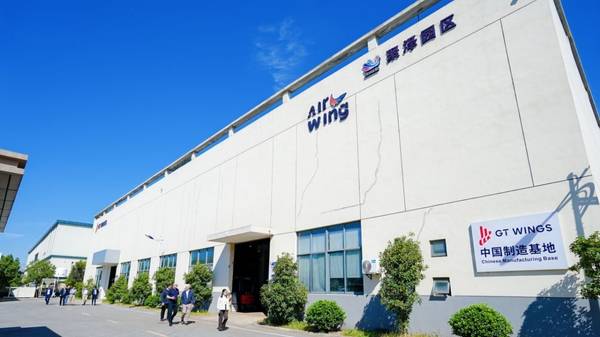
GT Wings launches compact AirWing S Jet Sail for smaller vessels
Wind propulsion developer adds lightweight unit to AirWing range as first customer-ordered AirWing20 units near completion. |
|
|
|
||
|
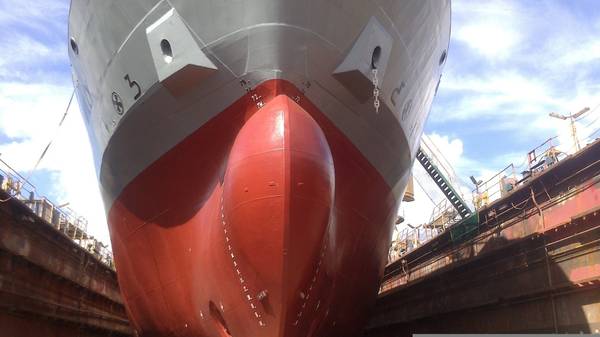
LR publishes retrofit guidance covering alternative fuels and energy-saving devices in one framework
New Guidance Notes address LNG, methanol, ammonia, hydrogen, wind-assisted propulsion and air lubrication retrofits for existing ships. |
|
|
|
||
|
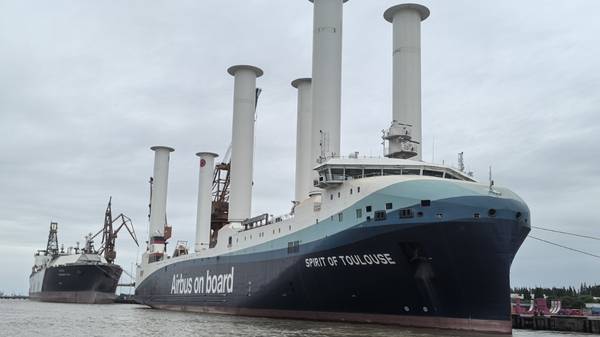
LD Armateurs' Spirit of Toulouse fitted with six Norsepower rotor sails
Six 35m rotor sails installed on the first of three methanol-capable ro-ro ships chartered by Airbus. |
|
|
|
||
|
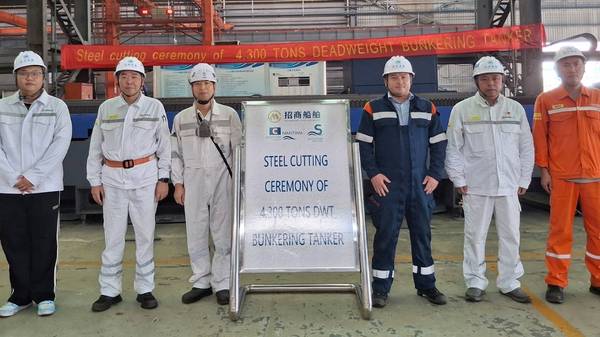
Maritima holds steel-cutting ceremony for Cap Morgiou, first of two Petroineos bunker vessels
Construction starts on bunker vessel able to carry conventional and low-carbon marine fuels, with delivery expected in early 2028. |
|
|
|
||
|
Singapore launches series of measures at SIBCON 2026
MPA announces LNG storage licences, digital bunkering grants and electric harbour craft incentives at 24th conference. |
|
|
|
||
|
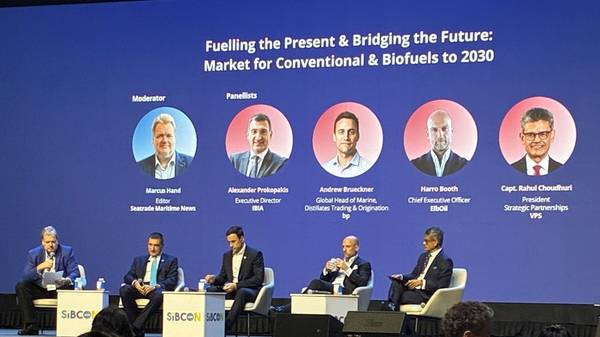
VPS outlines marine fuel standards and quality data at SIBCON 2026
VPS's Rahul Choudhuri addresses Singapore's evolving fuel standards and the quality of conventional fuels and biofuels. |
|
|
|
||
| 25 years of air pollution regulations [News & Insights] |
| Formula for change: UECC solution for EU ETS gives clients clarity on emission costs | UECC [News & Insights] |
| Methanol Institute publishes comprehensive fuel guide [News & Insights] |
| LR publishes retrofit guidance covering alternative fuels and energy-saving devices in one framework [News & Insights] |
| Study finds methanol dual-fuel retrofit of Kamsarmax bulk carrier would take about 75 days [News & Insights] |
| ClearMariner expands maritime sanctions screening with ESG, emissions and API support [News & Insights] |
| Nuclear-powered LNG carriers cost more upfront but cut lifetime fuel bills, ABS-backed study finds [News & Insights] |
| Electric and hybrid ferries could cut Sea of Marmara emissions by 63%, IMO study finds [News & Insights] |
