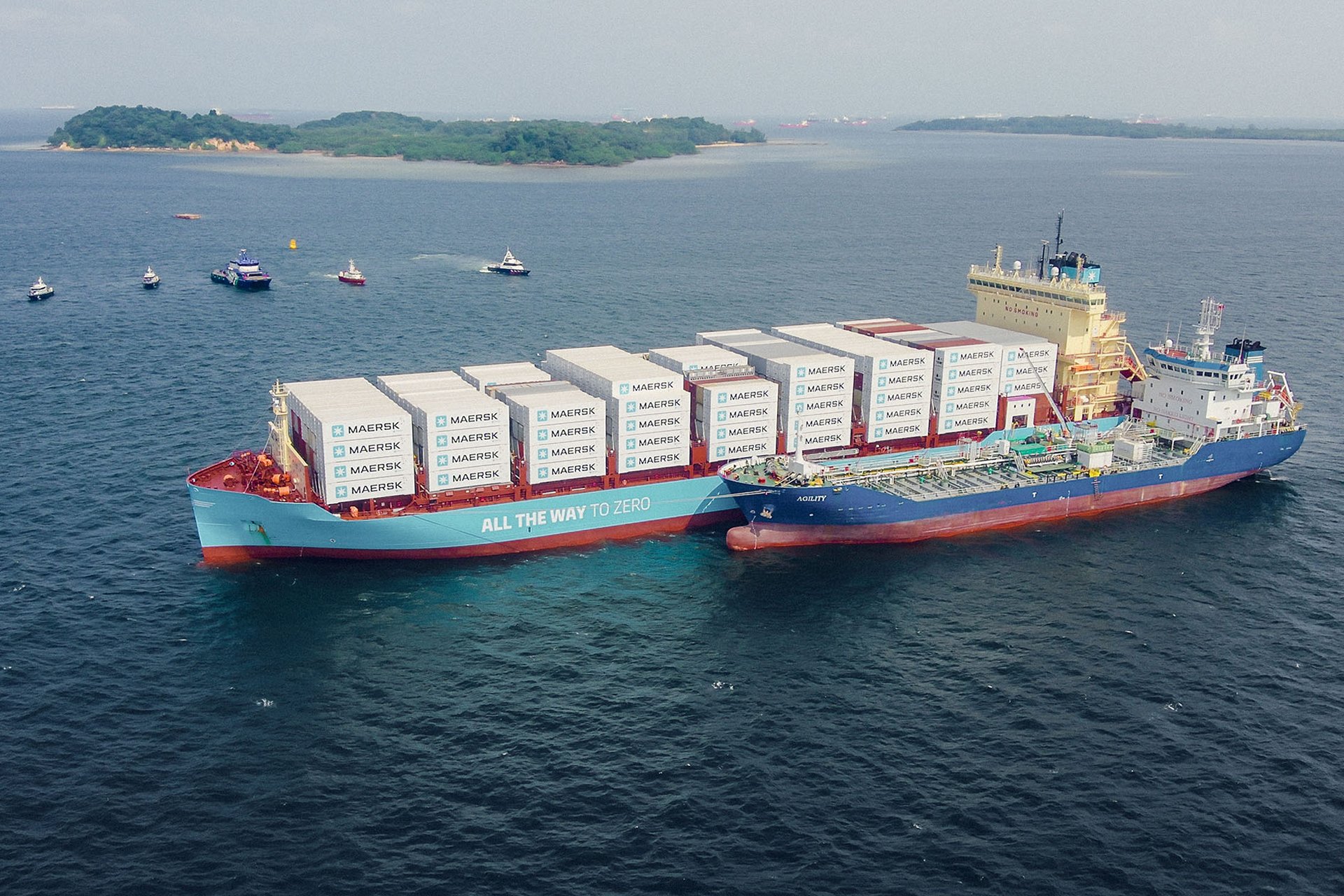
The world's first methanol-fuelled container ship has completed its maiden journey from Ulsan to Copenhagen.
The vessel arrived at Skagen anchorage on August 31; then made the short trip to Copenhagen anchorage from September 10-11, and was christened Laura Maersk during a naming ceremony in Copenhagen three days later.
Ordered in August 2021 and built by Hyundai Heavy Industries (HHI), the Laura Maersk has a 2,100-TEU container capacity and dual-fuel capability, thus enabling operation on methanol as well as conventional low-sulphur fuel.
The methanol propulsion configuration was developed in collaboration with manufacturers MAN ES, Hyundai Himsen and Alfa Laval.
When the initial methanol-enabled vessel orders were announced in 2021, Maersk stated that it aimed to operate the ships on carbon-neutral e-methanol or sustainable bio-methanol as soon as possible, whilst also acknowledging the challenges involved in sourcing the required methanol production.
And as part of that process, Maersk announced earlier this week that it had signed an agreement with Equinor to secure the supply of green methanol for its landmark feeder vessel during the initial months of operation in northern Europe, between September 2023 and the first half of 2024. The methanol bunkering of the Laura Maersk is to take place in Rotterdam during this period.
Equinor — which runs a production plant in Tjeldbergodden, Norway — is an established player in Europe's methanol market; and Alex Grant, Senior Vice President for the liquid commodity segment at Equinor, stated this week that the company has "ambitions to be a key provider of green methanol in the marine fuel segment."
The methanol used for the Laura Maersk's 21,500 km trip from the Republic of Korea to Denmark was sourced from Dutch producer OCI Global, with physical marine fuel supplier Hong Lam delivering methanol to the ship in Singapore towards the end of July, and VPS carrying out the bunker quantity survey.
OCI produces its methanol at a US-based facility by using captured biogas from decomposing organic waste in landfills. The biogas is upgraded to biomethane and injected into the gas grid, and methanol is then produced from biomethane in the grid.
Maersk has set itself the target of transporting a minimum of 25% of its Ocean division cargo using green fuels by 2030, compared to a 2020 baseline; and the shipper has a 2040 target of net zero greenhouse gas emissions.
|
FuelEU pooling drives surge in bio-LNG demand, Titan analysis finds
Clean fuel supplier's modelling shows pooling mechanism turning overcompliance into tradable value for LNG-fuelled ships. |
|
|
|
||
|
Ports told to prepare now for advanced nuclear power
Joint paper sets out a readiness pathway for ports facing nuclear-powered vessels, floating reactors and small modular units |
|
|
|
||
|
Eastern Pacific Shipping takes delivery of first ammonia dual-fuel VLAC
Terra Clove powered by first Everllence B&W 6G60ME-C10.5-LGIA ammonia dual-fuel two-stroke engine. |
|
|
|
||
|
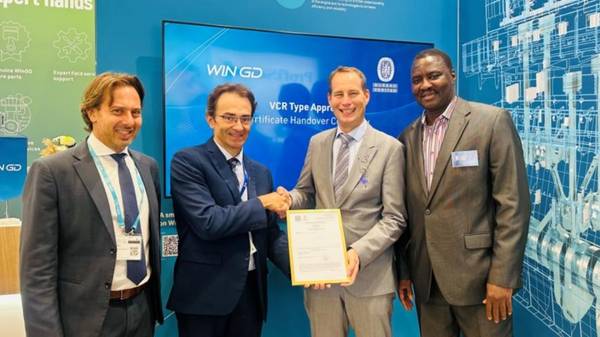
Bureau Veritas approves WinGD's variable compression ratio technology for dual-fuel engines
Classification society grants type approval to engine technology enabling compression ratio adjustment across different marine fuels. |
|
|
|
||
|
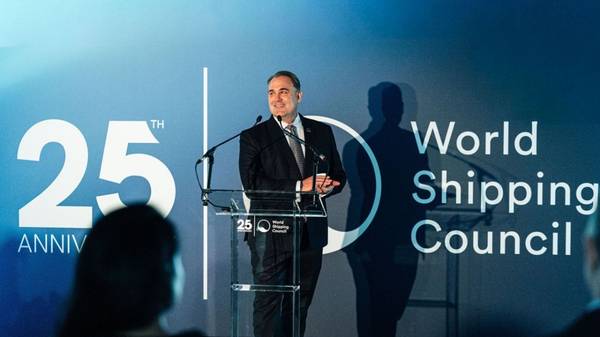
Dual-fuel fleet passes 500 ships as investment tops $200bn
World Shipping Council data shows dual-fuel container ships and vehicle carriers growing fast, with IMO rules uncertain. |
|
|
|
||

|
VPS to host Athens seminar on fuel efficiency and carbon reduction
VPS's final European round table of 2026 will cover marine fuels, lubricants and decarbonisation in Athens. |
|
|
|
||
|
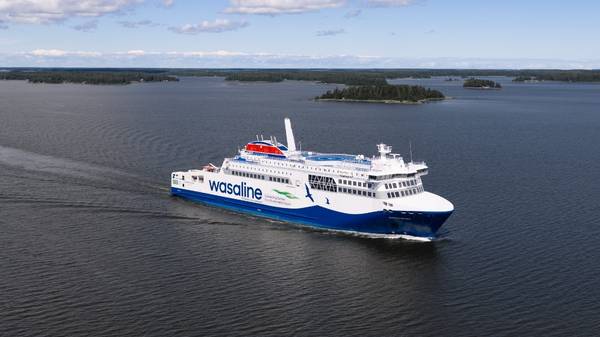
Wasaline secures locally produced biogas supply from St1 Biokraft for Vaasa–Umeå ferry
Agreement will supply 42 GWh of liquefied biogas annually, with deliveries due to start in January 2028. |
|
|
|
||
|
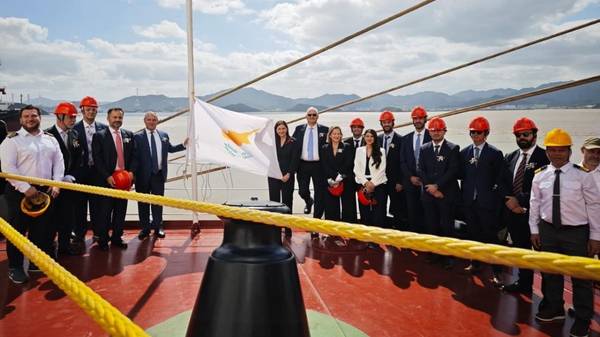
Safe Bulkers takes delivery of first dual-fuel methanol Kamsarmax newbuild
Kypros Island becomes the first dual-fuel bulker to enter the Cyprus Registry. |
|
|
|
||

|
PetroChina seeks LNG bunker trader to expand Asian marine fuel business
Role requires five to ten years of commercial experience in LNG, bunker trading, marine fuels, commodities, or energy trading. |
|
|
|
||
|
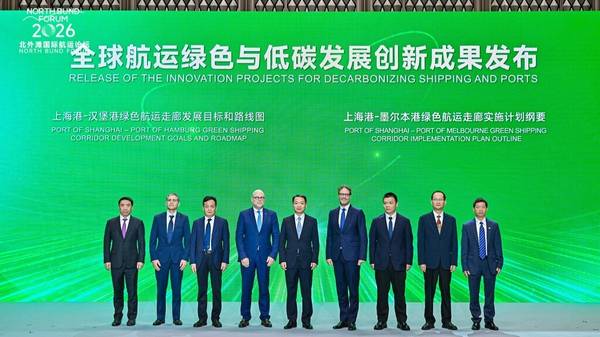
Shanghai and Melbourne ports move green shipping corridor into delivery phase
Ports launch implementation plan targeting green methanol, biofuels and shore power by 2035. |
|
|
|
||
| Maersk procures fuel for world's first methanol-enabled boxship [News & Insights] |
| VPS performs first methanol bunker quantity survey [News & Insights] |
| Methanol Institute publishes comprehensive fuel guide [News & Insights] |
| Maersk orders eight large methanol-fuelled boxships [News & Insights] |
| VPS to host Athens seminar on fuel efficiency and carbon reduction [News & Insights] |
| Maersk Tankers names second gas carrier in South Korea [News & Insights] |
| HMM orders eight LNG dual-fuel container ships in newbuild push [News & Insights] |
| Singapore completes world's largest ethanol bunkering operation [News & Insights] |
| WinGD engine completes first in-service ethanol voyage on Maersk container ship [News & Insights] |