This year marks a quarter of a century since IMO's 'Protocol of 1997 to Amend the International Convention for the Prevention of Pollution from Ships', which would add Annex VI - Regulations for the Prevention of Air Pollution from Ships.
With the 79th session of the IMO's Marine Environment Protection Committee (MEPC) currently under way, we provide a timeline below of the key emission regulations that have been approved and implemented since the Protocol of 1997 was put forward.
25-Year Timeline of Key Regulatory Events
September 1997: IMO's 1997 protocol to amend the MARPOL Convention (MARPOL 73/78) — the global agreement to control pollution from ships — adds Annex VI (Regulations for the Prevention of Air Pollution from Ships).
1997: The Baltic Sea Emission Control Area (ECA) is agreed by the nine Baltic governments, setting lower limits on sulphur oxide (SOx) and nitrous oxide (NOx) emissions by ships while in the Baltic Sea.
January 2000: EU 0.2% sulphur limit on marine gas oil (MGO) comes into effect under Directive 1999/32/EC.
January 2003: EU 1.0% sulphur limit on heavy fuel oil (HFO) enters into force under Directive 1999/32/EC.
May 2005: MARPOL Annex VI comes into force, introducing requirements to regulate the air pollution by ships and establising Sulphur Emission Control Areas (SECAs).
August 2006: The Baltic Sea becomes the first SECA in the world to enter into force, with a fuel sulphur limit of 1.5%.
August 2007: The North Sea and English Channel becomes the second SECA under EC Directive 2005/33/EC.
January 2008: IMO's MARPOL Annex VI begins enforcing a global sulphur limit of 4.5% on all fuels and a 1.5% cap for ships operating in Baltic, North Sea and Channel ECAs.
January 2008: A 0.1% sulphur limit becomes effective on DMA-grade MGO, and a 1.5% cap is enforced on DMB- and DMC-grade distillates for ships operating in EU territorial seas and inland waterways under Directive 2005/33/EC.
October 2008: IMO agrees a three-tier structure for new engines, which would set progressively tighter NOx emission standards depending on their installation date, with Tier III limits representing an 80% reduction from Tier I. The Annex VI requirements apply to installed marine diesel engines of over 130 kW output power.
January 2010: The EU's 0.1% fuel sulphur limit for ships at berth and operating within its inland waterways enters into force under Directive 2005/33/EC.
July 2010: The fuel sulphur limit for existing ECAs (Baltic Sea Area and North Sea, including the English Channel) is reduced from 1.5% to 1.0%, under MARPOL Annex VI.
July 2011: IMO agrees to include a new chapter on energy efficiency in MARPOL Annex VI and adopts mandatory energy efficiency regulations for ships – the Energy Efficiency Design Index (EEDI) for new ships and the Ship Energy Efficiency Management Plan (SEEMP) for all ships.
January 2012: IMO's worldwide fuel sulphur limit of 3.5% enters into force under MARPOL Annex VI. It also starts enforcing a 1.0% sulphur cap on ships operating in Baltic, North Sea and Channel ECAs.
July 2012: A 1.0% fuel sulphur cap for ships operating in the North American ECA is implemented under MARPOL Annex VI.
January 2015: IMO's MARPOL Annex VI starts enforcing a fuel sulphur limit of 0.1% for ships operating in ECAs.
January 2016: The North American and Caribbean Sea NOx ECAs (or NECAs) come into effect, imposing Tier III emission restrictions on all vessels with engines installed on or after January 1, 2016.
October 2016: IMO adopts the mandatory IMO Data Collection System (DCS) for ships to collect and report fuel oil consumption data from ships over 5,000 gt. The first calendar year data collection was completed in 2019.
April 2018: The Initial IMO GHG Strategy on the reduction of greenhouse gas emissions from ships is adopted, which sets the target of halving GHG emission from ships by 2050, compared to 2008, and reducing the carbon intensity of all ships by 40% by 2030 compared to 2008.
January 2020: The IMO 2020 0.50% global sulphur limit on marine fuels enters into force, with the only exception being for ships fitted with scrubber technology.
January 2021: The North Sea and Baltic Sea become NOx ECAs, enforcing the Tier III standard against ships built after January 1, 2016.
June 2021: IMO adopts short-term measures to reduce the carbon intensity of all ships by 40% by 2030, compared to 2008.
November 2022: The short-term measure to reduce ships' carbon intensity enter into force, introducing the Energy Efficiency Existing Ship Index (EEXI), the annual operational carbon intensity indicator (CII) rating and an enhanced Ship Energy Efficiency Management Plan (SEEMP).
January 2023: All ships will be required to calculate their attained Energy Efficiency Existing Ship Index (EEXI) and to initiate the collection of data for the reporting of their annual operational carbon intensity indicator (CII) and CII rating. The first annual reporting will be completed in 2023, with initial CII ratings given in 2024.

|
PetroChina seeks LNG bunker trader to expand Asian marine fuel business
Role requires five to ten years of commercial experience in LNG, bunker trading, marine fuels, commodities, or energy trading. |
|
|
|
||
|
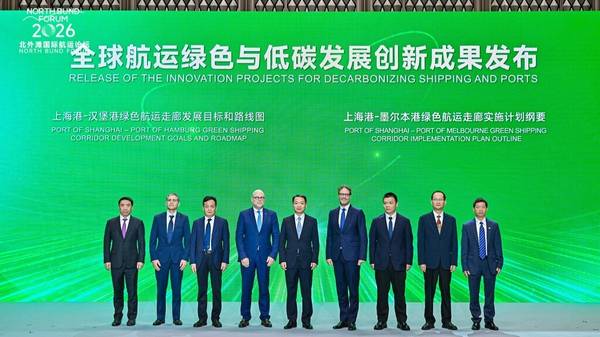
Shanghai and Melbourne ports move green shipping corridor into delivery phase
Ports launch implementation plan targeting green methanol, biofuels and shore power by 2035. |
|
|
|
||
|
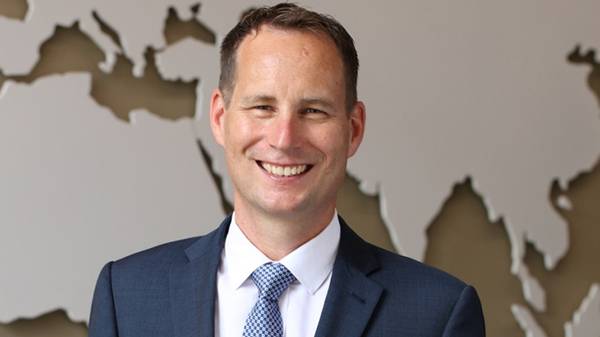
WinGD CEO warns of mounting cost due to Net Zero Framework delay
Dominik Schneiter says shipping's fossil-fuelled newbuild boom shows the cost of the IMO's delayed climate policy. |
|
|
|
||
|
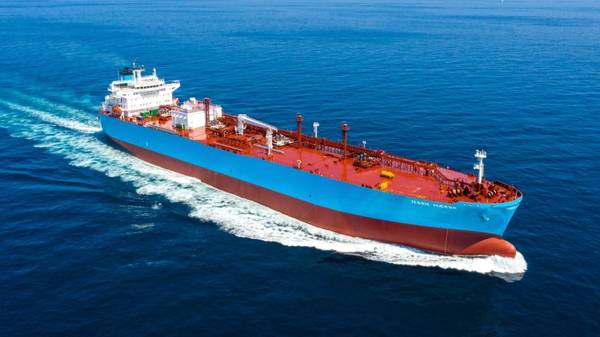
Maersk Tankers names second gas carrier in South Korea
Jessie Maersk, built to carry LPG and ammonia, joins a ten-ship series as the company expands its gas-shipping business. |
|
|
|
||
|
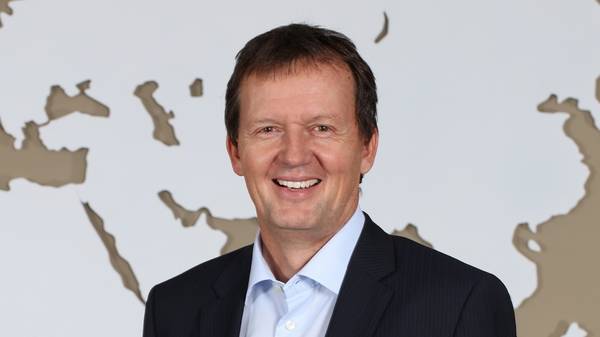
WinGD signs ten-year service deal for six COSCO LNG carriers
Swiss firm to provide global service and maintenance support for six LNG carriers powered by its 6X72DF dual-fuel engines. |
|
|
|
||
|
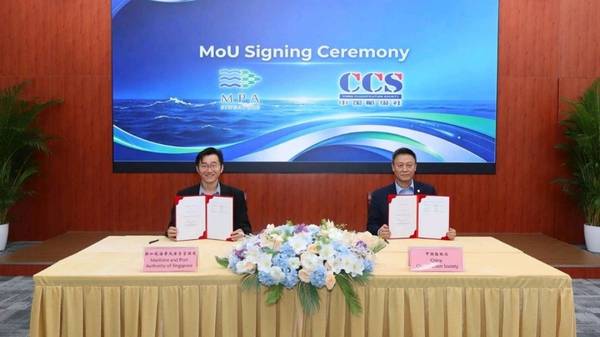
Singapore and China Classification Society deepen maritime ties with renewed decarbonisation pact
MPA and China Classification Society renew MOU, widening cooperation on green fuels, smart ships and talent development. |
|
|
|
||
|
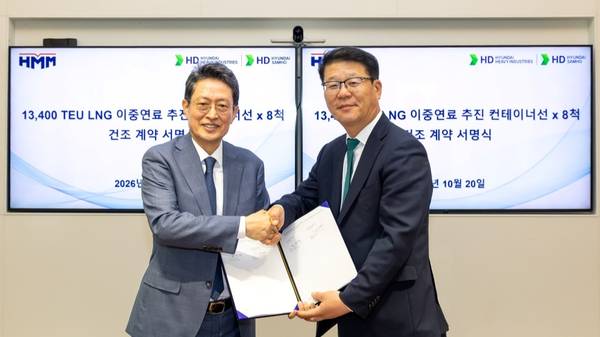
HMM orders eight LNG dual-fuel container ships in newbuild push
South Korean carrier commissions 13,000-TEU vessels from HD Hyundai, with deliveries due to begin in 2029. |
|
|
|
||
|
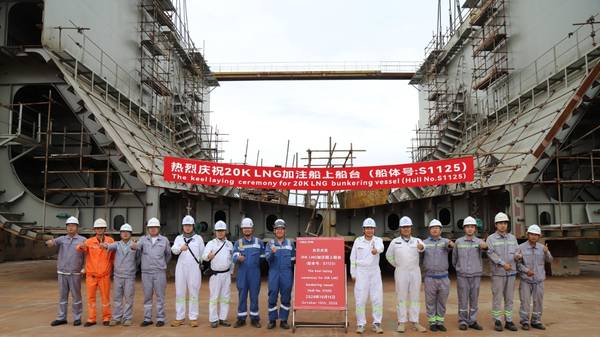
CIMC SOE advances construction on three LNG bunker vessels
Chinese shipbuilder progresses three bunker vessel projects in the same week. |
|
|
|
||
|
Verde Marine Energy adds two staff as it expands bunkering operations in ARA region
Dutch bunker supplier hires former Melroh Trading employees and launches RMG 380 3.5% HSFO barge service following Sunoco Marine tie-up. |
|
|
|
||
|
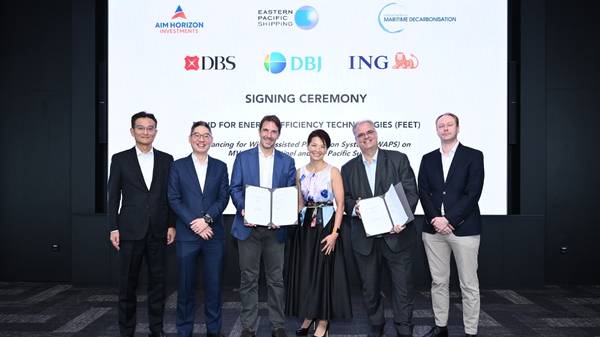
Fund for Energy Efficiency Technologies finances first wind-assisted propulsion projects with Eastern Pacific Shipping
GCMD and AIM Horizon Investments link verified fuel savings to financing for two EPS vessels fitted with wind-assisted propulsion. |
|
|
|
||
| Bunker-related issues pack MEPC 79 agenda [News & Insights] |
| Med ECA approved; zero 2050 target gains traction [News & Insights] |
| PetroChina seeks LNG bunker trader to expand Asian marine fuel business [News & Insights] |
| WinGD signs ten-year service deal for six COSCO LNG carriers [News & Insights] |
| HMM orders eight LNG dual-fuel container ships in newbuild push [News & Insights] |
| CIMC SOE advances construction on three LNG bunker vessels [News & Insights] |
| CLPe and CNOOC complete Hong Kong's first LNG bunkering of a pure car and truck carrier [News & Insights] |