Tue 12 Nov 2019, 19:14 GMT

Peninsula primed for 2020 following 300kt VLSFO sales


Expects to have delivered more than 600,000 tonnes of VLSFO by the end of this year.


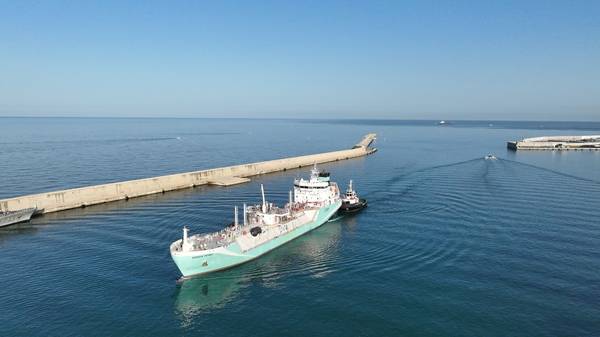
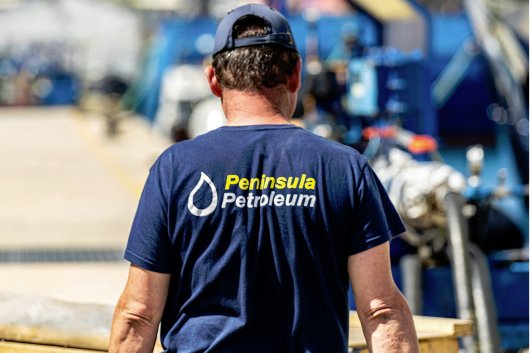
Image credit: Peninsula Petroleum
Marine fuel seller Peninsula Petroleum Group (PPG) stated on Tuesday that it is ready for IMO's 0.5 percent global sulphur cap, which is due to be implemented on January 1, 2020.

Outlining the group's preparations in recent months, Peninsula explained that it began supplying very-low-sulphur fuel oil (VLSFO) to clients in Europe, the Americas and Asia back in July.

And according to CEO John Bassadone, Peninsula has already delivered 300,000 tonnes of VLSFO at its physical supply ports of Gibraltar, Algeciras, Barcelona, ARA, Canary Islands, Malta, Panama, US Gulf Coast and Los Angeles.

By the end of this year, more than 600,000 tonnes is expected to have been supplied to customers - which would amount to around four percent of total fuel delivered by the firm in 2019 if last year's figure of 15m tonnes worldwide were to be replicated.

Terminal capacity increase; vessel additions and modernization

Peninsula noted that its focus on supply chain control and logistics has seen the group increase its strategic global storage positions during 2019, which currently includes more than 400,000 tonnes of terminal capacity in Europe and a further 370,000 tonnes across the Americas.

The group also recently acquired its first Panamax vessel, providing increased operational flexibility for product procurement, floating storage and cargo transhipments.

Moreover, Peninsula has purchased and added another seven product tankers to modernize and upgrade its global fleet of more than 30 owned and chartered-in vessels. One of them, an 8,000-dwt tanker, is the first of a new building programme designed to offer more segregation, enhanced quality control and optionality.

Product availability and quality

In terms of product availability, Peninsula explained that it has secured "the right flow of compliant fuels" in order to correctly meet the requirements of clients well ahead of the January 1 implementation date.

"PPG's direct relationships with oil majors, large IOCs, refiners and large global commodity traders on the supply side have allowed the implementation of a diverse 2020 procurement offering which has provided clarity to customers on product availability in each of its physical locations," the bunker seller noted.

Alex Lyra, Global Head of Supply & Trading, added: "We have secured the full mix of products and availability in our physical ports from reliable partners in advance of 2020 and beyond. Our enhanced supply chain offers customers comprehensive solutions across multiple locations."

On the issue of product quality, Peninsula asserted that its operations, logistics and supply chain control are set up to facilitate the purchase of products and components for the production and delivery of compliant fuels well within ISO 8217:2017 specifications, backed up by in-house technical expertise.

Victor Morales, Global Head of Sales and Marketing, remarked: "By engaging our customers early on in the 2020 planning phase to better understand their fuel strategies, demands and concerns, we've expanded key customer relationships across our entire blue-chip portfolio. This has enabled us to develop a comprehensive supply offering which is relevant and competitive."

Bassadone concluded: "We have been committed to growing our business in a conservative manner and we have invested heavily over the past few years in our people, especially in building out comprehensive middle and back office teams to bolster our controls and processes. Our approach has been endorsed by our stakeholders who've shown their confidence in our business."


Wärtsilä logo. Shipping firms struggle to prioritise decarbonisation investments amid regulatory uncertainty, Wärtsilä survey finds  

Survey of 225 maritime executives reveals 70% say uncertainty hinders investment decisions despite regulatory pressure.

IMT Isca G-Flex vessel render. Longitude Engineering unveils IMT Isca G-Flex PSV design with alternative fuel capability  

Naval architecture firm launches adaptable platform support vessel design based on the IMT-984 G-Class hull.

Philippos Ioulianou, EmissionLink. Shore power infrastructure is key to cutting ferry emissions in European cities, says EmissionLink  

Port electrification is needed to enable vessels to switch off engines at berth, reducing urban pollution.

Maritime and Port Authority of Singapore logo. Singapore prioritises maritime resilience amid geopolitical uncertainty, eyes digitalisation and green fuels  

MPA chief outlines the sector’s adaptation to supply chain disruptions while advancing automation and alternative fuels.

Aerial photograph of Zhoushan Island. China exports first domestically blended biofuel for marine use from Zhoushan  

A vessel carries 2,600 tonnes of biofuel blend to Qingdao Port for international ship refuelling.

Green ammonia energy workshop graphic. H2SITE to present ammonia-cracking technology at Green Ammonia Energy Workshop  

Spanish company to showcase APOLO project's role in producing hydrogen for maritime decarbonisation.

Brave Quest vessel. Tsuneishi-Cebu delivers methanol dual-fuel Kamsarmax bulker  

Philippine shipyard hands over 81,100-tonne deadweight vessel capable of running on methanol fuel.

EIB and Port of Rotterdam signing. Port of Rotterdam secures EUR90m EIB loan for shore power installations  

Financing will support shore power infrastructure at three container terminals, with an EU grant also approved.

IBIA logo. IBIA updates biofuels training module for 2026  

Updated online course covers latest regulatory developments and market trends in liquid and gaseous biofuels.

Brim Explorer’s fully electric passenger vessel concept render Bureau Veritas to class all-electric trimarans for Brim Explorer  

Two zero-emission passenger vessels will operate in Norwegian fjords after extensive Arctic testing.